

Share this post


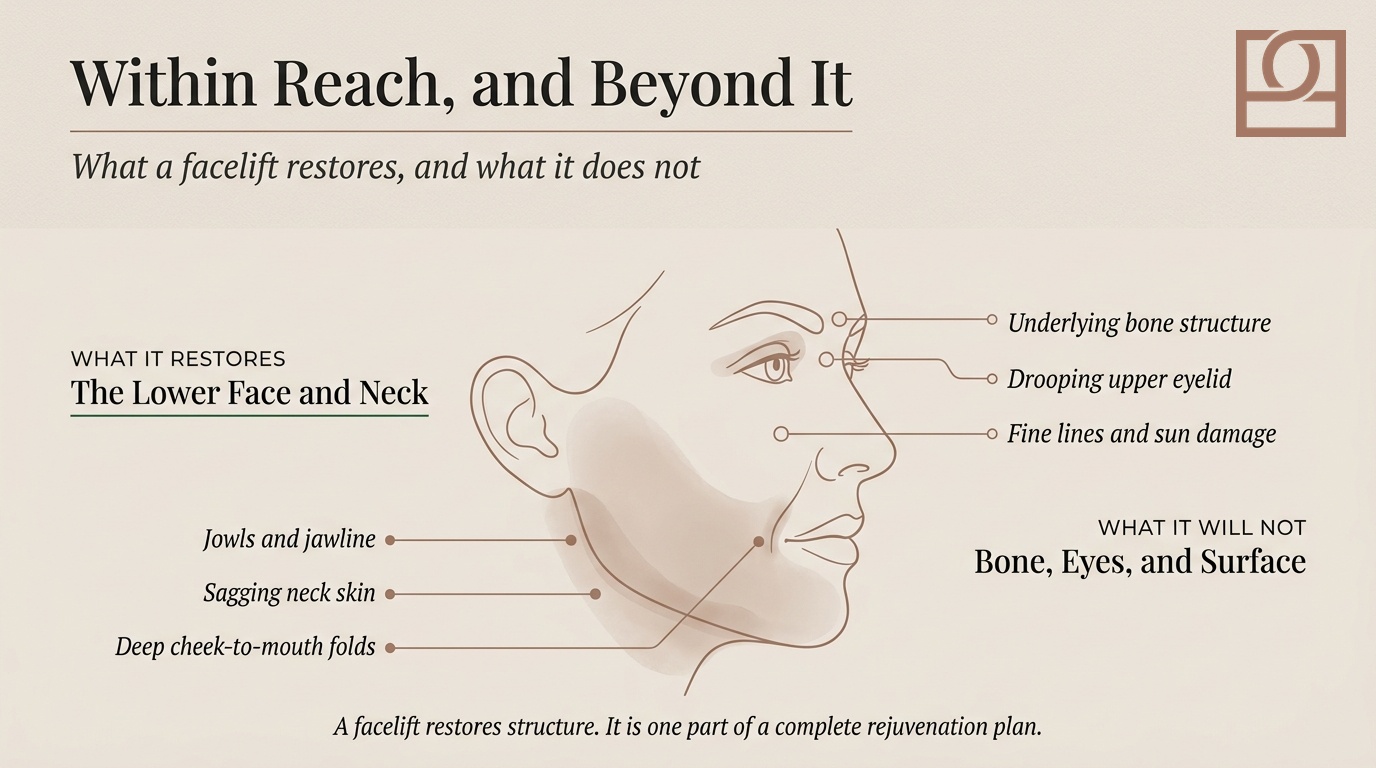
According to the Cleveland Clinic, a facelift, known medically as a rhytidectomy, involves the surgical removal or repositioning of excess skin and underlying tissue to create a smoother, more youthful facial contour. Johns Hopkins Medicine confirms that the procedure often includes tightening of the underlying muscles and connective tissue, not simply re-draping the skin. The Mayo Clinic notes that a facelift will not address sun damage, fine lines, or changes in skin color, and is best understood as one component of a comprehensive facial rejuvenation plan rather than a single solution for every aging concern.
Understanding what a facelift can and cannot do is the first step toward a decision you will feel genuinely confident about. It is a meaningful investment in how you look and how you feel, and it deserves the same clarity and research you would bring to any major health decision.
---
If the word "facelift" still conjures an image of an overly tight, wind-swept face that announces surgery to anyone in the room, it is time to update that picture. The facelift performed in 2026 bears very little resemblance to the procedures of twenty years ago. Advances in anatomical understanding, technique refinement, and patient-centered outcomes have transformed this surgery from a feared intervention into one of the most elegant procedures in plastic surgery.
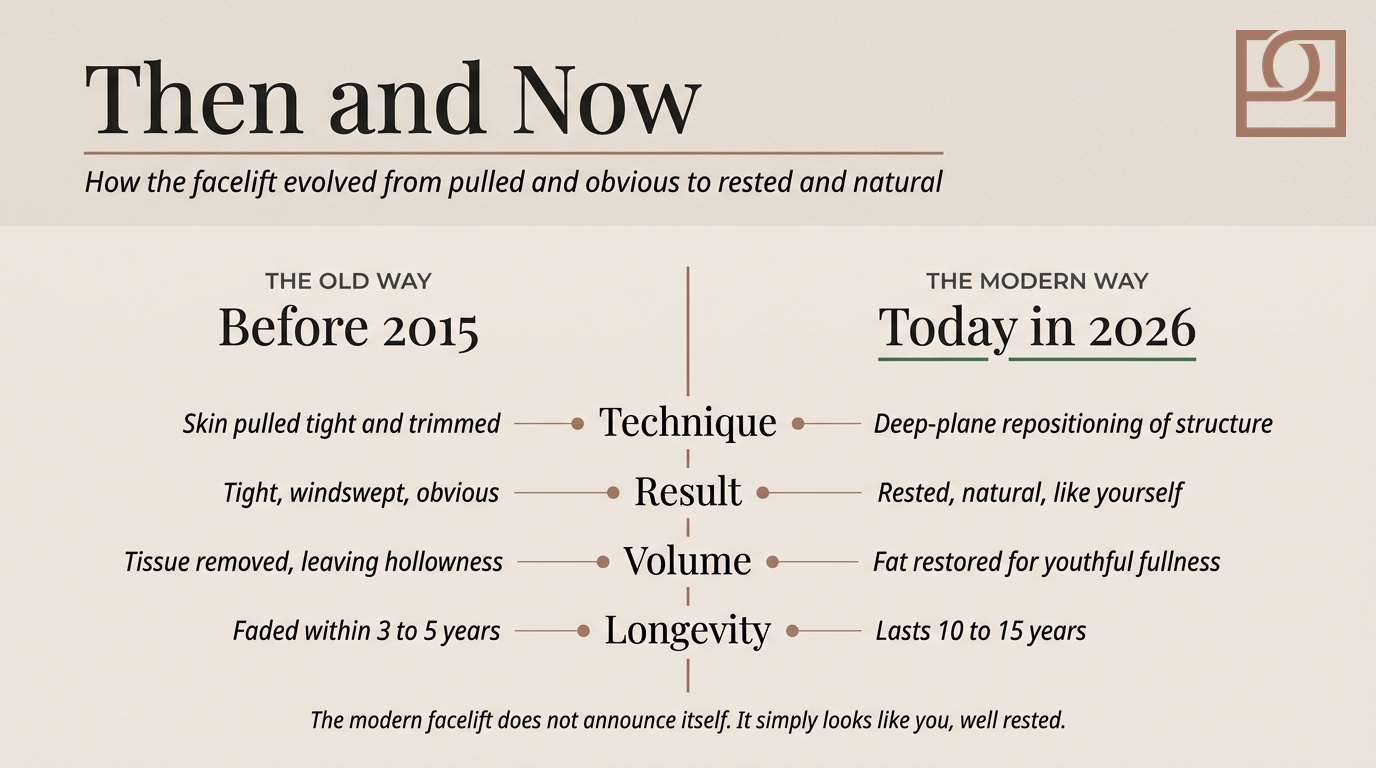
Early facelift techniques focused almost entirely on pulling and removing excess skin. The results were dramatic in the short term but aged poorly and often left patients looking perpetually startled. The fundamental problem was biomechanical: skin under tension has nowhere to go but to relax back toward its original position, which is why older-style lifts faded quickly and sometimes created visible distortion along incision lines.
The modern standard, as documented in current surgical trend research, is the deep-plane or SMAS-based facelift. SMAS stands for the superficial musculoaponeurotic system, a layer of fibromuscular tissue that sits beneath the skin and above the deeper facial muscles. By working at this level, surgeons reposition the face's structural scaffolding rather than simply stretching its surface. The result is a lift that moves with your face, preserves natural ligament attachment points, and avoids the "pulled" distortion that earlier techniques were known for.
The preservation facelift trend, as reported by Allure in 2026, takes this philosophy even further. Instead of releasing and repositioning every structure, preservation-based approaches selectively support what is still working while correcting only what has fallen. Patients who undergo these techniques maintain the ability to smile fully, animate expressively, and look genuinely like themselves, just visibly rested. This is the outcome most patients are actually seeking, and it is now reliably achievable in the hands of a skilled surgeon. You can learn more about how this technique compares to alternatives by reading about the deep plane facelift in detail.
One of the most telling indicators of how technically sophisticated facelift surgery has become is the rapid growth of the male market. According to the Male Aesthetic Revolution 2026 report from 5WPR, male aesthetic procedures represent the fastest-growing luxury category in cosmetic medicine, with facelifts among the most requested procedures for men over 45.
This matters for female patients for a specific reason. Male facial anatomy is fundamentally different from female anatomy. Men have a heavier brow, a stronger jaw, more prominent musculature, and beard follicles that must not be disrupted during incision placement. Performing a facelift on a male patient and producing a masculine, natural result, rather than feminizing the face or leaving visible scars in the beard, requires a precision that forces surgeons to develop entirely new levels of anatomical awareness.
As current facelift research confirms, the era of the one-size-fits-all technique is definitively over. Surgeons now customize vector placement, incision design, and the degree of SMAS manipulation based on each patient's bone structure, skin thickness, and gender-specific anatomy. For women, this means a surgeon who is technically sophisticated enough to operate across diverse anatomical profiles is far more likely to deliver a result that is beautiful, not just adequate.
Another significant shift in the facelift landscape is who is choosing to have the procedure. AZ Big Media's 2026 facial plastic surgery trend report notes that 57% of surgeons report an increase in patients under 30 requesting procedures, with many seeking early intervention to maintain their current appearance rather than correct dramatic aging.
This represents a philosophical shift in how patients relate to cosmetic surgery. Rather than viewing a facelift as a last resort after decades of visible decline, a growing number of patients treat it as part of a long-term facial health strategy. A mini facelift performed at 40 to address early jowl formation and mild skin laxity may produce a subtler result, but it also starts the patient's "clock" from a younger baseline, meaning the next intervention (if desired) can be smaller and more targeted.
The American Society of Plastic Surgeons' 2026 trend report frames this as the "youthful regeneration" movement, in which patients invest proactively in maintaining facial health rather than reactively. Whether you are 38 and noticing the earliest signs of jowling or 58 and ready for comprehensive rejuvenation, understanding your options at different stages of the aging process is the foundation of a smart treatment plan. Reading about the best age for a facelift can help clarify where you fall on that spectrum.
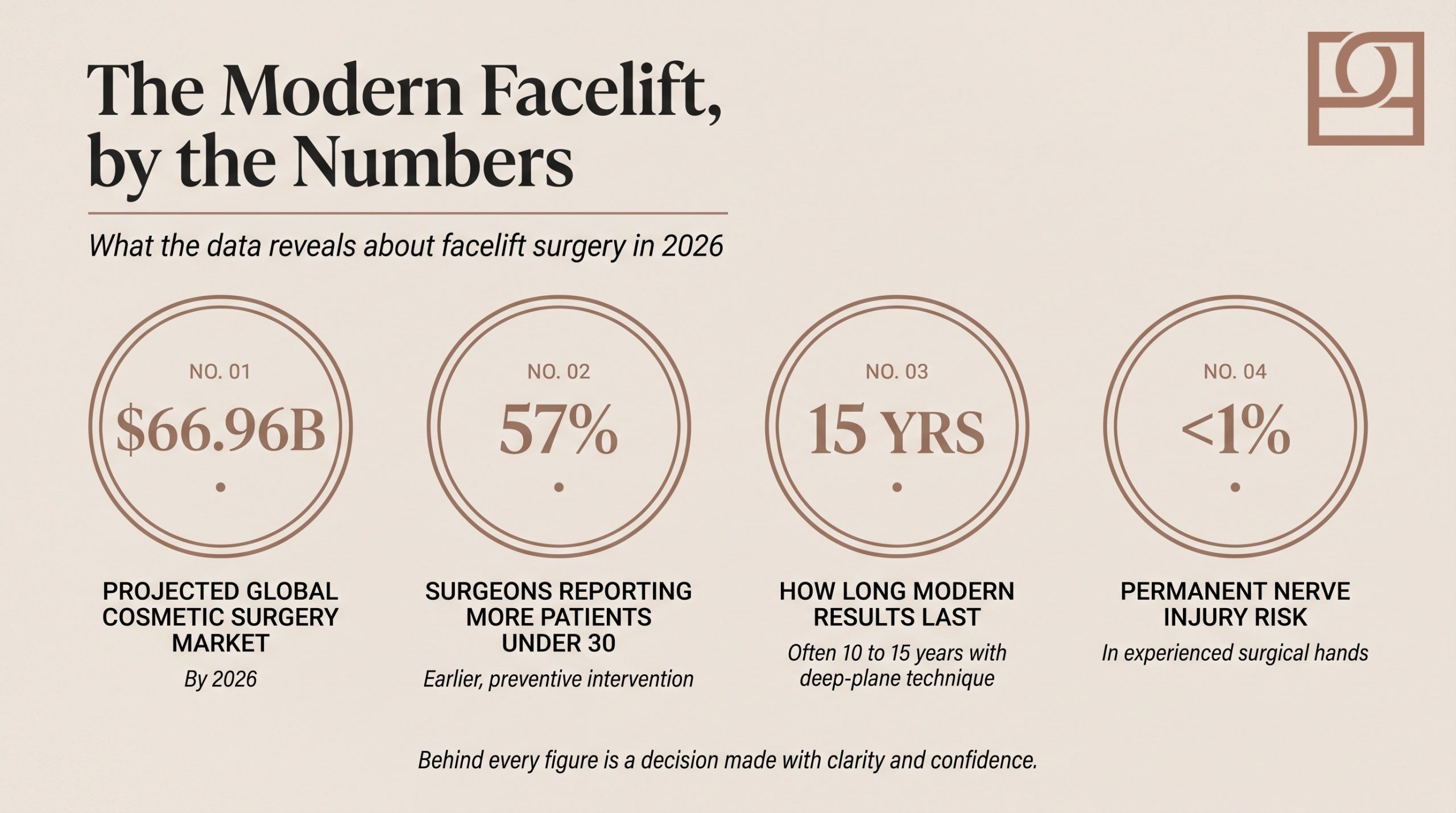
The global cosmetic surgery market is projected to reach $66.96 billion by 2026, with facial rejuvenation procedures accounting for a substantial and growing segment valued at over $15.8 billion. This growth is not driven by vanity alone. It reflects a broader cultural normalization of self-investment, the same mindset that has driven premium skincare, functional medicine, and bespoke wellness programs into the mainstream.
What is interesting about where this market is heading is that growth is accompanied by rising patient expectations, not just for outcomes, but for the entire experience. Nextech's plastic surgery trend analysis notes that as the market matures, patients increasingly expect surgical excellence and service excellence in equal measure. Private entrances, dedicated aftercare nurses, climate-controlled recovery environments, and seamless coordination between surgery and wellness services are no longer novelties. For the patients driving this market forward, they are baseline requirements.
This convergence of medicine and hospitality is precisely what distinguishes elite practices from volume-based clinics. When you invest in a facelift at this level of the market, you are not just purchasing a procedure. You are purchasing a system of care designed to protect and optimize your result from consultation through full recovery.
---
Many patients arrive at their consultation with significant anxiety about the unknown. The more clearly you understand what actually happens in the operating room, the more confident and prepared you will feel. Transparency is not just courteous. It is part of what responsible surgical care looks like. The following is a plain-language breakdown of the key technical elements of a facelift, explained in a way that empowers rather than overwhelms.
One of the most common concerns patients raise is scarring. The good news is that modern incision design prioritizes concealment without compromising access. As the Mayo Clinic describes, the standard facelift incision begins at the temple hairline, continues along the front of the ear, wraps behind the earlobe, and ends in the lower scalp behind the ear. Every segment of this incision is positioned so that it falls within a natural shadow, skin crease, or hairline boundary.
Scar appearance changes significantly over time. In the first six to eight weeks, incision lines are typically pink or red and may be slightly raised. Over the following twelve to eighteen months, they mature into fine, pale lines that are virtually invisible to anyone who is not specifically looking for them. The American Board of Cosmetic Surgery emphasizes that hairline preservation is particularly critical during closure: pulling the skin too tightly can elevate the hairline or create a step-off deformity that is difficult to correct.
For patients with darker skin tones or textured hair, incision placement and closure technique require additional expertise. The risk of keloid or hypertrophic scar formation is higher in these populations, and a surgeon experienced in advanced wound closure can significantly reduce this risk through layered suturing, tension-free skin closure, and appropriate post-operative scar management protocols.
Understanding the layers of the face helps demystify what your surgeon is actually doing and why the technique matters so much. From outermost to deepest, the relevant layers are: skin, subcutaneous fat, the SMAS layer (the fibromuscular sheet that connects facial muscles to the overlying skin), and the deeper facial musculature and parotid gland. The facial nerve, which controls all expressive movement, runs beneath the SMAS layer.
A skin-only facelift lifts and re-drapes the outermost layer and nothing else. It is faster and carries less surgical risk, but it also produces results that fade significantly within three to five years because the underlying structural changes driving the aging have not been addressed. An SMAS facelift tightens this middle layer using sutures, folds, or excision before re-draping the skin. This produces longer-lasting results and a more three-dimensional correction. As detailed in Johns Hopkins Medicine's facelift overview, muscle tightening is a central component of what modern facelifts accomplish.
The deep-plane facelift goes one step further by entering the plane directly beneath the SMAS, releasing certain ligamentous attachments, and repositioning the entire musculocutaneous unit as a single flap. Current clinical guidance confirms that in expert hands, permanent motor nerve injury from facelift surgery is well under 1%. The key qualifier is expert hands: a surgeon with thorough training in facial nerve anatomy and extensive case volume operates with a significantly different safety margin than one who performs occasional facelifts alongside a primarily non-surgical practice.
The old paradigm of facelift surgery was essentially subtractive: remove what sags, tighten what remains. This produced results that looked corrected but not youthful, because youth is characterized by volume, not just tightness. A 25-year-old face has full cheeks, defined temples, a soft jawline, and a slight fullness beneath the eyes. Removing tissue indiscriminately does not restore any of those qualities.
Modern facelift philosophy, as reflected in 2026 surgical trend reporting, integrates volume restoration as a core component of facial rejuvenation. Fat grafting involves harvesting a small amount of the patient's own fat (typically from the abdomen or inner thigh), processing it to remove impurities, and reinjecting it into areas of the face that have lost volume: the temples, the mid-cheek, the tear trough, the jawline, and the lips. As the University of Utah Health surgical team notes, this repositioning approach recreates the three-dimensional fullness that defines a truly youthful appearance.
What makes fat grafting particularly compelling is its longevity. Transplanted fat cells that survive the engraftment process, roughly 50 to 70% of what is injected, become permanent residents of their new location and age naturally with the face over time. This is fundamentally different from temporary fillers, which are reabsorbed by the body within months to a couple of years. The combination of structural lift and volume restoration is what produces the "refreshed, not done" result that modern facelift patients consistently describe as their goal.
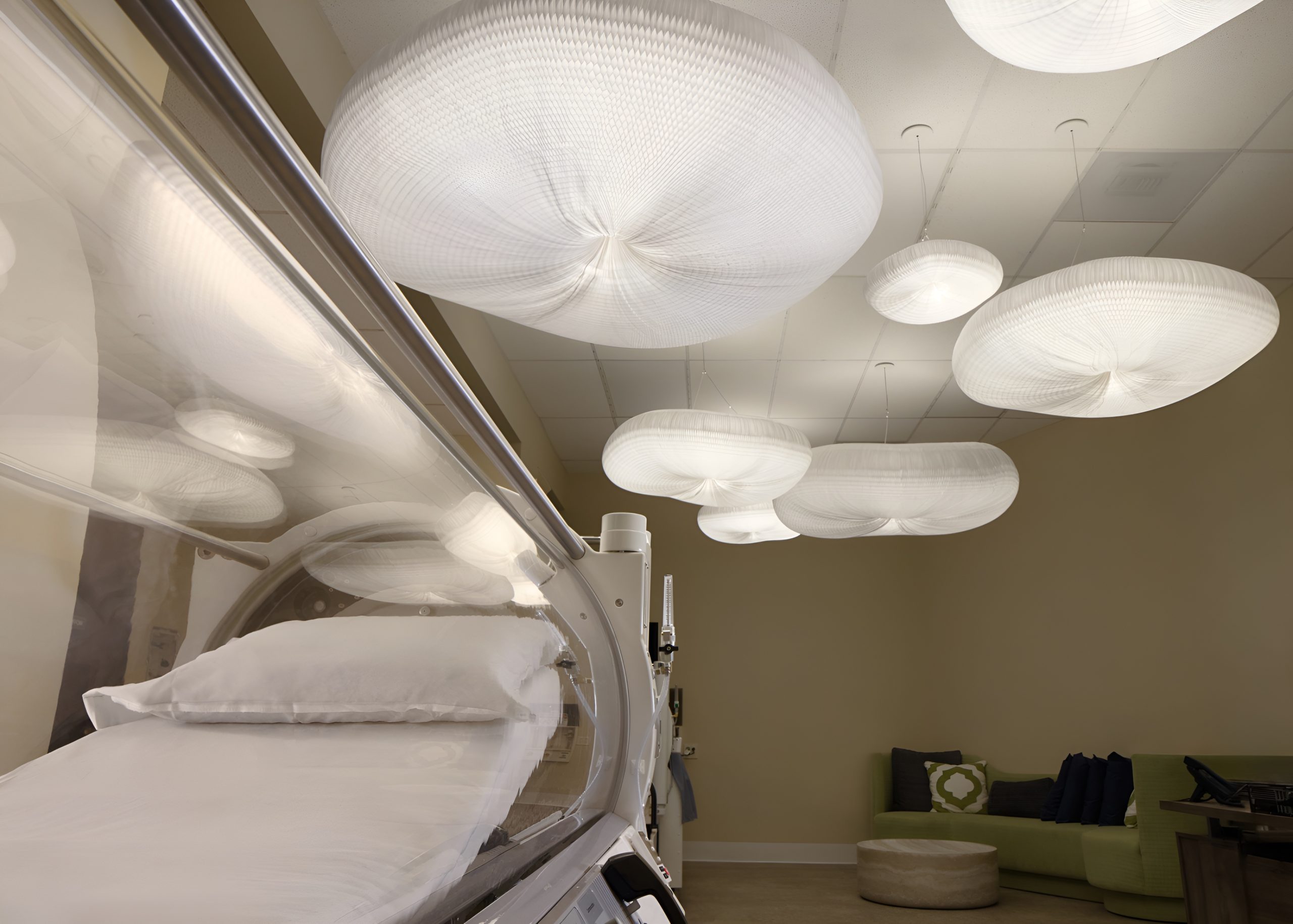
A full facelift is performed under general anesthesia in the vast majority of cases, ensuring patient comfort, airway protection, and optimal surgical conditions. Mini facelifts and limited-incision procedures can sometimes be performed under IV sedation combined with local anesthetic, which reduces anesthesia-related recovery time. The Mayo Clinic notes that the procedure itself typically takes between two and five hours, depending on the extent of surgery and whether additional procedures such as neck lift, fat grafting, or blepharoplasty are performed simultaneously.
Same-day discharge is the standard model for healthy patients undergoing facelift at accredited outpatient surgical facilities, provided a responsible adult can escort them home and stay with them for the first 24 hours. The American Board of Cosmetic Surgery confirms that same-day discharge is safe and appropriate for most facelift patients when the surgical facility has robust monitoring protocols during the post-anesthesia recovery period.
Overnight observation options are particularly relevant for out-of-town patients, individuals with complex medical histories, or those who simply want an extra layer of security during the first critical post-operative hours. For practices that offer dedicated aftercare infrastructure, including assigned post-operative nurses and a private recovery environment, the distinction between "same-day" and "overnight" becomes less about clinical necessity and more about individual preference and peace of mind.
---
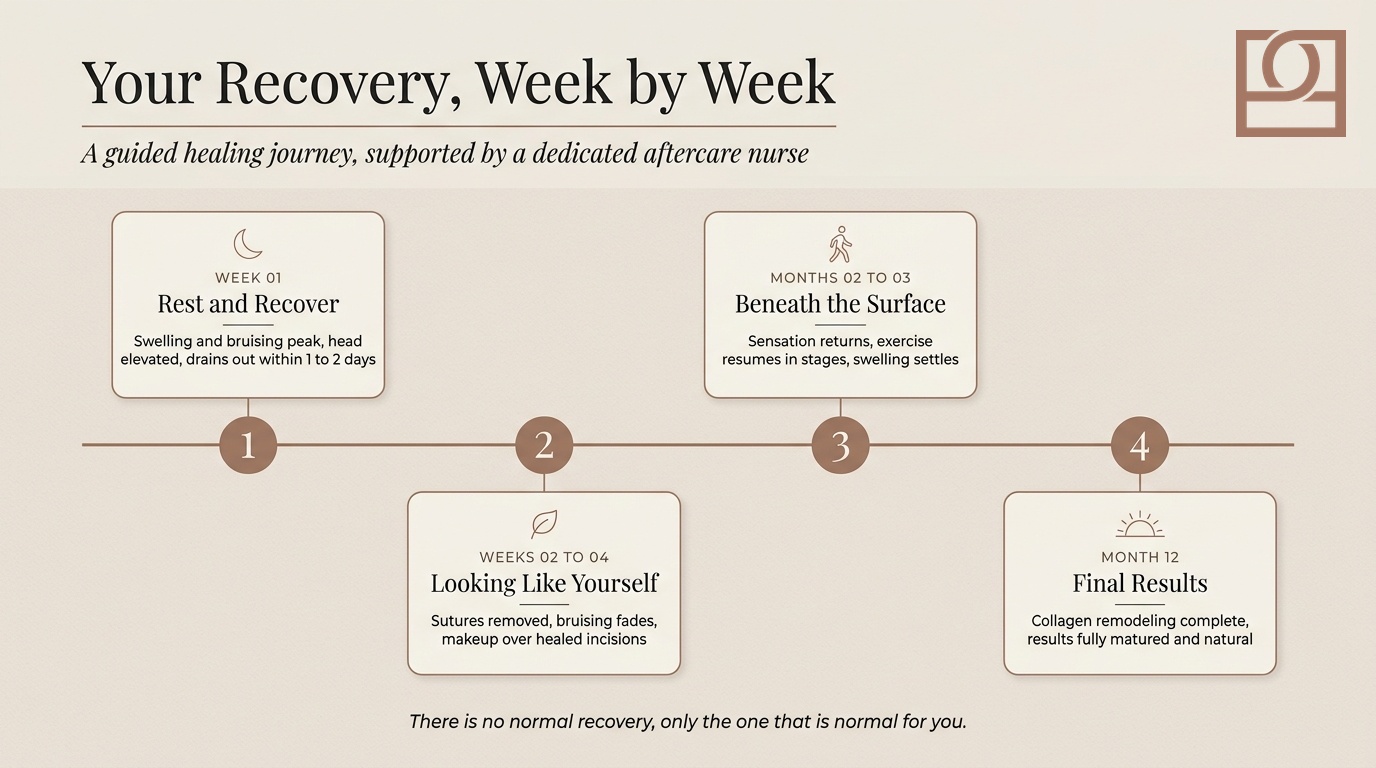
Recovery is the chapter of the facelift journey that patients most often underestimate, not because it is extraordinarily difficult, but because it is longer and more variable than most people expect. Understanding what is normal at each stage removes much of the anxiety that comes with healing, and knowing what to watch for means you can identify anything that needs attention early. The following timeline is based on the typical trajectory for a full facelift with or without neck lift.
The first three days following surgery represent the peak of swelling and discomfort. The face will feel tight and heavy, bruising will be at its most visible, and most patients feel most comfortable resting quietly at home with their head elevated on two pillows. Pain is generally described as moderate and is well-managed with prescription analgesics for the first 48 to 72 hours, transitioning to over-the-counter options by day four or five. As the comprehensive facelift recovery timeline from CCPS notes, the first 72 hours are the most demanding, but also the most predictable.
If surgical drains have been placed to prevent fluid accumulation, they are typically removed within 24 to 48 hours at the first post-operative appointment. This visit is critically important: your surgeon will inspect incision sites, assess blood flow to the skin flaps, check for signs of hematoma, and make any necessary dressing adjustments. Detailed week-by-week recovery guidance consistently identifies the first follow-up as the most important appointment in the recovery sequence.
Lymphatic drainage massage, when cleared by your surgeon, can significantly reduce swelling in the first week. Ice packs applied gently to cheeks (never directly on incisions) also help manage edema. The activities to avoid entirely during this period include bending at the waist, lifting anything heavier than a coffee cup, any activity that raises blood pressure or heart rate, and any position that puts pressure on the face. No-drain protocol practices have published data suggesting that eliminating drains, when combined with precise hemostasis technique, can reduce early patient discomfort without increasing complication rates, though this remains surgeon and case specific.
You can read a more detailed overview of what to expect at each stage of the process in this guide to facelift surgery.
The second week marks a meaningful turning point for most patients. If non-dissolving sutures were used, they are typically removed between days seven and fourteen, which immediately reduces tightness and discomfort around the ears and hairline. Bruising progresses through its characteristic color cycle: the deep purple and maroon tones of the first week transition to blue-green, then yellow-green by the end of week two. This looks alarming but is entirely normal and reflects healthy tissue healing. As documented in the recovery timeline, most patients find week two far more manageable than week one.
By week three, the majority of patients feel comfortable participating in low-key social activities, attending Zoom meetings with camera on, and returning to sedentary desk work. Residual swelling is still present, particularly in the morning upon waking, but it is distributed more evenly and less dramatically than in the first week. Makeup can generally be applied over healed incisions by weeks three to four, making it possible to camouflage the remaining discoloration for professional or social appearances.
Hematoma, a collection of blood beneath the skin, is the most common early complication of facelift surgery. It occurs in approximately one to three percent of patients and typically presents within the first 24 to 48 hours as sudden, asymmetric swelling on one side of the face accompanied by tightness and pain. Blood pressure management is one of the primary prevention strategies, both in the peri-operative period and during the early recovery weeks. Patients are consistently advised to avoid salt, straining, heavy exertion, and emotional stress during this window. Photobiomodulation (red light therapy) and compression garments are increasingly used in the post-operative period to reduce edema and accelerate tissue healing, with promising data supporting their role in shortening visible bruising duration.
By the time most patients reach the six-week mark, they look and feel largely like themselves, perhaps better. But healing is still actively occurring beneath the surface in ways that are invisible to the naked eye. Collagen remodeling, the process by which the body replaces the temporary healing scaffolding with mature scar tissue, continues for a full twelve months. This is why final facelift results are not fully evaluated until the one-year post-operative mark.
Sensory changes are among the most common concerns patients raise during months two and three. Numbness, tingling, and a sensation of skin tightness around the ears, along the jawline, and into the hairline are entirely normal as sensory nerve fibers regenerate. As experienced surgeons note, most sensory changes resolve between three and twelve months post-operatively, with the majority improving noticeably by month three. Occasional sharp "zingers," brief electric sensations, are a positive sign that nerve fibers are actively regenerating.
Exercise progression follows a carefully staged protocol. Activity guidelines from recovery specialists generally recommend gentle walking immediately post-op, low-impact cardio at three to four weeks, resistance training at six weeks, and high-impact or contact activities at eight to twelve weeks. Comprehensive recovery guidance also addresses when skincare actives can be safely reintroduced: retinoids and chemical exfoliants are typically paused for six to eight weeks, and laser or energy-based treatments on the treated areas are deferred for three to six months depending on the modality and the surgeon's protocol.

Among the most important things a patient can internalize before facelift surgery is that recovery timelines are ranges, not schedules. Recovery specialists consistently note that two patients of the same age undergoing the same procedure with the same surgeon can have meaningfully different experiences based on factors entirely outside anyone's control. Genetics influences how quickly you form collagen and how your body manages inflammation. Skin thickness affects how much swelling is externally visible. Smoking history (even decades in the past) can slow circulation and healing. Prior surgeries change the tissue plane dynamics your surgeon is working within.
Experienced surgical practices emphasize that there is no "normal" recovery, only the one that is normal for you. Some patients are camera-ready for a professional video call at ten days. Others prefer three full weeks before appearing in any public-facing context. Both timelines can be entirely appropriate outcomes of the same procedure. The variable that patients control most directly is adherence to post-operative instructions. Consistent post-operative guidance confirms that patients who follow instructions precisely, particularly around activity restrictions, sleep positioning, and compression wear, tend to heal more smoothly and see better early results than those who push boundaries too soon.
This is precisely where dedicated aftercare infrastructure makes a measurable difference. A model that assigns each patient a dedicated post-operative nurse for four weeks, available for daily check-ins, garment adjustments, swelling assessment, and early complication identification, fundamentally changes the recovery experience. You are not trying to self-diagnose on a forum at midnight. You have a professional who knows your case and your baseline, which is the most practical form of safety net facelift recovery can offer. For a detailed look at facelift recovery, including what to prepare and what to expect, comprehensive resources can help you plan confidently.
---
Every surgery carries risk. The appropriate response to that reality is not avoidance but informed preparation. Understanding the actual complication profile of modern facelift surgery, including what is common, what is rare, and what surgical and anesthetic protocols exist to minimize each risk, allows you to make a decision grounded in accurate information rather than either unrealistic optimism or unfounded fear.
Hematoma, defined as a collection of blood beneath the skin surface that the body has not naturally reabsorbed, is the most frequently cited early complication of facelift surgery. Clinical data places its incidence at approximately one to three percent of facelift cases, with higher rates in male patients due to their denser skin vascularity and higher blood pressure baseline.
The condition typically presents within the first 24 to 48 hours post-operatively. The warning signs are difficult to miss: a sudden increase in swelling on one side of the face, a feeling of intense pressure or pain that differs from the expected discomfort, and visible asymmetry that was not present earlier. If you experience these symptoms, the appropriate response is immediate contact with your surgical team, not a wait-and-see approach. Caught early, hematoma is treated with a straightforward office or bedside drainage procedure and does not compromise your final aesthetic result.
Prevention is built into every stage of the perioperative experience at a high-quality practice. Blood pressure is carefully managed from the moment anesthesia induction begins through the post-anesthesia recovery period. Patients are counseled to avoid NSAIDs (aspirin, ibuprofen, naproxen) for two weeks before and after surgery, as these medications impair platelet function and increase bleeding tendency. Activity restriction protocols are a primary prevention tool: anything that spikes blood pressure, including heavy lifting, intense emotional events, or straining during bowel movements, creates conditions favorable to hematoma formation in the first two weeks.
The facial nerve is the structure patients are most concerned about when they think about facelift risks, and understandably so. It controls all voluntary facial movement, including your smile, your ability to raise your eyebrows, and the movement of your eyelids. Any interruption of facial nerve function is immediately visible and deeply alarming.
The important distinction is between temporary and permanent nerve injury. Clinical review data confirms that permanent motor nerve damage in facelift surgery performed by experienced surgeons is well under one percent. Temporary nerve bruising, known as neuropraxia, is more common and causes transient weakness in specific facial movements, such as an asymmetric smile or slightly uneven eyelid position. These changes typically resolve within weeks to three months as the nerve heals from the surgical irritation.
Sensory nerve changes are an expected, not exceptional, part of facelift recovery. The skin around the ears, along the earlobe, and into the neck is served by several small sensory branches that are inevitably affected by the surgical dissection. The resulting numbness, tingling, or altered sensation in these areas is normal and improves progressively over three to twelve months. Experienced facelift practices note that patients should report any inability to move a part of their face once anesthesia has worn off, as this is the appropriate trigger for immediate evaluation, though it remains a rare event in hands with deep expertise in facial nerve anatomy.
Scarring at facelift incision sites is expected and, in most cases, beautifully concealed by skilled incision design and careful closure. The concern arises when scarring becomes hypertrophic (raised and thickened) or, in a small subset of patients, forms keloids (scars that grow beyond the wound boundaries). The Mayo Clinic's comprehensive risk overview identifies darker skin tones as carrying higher risk for these scar types, though this varies significantly by individual genetics rather than skin tone alone. Treatment options include corticosteroid injections, silicone sheeting, laser therapy, and in persistent cases, scar revision.
Temporary hair loss along incision lines (a phenomenon called telogen effluvium or shock loss) can occur due to trauma to follicles at the wound edges. In the vast majority of cases, this resolves completely within three to six months as follicles re-enter their growth phase. Permanent hair loss is rare (under one percent) and typically occurs only when follicles are directly damaged by excessive tension, cauterization too close to the hairline, or poor wound healing.
Skin necrosis, the death of skin tissue due to compromised blood supply, is one of the most serious potential complications of facelift surgery. It is fortunately rare, and its primary risk factor is smoking. Nicotine causes intense vasoconstriction that can reduce blood flow to the elevated skin flaps below the threshold required for survival. The American Board of Cosmetic Surgery consistently identifies smoking cessation for a minimum of four to six weeks before and after surgery as non-negotiable. This is not a preference. It is a clinical safety requirement, and no ethical surgeon will perform elective facelift surgery on an active smoker.
Infection following facelift surgery is uncommon, with rates consistently below one percent in practices using appropriate sterile technique and prophylactic antibiotic protocols. When it does occur, it is typically identified in the first one to two weeks and responds well to oral or intravenous antibiotics. Signs to report promptly include increasing rather than decreasing redness at incision sites, warmth, discharge, fever, and any unusual odor.
Anesthesia-related complications in healthy elective patients are extremely rare and have become rarer as anesthetic agents and monitoring technology have advanced. Thorough pre-operative medical clearance, including bloodwork, cardiac evaluation where indicated, and a detailed medication review, identifies risk factors before the day of surgery. The presence of a board-certified anesthesiologist (as distinct from a nurse anesthetist working without physician supervision) adds another layer of trained oversight, particularly for longer procedures or patients with complex histories.
Accredited surgical suites operating under AAAASF, JCAHO, or state licensure standards are required to maintain emergency equipment, trained support staff, and infection control protocols that meet or exceed hospital standards. The misconception that "office-based" means "less safe" does not hold in well-resourced, properly accredited practices. What you gain in an accredited surgical suite is hospital-grade safety without the overhead, wait times, or anonymity of a hospital environment, paired with the boutique experience that defines the highest tier of cosmetic surgical care.
---
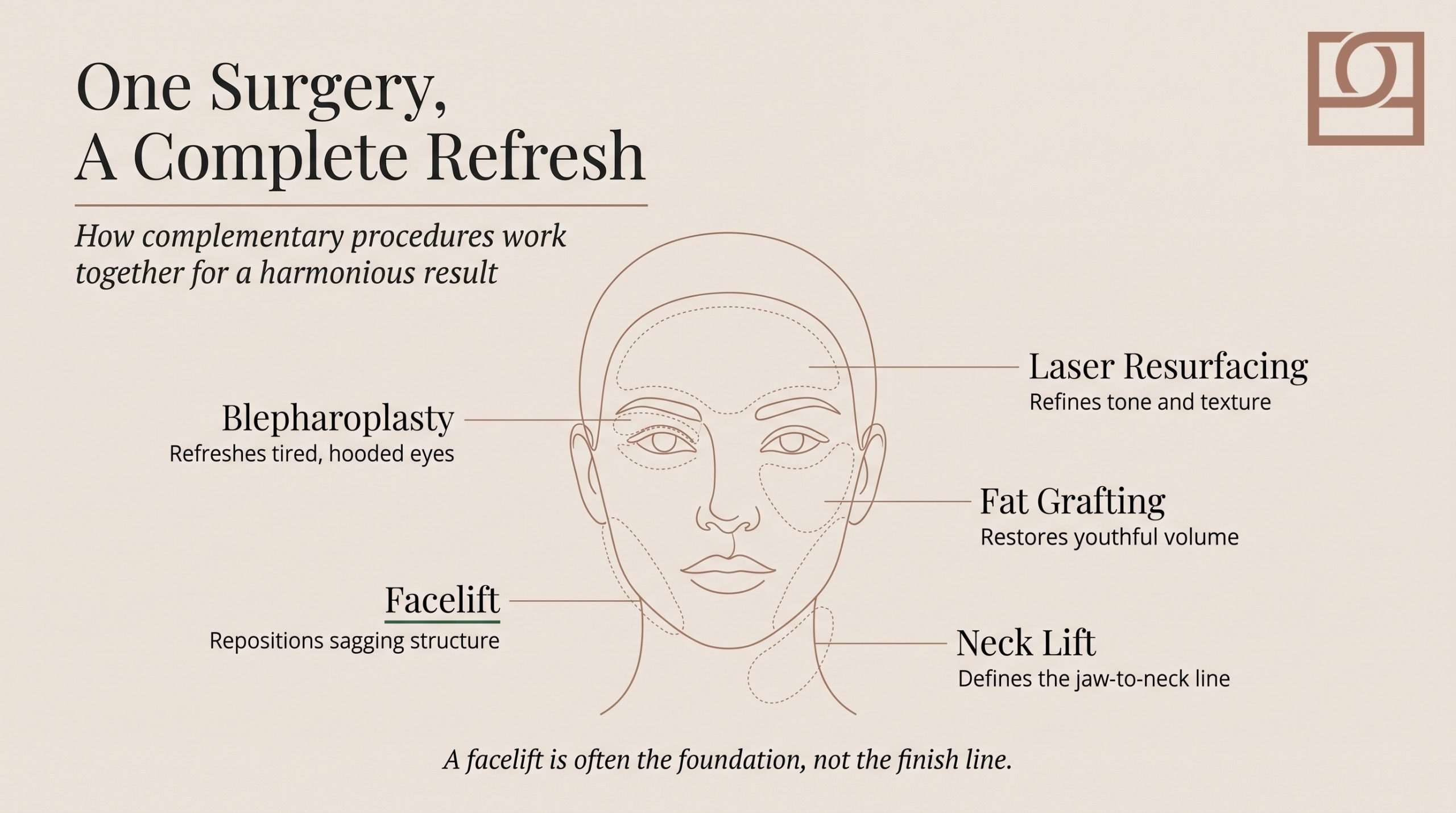
For many patients, a facelift addresses the most significant structural changes, but it is not the only intervention that contributes to a truly comprehensive rejuvenation. The face, neck, eyes, and body age together, and an integrated treatment plan that addresses multiple dimensions of that process produces results that are more harmonious, more lasting, and more satisfying than any single procedure in isolation.
The face and neck are anatomically continuous, but they do not age identically. The neck frequently develops its own distinct concerns, including platysmal banding (vertical cords that appear along the front of the neck due to muscle separation), submental fat accumulation (the "double chin" that persists despite healthy body weight), and loose skin that creates a "turkey neck" appearance. A facelift alone, even a beautifully executed one, can leave these neck concerns completely unaddressed.
A neck lift, also called a lower rhytidectomy, is the natural complement to a facelift for patients with significant neck concerns. As the University of Utah Health surgical team outlines, a neck lift typically involves platysmaplasty (surgically tightening the platysma muscle, which runs from the jaw to the clavicle), liposuction to remove submental fat, and skin excision or tightening to address laxity. Current trend research confirms that the neck lift is increasingly performed as a companion to facelift rather than as a standalone procedure.
The practical advantage of combining these procedures is significant. Because facelift and neck lift share overlapping incision sites behind the ears and in the submental crease, and because both are performed under the same anesthesia event, combining them adds minimal time to the surgery while eliminating the need for a separate recovery period. The visual payoff is a defined jawline, a smooth chin-to-chest transition, and an overall result that looks coherent rather than patchwork.
The eyes are perhaps the most emotionally expressive feature of the face, and they are also among the earliest to show signs of aging. Upper eyelid skin begins to accumulate excess folds as the brow descends and the skin loses elasticity, sometimes obscuring the eyelid crease or even impinging on peripheral vision in advanced cases. Lower eyelids develop herniated fat pads that create persistent puffy under-eye bags, shadowing, and a look of chronic fatigue that no amount of sleep or concealer can entirely address.
A facelift addresses the lower two-thirds of the face: the cheeks, jowls, jawline, and neck. The Mayo Clinic is explicit that a facelift does not address eyelid changes or under-eye bags, which require blepharoplasty to correct. Upper blepharoplasty removes the excess eyelid skin and, where appropriate, a small amount of fat to re-open and refresh the eye aperture. Lower blepharoplasty removes or repositions the herniated fat pads and may include skin tightening depending on the degree of laxity.
Combination procedure planning, incorporating blepharoplasty with a facelift in a single surgical session, adds approximately 30 to 45 minutes of operating time and produces a result that addresses the entire face simultaneously. The practical benefit is avoiding staggered recoveries: rather than healing from a facelift, waiting six months, and then recovering from eyelid surgery, the patient addresses everything in one healing period and emerges with a result that looks cohesive and complete.
A facelift, with or without a neck lift, and eyelid surgery address structure and laxity. Fat grafting addresses volume. Laser resurfacing addresses surface quality. Together, these three dimensions of facial aging produce the "completely refreshed" outcome that patients often see in a single before-and-after image and wonder how it was achieved.
As highlighted in Allure's 2026 trend analysis, fat grafting has become one of the most sought-after complementary procedures in the facelift space precisely because it addresses what lifting cannot: the loss of subcutaneous fat from the temples, mid-cheeks, tear-trough region, and perioral area that gives aging faces their characteristic hollowed or "deflated" appearance. When combined with a structural lift, fat grafting creates results that are both rested and youthful, rather than merely tightened.
Laser resurfacing is sometimes staged separately from the facelift by six to eight weeks, depending on the laser system used and the surgeon's wound-healing preferences. Some practices do perform fractional resurfacing at the time of the facelift itself, particularly for patients with significant sun damage or texture irregularity. The decision about sequencing is a clinical one, guided by your surgeon based on your skin type, the degree of resurfacing planned, and how those two healing processes might interact. Deep-plane facelift recovery guidance addresses this sequencing question within comprehensive planning, noting that integrated planning minimizes total recovery time and yields more cohesive aesthetic outcomes.
The patients who seek facelift surgery are often the same ones who are simultaneously navigating changes in their bodies, hormones, and pelvic health. Women in their 50s and 60s who are ready for facial rejuvenation may also be candidates for breast lift or reduction, body contouring, hormone optimization therapy, or pelvic floor rehabilitation. Treating these as entirely separate conversations, to be addressed in entirely separate practices, is a model that no longer serves patients who understand their health as an integrated system.
The American Society of Plastic Surgeons' 2026 trend report identifies body contouring as one of the fastest-growing segments of aesthetic medicine, with a significant proportion of body patients also seeking facial procedures. When a practice can coordinate a facelift with a breast lift, or integrate hormone optimization into the surgical recovery plan, the practical benefits are significant: one anesthesia event, one recovery window, one care team with complete knowledge of your medical history and aesthetic goals.
This is the model that The Practice Healthcare was built around: a 12,000-square-foot facility where plastic surgery, gynecology, medspa treatments, and wellness programming are not separate silos but an integrated system designed around the whole patient. Whether you arrive for a facelift consultation and realize you also want to address your hormone levels, or you come in for a wellness visit and decide you are finally ready to discuss your facial concerns, the infrastructure exists to meet you where you are.
---
One of the most practical conversations surrounding facelift surgery involves money, and yet it is one that many patients feel uncomfortable initiating. Understanding the real cost of facelift surgery, what drives that cost, what insurance does and does not cover, and how to think about the investment over time transforms what feels like a luxury expenditure into a financially informed decision.
Facelift surgery in the United States spans an enormous price range. Based on published economic analysis of facelift surgery costs in the USA, total costs including surgeon fees, anesthesia, facility fees, post-operative garments, and medications typically range from $8,000 at the lowest end to $25,000 or more for comprehensive procedures performed by highly experienced surgeons in premium markets. Beverly Hills practices consistently reflect the upper end of this range, for reasons that are substantive rather than merely geographic.
| Facelift Cost Component | Typical Cost Range (USA) | Key Cost Drivers |
|---|---|---|
| Surgeon fee | $5,000 to $15,000+ | Training, experience, geographic market, case complexity |
| Anesthesia fee | $1,000 to $3,000+ | Duration of procedure, type of anesthesia, anesthesiologist vs. CRNA |
| Facility fee | $1,500 to $4,000+ | Accreditation level, equipment, staffing model |
| Post-operative garments and supplies | $200 to $600 | Compression design, number of garments, specialized wound care products |
| Medications | $100 to $400 | Prescription analgesics, antibiotics, anti-nausea medication |
| Pre-op lab work and clearances | $200 to $800 | Age, medical complexity, whether internal lab or external referral |
Disclaimer: The figures above reflect general national averages drawn from published industry data and are provided to illustrate the cost-per-year concept, not to represent our pricing. Actual costs vary considerably based on the surgeon's experience and qualifications, the specific technique used, surgical facility and anaesthesia fees, geographic location, and the complexity of each individual case. For accurate pricing tailored to your goals, we recommend a personal consultation.
The total facelift investment is driven more by surgeon experience and training than by any other single factor, and this is precisely where cost-cutting carries the highest risk.
The American Board of Cosmetic Surgery cautions patients against selecting a surgeon primarily on the basis of lower quoted fees. An undertrained provider performing facelift surgery in a non-accredited facility without proper aftercare infrastructure may quote an attractive price and produce a result that requires expensive, complex revision surgery. The cost of revision facelift surgery consistently exceeds that of the original procedure, and not all complications can be fully corrected even with revision surgery.
Cosmetic facelifts performed purely for aesthetic improvement are never covered by insurance. This is a consistent, categorical exclusion across all major carriers and is not a matter of negotiation or documentation strategy. However, there are genuine medical scenarios in which facial surgery that looks similar to a facelift is covered because it is reconstructive in nature rather than cosmetic.
| Facelift Scenario | Insurance Coverage Likelihood | Documentation Required |
|---|---|---|
| Cosmetic facial rejuvenation | Never covered | Not applicable |
|
Potentially covered under reconstructive benefit | Oncologist documentation, surgical plan, prior authorization |
| Facial paralysis correction (Bell's palsy, nerve damage) | Potentially covered with functional impairment documentation | Neurology evaluation, functional deficit assessment |
| Post-traumatic facial repair | Typically covered for reconstructive components | Trauma records, photographs, functional limitation documentation |
| Skin cancer excision with adjacent repair | Cancer excision covered; cosmetic refinement not covered | Pathology reports, reconstructive necessity documentation |
The key distinction across all insurance scenarios is functional impairment: the procedure must address something that materially limits normal function or results from a medical condition, not simply something that affects appearance.
Hybrid cases are the most administratively complex. If you are undergoing surgery to repair skin after cancer excision and wish to incorporate cosmetic refinement of the same area simultaneously, your practice must be capable of accurately coding and billing the reconstructive portion through insurance while collecting the cosmetic component directly from you. This requires a billing infrastructure that many exclusively cosmetic practices lack, and it is one of the practical advantages of choosing a practice that genuinely serves both populations.
Third-party medical financing has made elective surgery accessible to a significantly broader patient population than it was two decades ago. The major platforms in this space include CareCredit, Cherry, Alphaeon Credit, and Prosper Healthcare Lending, all of which offer promotional financing terms for qualified applicants. Standard offerings include 0% APR for 12 to 24 months with approved credit; longer-term options are available at standard interest rates. Applications are typically completed online or in-office within minutes, and approval decisions are immediate.
At The Practice Healthcare, our preferred financing partner is Cherry. The application takes under a minute to complete, uses only a soft credit check that does not affect your credit score, and delivers an approval decision almost instantly. Cherry offers financing amounts up to $65,000 with terms ranging from a few months to 60 months, and every approved applicant receives a zero-interest payment option, with qualifying applicants eligible for 0% APR plans or rates as low as 5.99% on longer interest-bearing terms. We also work with CareCredit and Alphaeon Credit, giving patients a range of options to find the arrangement that best fits their budget.
In-house payment plans, where the practice itself structures an installment arrangement directly with the patient, are offered by some practices and represent a more flexible option for patients who prefer not to work through a third-party lender. These arrangements vary significantly in terms, interest, and eligibility criteria, and patients should ask their practice administrator specifically about this option during the financial consultation.
Health Savings Accounts (HSA) and Flexible Spending Accounts (FSA) cannot be used for cosmetic procedures under current IRS guidelines. However, if a portion of your surgery qualifies as medically necessary (reconstructive, functionally indicated), that portion may be eligible for HSA or FSA reimbursement. In some cases, reconstructive procedures may also qualify as a medical expense deduction for income tax purposes, though this analysis requires consultation with a tax professional who understands healthcare deduction rules.
For the patient who approaches her health as an investment portfolio rather than a series of expenses, the financial case for a modern facelift deserves honest analysis. A deep-plane facelift performed by an experienced surgeon consistently produces results that last 10 to 15 years. Maintenance with non-surgical treatments (radiofrequency microneedling, PRP, medical-grade peels) can extend visible results further by supporting skin quality and collagen production between surgical interventions.
|
|
|
|---|---|---|
|
|
|
|
|
|
|
|
|
|
|
|
When facelift results are amortized over their expected lifespan, the annual cost is frequently lower than what patients spend on non-surgical treatments that address surface concerns without correcting structural aging.
This comparison is not an argument against Botox or fillers. Those treatments have genuine value in the right context, particularly for maintaining surgical results between procedures. Rather, it is a framework that helps patients understand that the perceived cost barrier of facelift surgery often looks very different when placed in the context of what they are already spending and what a surgical investment actually delivers per year of lasting structural correction. As the American Society of Plastic Surgeons' 2026 trend analysis notes, patients increasingly evaluate aesthetic investments through exactly this lens, making the financial case for surgery a standard part of the consultation conversation at top practices.
---
The single most important variable in your facelift outcome is the surgeon who performs it. Technique matters. Technology matters. Aftercare infrastructure matters. But all of those variables flow through the judgment, skill, and expertise of the individual holding the scalpel. Knowing how to evaluate a facelift surgeon with the same rigor you would apply to any other major professional relationship is essential preparation for this decision.
Board certification in plastic surgery is not a single credential but a category of credentials that encompasses several distinct pathways. The American Board of Plastic Surgery (ABPS) is the gold standard for surgeons performing facelift procedures in the United States. ABPS certification requires completion of an accredited plastic surgery residency, passage of comprehensive written and oral examinations, and ongoing maintenance of certification through continuing medical education and peer review.
The American Board of Facial Plastic and Reconstructive Surgery (ABFPRS) is a separate, legitimate credential for surgeons who completed residency in otolaryngology (ear, nose, and throat) and pursued subspecialty fellowship training in facial surgery. ABFPRS-certified surgeons are appropriately trained for facial procedures, including a facelift. Both ABPS and ABFPRS board certifications represent meaningful quality assurance.
What to be cautious about: the term "board certified" does not specify which board. Some boards require minimal training or no formal surgical residency. When evaluating a surgeon's credentials, ask specifically whether they are certified by the American Board of Plastic Surgery or the American Board of Facial Plastic and Reconstructive Surgery, and verify their status directly through those organizations' online lookup tools.
Where a surgeon trained, and specifically whether that training included dedicated facial surgery fellowship exposure, is a meaningful quality indicator. Academic medical centers affiliated with Ivy League or major research universities tend to produce surgeons with broad exposure to complex cases, emerging techniques, and peer-review culture. Fellowship training in facial surgery, beyond the foundational plastic surgery residency, signals additional commitment to this specific subspecialty.
Case volume is equally relevant. A surgeon who performs 200 facelifts per year has had 200 opportunities to refine each technical decision, manage each anatomical variant, and observe each recovery trajectory. A surgeon who performs ten facelifts annually, even with the same credentials, has a much narrower experiential base. Ask your surgeon directly how many facelifts they perform per year and in what proportion of their total surgical practice facial surgery represents.
Proprietary technique development is one of the clearest signals of deep surgical engagement. When a surgeon has developed, refined, and published original approaches to surgical problems, rather than simply learning and repeating standard techniques, it indicates a practitioner who is actively interrogating their craft. This is the profile that drives surgical innovation rather than replication, and it is the profile that tends to yield the most consistently excellent outcomes in the most complex cases.
The consultation appointment is your primary opportunity to assess not just whether a surgeon is technically capable, but whether they are the right fit for you specifically. A high-quality facelift consultation involves several specific elements that distinguish it from a brief, sales-oriented appointment.
Your surgeon should take a complete facial analysis, evaluating not just the areas of concern you have identified but the overall proportions and relationships of your facial thirds, the quality and thickness of your skin, the position of your fat pads, the degree of bony support underlying the soft tissue, and the vector relationships that will guide their surgical planning. A surgeon who agrees to perform a facelift without conducting this analysis and translating it into a specific, individualized surgical plan is not providing the level of care that a procedure of this magnitude warrants.
You should leave a consultation with a clear understanding of which specific technique the surgeon proposes and why, what the expected recovery trajectory looks like for your case specifically, what the realistic outcome range is, and what the aftercare infrastructure looks like in detail. If any of those conversations feel rushed, generic, or dismissive of your questions, treat that as important information about the level of care you would receive throughout the process. The quality of the consultation is often a reliable predictor of the quality of everything that follows. You can find additional perspective on what a facelift journey looks like at a high-quality practice in this comprehensive overview of facelift outcomes and how to choose wisely.
Before-and-after photo galleries are the most commonly used evaluation tool among facelift patients, and they are genuinely useful when read critically. Several elements distinguish informative galleries from curated marketing materials.
Consistency of photography conditions matters: consistent lighting, similar expressions, and standardized camera angles make results comparable across patients. Be cautious of galleries where "after" photographs are taken with dramatically better lighting, significantly more flattering angles, or different hairstyling that obscures the neck and jawline results. Also look for consistency of patient age and concern: if a gallery shows exclusively patients in their early 40s with mild laxity, it may not reflect the surgeon's performance on patients in their 60s with more advanced aging.
Look specifically at the neck results, not just the face. An incomplete neck lift alongside a beautiful facial lift produces an incongruous result that experienced observers will notice immediately. Look at the earlobe position: "pixie ear deformity," where the earlobe is pulled forward and downward by excessive skin tension, is one of the most recognizable signs of a technically compromised facelift. And look at patients who look like you, specifically of similar age, skin tone, and degree of laxity, to form a realistic expectation of what your own outcome might look like.
---
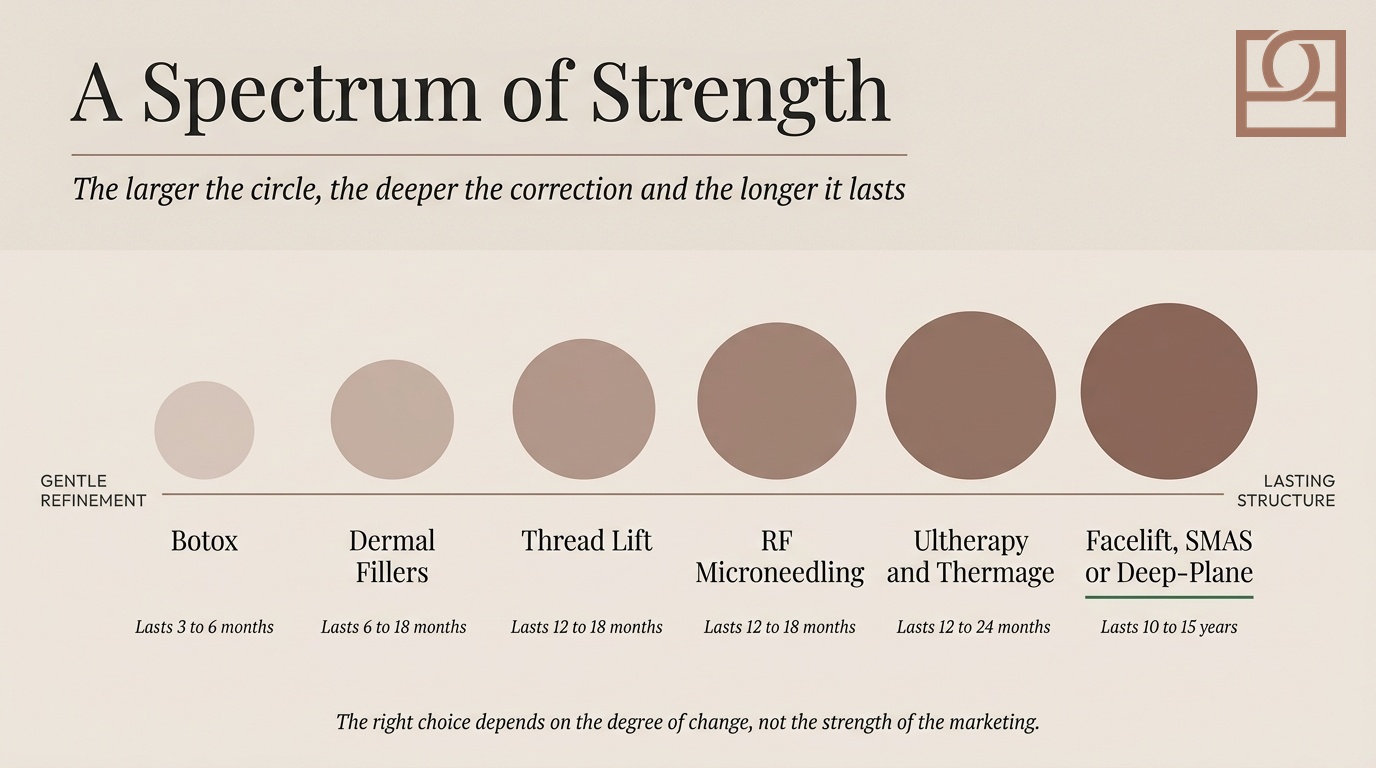
The aesthetic medicine landscape offers a growing menu of non-surgical treatments marketed as alternatives to facelift surgery. Some of these deliver genuine, meaningful results. None of them deliver results equivalent to surgery for patients with moderate to significant tissue laxity. Understanding what non-surgical treatments can and cannot do allows you to use them intelligently, either as a bridge before surgery, as maintenance after surgery, or as a standalone solution if your concerns are genuinely within their effective range.
Thread lifts involve inserting dissolvable sutures beneath the skin to provide temporary mechanical lifting of sagging tissue. They have been marketed with increasing enthusiasm, and there is genuine evidence that they provide modest, temporary improvement in mild to moderate facial laxity, particularly in the mid-face and jawline.
The honest assessment is that thread lifts provide subtle improvement lasting 12 to 18 months in appropriate candidates, typically patients in their late 30s to mid-40s with mild laxity who are not yet ready for surgical intervention. They do not address platysmal banding in the neck, they do not reposition deep fat compartments, and they do not produce results comparable to SMAS or deep-plane facelift in patients with meaningful tissue descent. Complications, including thread migration, puckering, and visible suture tracks, are uncommon but not negligible.
Thread lifts are best understood as a maintenance tool for early-stage aging or a bridge for patients delaying surgery, not as a surgical substitute for patients who are genuinely facelift candidates.
Ultrasound-based (Ultherapy) and radiofrequency-based (Thermage, Morpheus8) energy treatments work by delivering controlled thermal energy to the deep dermis and SMAS layer, stimulating collagen production and producing gradual tissue tightening over three to six months following treatment.
These treatments have a meaningful role in the aesthetic medicine ecosystem, particularly for patients with mild laxity who want to extend and maintain their surgical results or who are not yet ready for surgery. They can produce visible improvement in skin tightness, texture, and early jowl formation in appropriate candidates. They do not, however, replicate the structural repositioning that a surgical facelift achieves, and in patients with moderate to significant tissue descent, they are unlikely to produce the transformation the patient is seeking.
The most effective use of these modalities is as part of an integrated maintenance program following surgical rejuvenation, performed annually or biannually to sustain the collagen benefits of the surgical result.
| Treatment Option | Best Candidate Profile | Expected Results Duration | Addresses Structural Laxity | Downtime |
|---|---|---|---|---|
| Botox and neuromodulators | Dynamic wrinkles, brow position, jaw slimming | 3 to 6 months | No | None to minimal |
| Dermal fillers | Volume loss, mild nasolabial folds, lip definition | 6 to 18 months | Partially (by adding volume) | No |
| Thread lift | Mild laxity, early jowling, ages 35 to 45 | 12 to 18 months | Minimally | 2 to 5 days |
| RF microneedling (Morpheus8) | Skin texture, early laxity, scar remodeling | 12 to 18 months | Minimally | 3 to 7 days |
| Ultherapy / Thermage | Mild to moderate skin laxity, maintenance | 12 to 24 months | Minimally to moderately | None to 1 day |
| Facelift (SMAS or deep plane) | Moderate to significant laxity, jowling, neck changes | 10 to 15 years | Yes, structurally | 2 to 4 weeks |
The clearest takeaway from comparing treatment options is that the appropriate intervention depends on the degree of structural change, and that attempting to address significant laxity with non-surgical treatments typically leads to frustration rather than satisfaction.
---
A facelift is one of the most consequential investments you can make in how you look, how you feel, and how you experience the world as you move through it. When performed by the right surgeon, in the right facility, with the right aftercare infrastructure in place, it produces results that are genuinely transformative without looking transformed. You look rested, vital, and like yourself at your best. Not like someone who had surgery.
The decisions that lead to that outcome are not made in the operating room. They are made in the weeks and months before: in the research you do, the consultations you attend, the questions you ask, and the standards you hold the entire experience to. You deserve a surgeon whose training is beyond reproach, a technique that is matched to your specific anatomy and goals, a recovery environment that makes the healing process as comfortable and supported as possible, and a practice relationship that continues long after your incisions have healed.
The Practice Healthcare was built around exactly that philosophy: world-class surgical outcomes and world-class patient experiences are not competing values but inseparable. If you are considering a facelift and want a conversation that starts with your specific face, your specific goals, and a genuinely individualized plan, that is exactly the kind of consultation The Practice Healthcare is designed to deliver.
---
A facelift surgically repositions or removes skin, fat, and muscle tissue to correct visible signs of facial aging, including jowls, deep facial creases, and loose neck skin. Modern facelifts work at the SMAS or deep-plane level, producing structural corrections that last 10 to 15 years. The procedure does not permanently stop aging, change bone structure, or address eyelid changes.
Most facelift patients are presentable for low-key social situations within two to three weeks, with the majority of visible bruising and swelling resolved by weeks three to four. Internal healing continues for 12 months, and final results are fully assessed at the one-year mark. Return to exercise follows a staged protocol, with most patients cleared for full activity by six to eight weeks.
A full facelift addresses the lower two-thirds of the face, the neck, and the jowls using the SMAS or deep-plane technique, with longer incisions and more comprehensive repositioning. A mini facelift uses shorter incisions and addresses early, localized laxity, typically in patients in their late 30s to mid-40s. Mini facelifts produce subtler results with shorter recovery but are not appropriate for patients with significant tissue descent or neck concerns.
Cosmetic facelifts performed for aesthetic improvement are never covered by insurance. Reconstructive facial surgery performed for medical reasons, such as post-cancer reconstruction, facial nerve paralysis correction, or traumatic injury repair, may be covered with appropriate medical necessity documentation. Patients should consult their surgeon and insurance carrier to determine which components of a proposed procedure may be covered.
There is no single "best age" for a facelift. The appropriate timing depends on the degree of tissue laxity, the patient's overall health, and their goals, rather than a specific number. Many patients have their first facelift in their late 40s to 60s when jowling and neck changes are significant, while others opt for earlier intervention in their late 30s to 40s to address changes from a younger baseline.
A modern deep-plane or SMAS facelift performed by an experienced surgeon typically produces results that last 10 to 15 years. Longevity is influenced by genetics, skin quality, sun exposure habits, smoking history, and whether non-surgical maintenance treatments are used in the years following surgery. Ongoing skincare and periodic non-surgical treatments can extend the visible benefits of surgery.
Hematoma, a collection of blood beneath the skin, is the most common early complication of facelift surgery, occurring in approximately one to three percent of cases. It is managed with prompt drainage and does not compromise the final result when caught early. Blood pressure control, activity restriction, and avoidance of blood-thinning medications are the primary prevention strategies.
Yes, when performed using modern preservation-based, SMAS, or deep-plane techniques by a skilled surgeon. Natural-looking results come from repositioning facial structures rather than simply pulling skin, preserving natural ligament attachment points, and incorporating volume restoration where needed. The goal of contemporary facelift surgery is to look rested and refreshed, not obviously operated upon.
A standard SMAS facelift tightens and repositions the fibromuscular layer beneath the skin using sutures or folds. A deep-plane facelift enters the plane directly beneath the SMAS, releases certain facial ligaments, and repositions the entire musculocutaneous unit as a single flap. The deep-plane technique is considered more technically demanding but produces longer-lasting, more comprehensive results, particularly in patients with significant midface descent.
Yes, and combining procedures is both common and practical. A facelift is frequently performed alongside a neck lift, blepharoplasty (eyelid surgery), fat grafting, and laser resurfacing in a single surgical session. Combining procedures reduces total anesthesia exposure, consolidates recovery into one surgery, and produces a more cohesive aesthetic result than staggered procedures.
Prioritize board certification by the American Board of Plastic Surgery or the American Board of Facial Plastic and Reconstructive Surgery, Ivy League or major academic training, fellowship-level facial surgery experience, and high annual case volume specifically in facelift procedures. Review before-and-after galleries critically for consistent photography conditions, natural-looking results, and cases similar to your own. Evaluate the quality of your consultation as a direct indicator of the care you will receive throughout the process.
Dermal fillers address volume loss and mild surface contour changes and last six to eighteen months per treatment. A facelift addresses structural tissue laxity, jowling, and neck changes through surgical repositioning, with results lasting 10 to 15 years. Fillers are most effective for patients with mild changes, while a facelift is the appropriate intervention when structural descent is the primary concern. Many patients use both: surgery for structure and fillers for ongoing volume maintenance.