


Share this post



According to Ochsner Health and Georgia Urology, Bulkamid represents one of the most clinically validated minimally invasive incontinence treatments currently available for women.
Stress urinary incontinence is one of the most common yet under-discussed conditions affecting women across all life stages. Understanding what it actually feels like, what causes it at a structural level, and why the standard lineup of solutions so often leaves women frustrated is essential before exploring what Bulkamid has to offer.
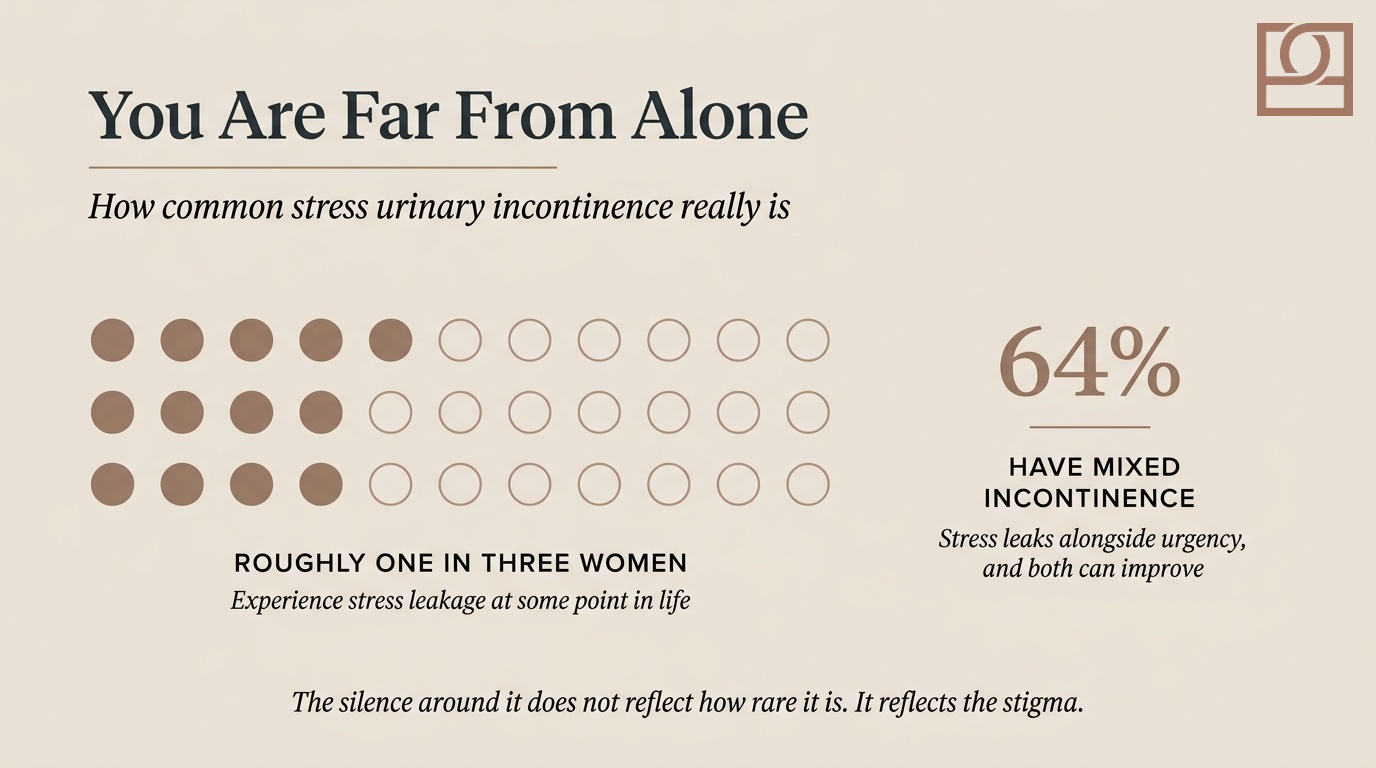
It happens during a sneeze. Or a laugh. Or during that moment in a yoga class when you shift into a standing split. Stress urinary incontinence is not about being incontinent in the clinical sense most people imagine. It is about the involuntary loss of urine at the exact moments when life demands the most from your body, whether that is a cardio class, a board meeting interrupted by a coughing fit, or simply a morning jog with a friend.
The experience is deeply personal and, for many women, profoundly embarrassing. Research cited by Premier Surgical Ireland confirms that SUI significantly affects quality of life, social participation, intimacy, and self-confidence, yet the majority of women never seek treatment. The reasons are consistent: stigma, the assumption that leaking is "just part of aging," and the fear that the only real solution involves major surgery.
If you are an active woman in your 30s, 40s, or 50s who has quietly started double-layering workout clothes, avoiding trampolines at your children's parties, or strategically positioning yourself near bathrooms at social events, you are not alone. Urology San Diego estimates that stress urinary incontinence affects roughly one in three women at some point during their lives. The silence around it does not reflect how rare it is. It reflects how little the conversation has been normalized.
You are not broken. Your body has changed, often because of the very things it has been through: childbirth, hormonal shifts, the natural aging of tissue. And you absolutely do not have to simply live with this.
When most people think about bladder leakage, the default explanation is a "weak pelvic floor." While that framing is not entirely wrong, it misses an important structural detail that changes how treatment is approached. For many women with SUI, the more precise diagnosis is intrinsic sphincter deficiency, or ISD.
The urethra is kept closed by a combination of mechanisms: the pelvic floor muscles that support the bladder neck, and the urethral sphincter itself, a ring of muscle and connective tissue that actively seals the urethra shut. When the sphincter loses its ability to generate sufficient closing pressure, which can happen due to tissue atrophy, nerve damage, scarring from prior surgery, or hormonal changes, even normal increases in abdominal pressure during a cough or sneeze are enough to overcome urethral resistance and cause leakage.
As explained by Boulder Medical Center, this is fundamentally a structural issue, not simply a matter of doing more Kegel exercises. The urethral tissue itself lacks sufficient volume and tone to maintain closure. That distinction matters enormously for treatment selection, because bulking agents like Bulkamid are specifically designed to address ISD by restoring the physical volume that the sphincter mechanism needs to function properly.
The contributing factors are ones many women in their 30s through 60s will recognize immediately: vaginal childbirth (especially multiple deliveries or instrumental delivery), the estrogen decline of perimenopause and menopause, prior pelvic surgeries including hysterectomy, and even long-term high-impact athletic training. Understanding that ISD has specific causes, rather than being a vague sign of bodily failure, is the first step toward choosing a targeted, effective solution.
Stress urinary incontinence exists on a spectrum, and the presence of urgency symptoms alongside stress leaks is more common than most patients realize. Pure stress urinary incontinence refers to leakage caused exclusively by physical exertion or abdominal pressure, with no component of urgency (the sudden, compelling need to urinate that results in leakage before reaching the bathroom). Mixed urinary incontinence, on the other hand, involves both stress and urgency components.
A landmark study published in the International Urogynecology Journal analyzing 2,710 women treated with Bulkamid found that 36% had pure SUI, while 64% presented with stress-predominant mixed incontinence. Both groups were eligible for and responded to Bulkamid treatment, with meaningful improvements in validated symptom scores.
Urodynamic studies play an important role in confirming the diagnosis. According to data published in the BJU International journal, 93 to 96% of women considered for Bulkamid undergo urodynamic testing prior to the procedure. These studies objectively measure bladder pressure, urethral resistance, and sphincter function, providing the kind of precision diagnosis that ensures the right treatment is selected for the right patient.
If you have been told your leaking is "just part of aging" and have never had a formal urodynamic evaluation, a proper diagnostic workup may reveal that you are an excellent Bulkamid candidate. The difference between living with vague advice and receiving an accurate diagnosis followed by a targeted intervention can be life-changing.
Pelvic floor physical therapy and lifestyle modifications, including weight management, caffeine reduction, and bladder training, remain appropriate first-line treatments for mild SUI, and they genuinely help some patients. But for women with confirmed intrinsic sphincter deficiency, the structural problem exceeds what exercise alone can resolve. No amount of voluntary muscle contraction can fully compensate for urethral tissue that has lost its tone and volume.
For years, that left a difficult gap in the treatment landscape. On one end: conservative measures that provided partial or temporary benefit. On the other end: midurethral sling surgery, the gold-standard intervention that delivers strong outcomes but requires an operating room, general or regional anesthesia, an incision, a permanent synthetic mesh implant, and a recovery measured in weeks. As research tracking search trends and patient interest in minimally invasive incontinence options confirms, demand for a middle-ground solution has been growing steadily.
The midurethral sling is a proven, highly effective procedure. But it is not the right choice for every woman. Many patients are not surgical candidates due to medical comorbidities. Others simply want to avoid general anesthesia, an implanted device, or the emotional and logistical weight of a surgical recovery. As explored by Denver Urology, Bulkamid fills that missing space in the treatment continuum, offering a clinically meaningful option that requires no operating room, no mesh, and no general anesthesia.
It is not a consolation prize. It is a carefully engineered, FDA-approved intervention that has demonstrated real-world effectiveness across multiple large-scale studies. For the right patient, it is the right choice, not just the "less scary" one.
Not all urethral bulking agents are created equal, and understanding the science behind Bulkamid helps explain why it has become the preferred option for providers and patients seeking a durable, well-tolerated minimally invasive incontinence treatment.
Bulkamid is a soft, cohesive hydrogel composed of 97.5% water and 2.5% cross-linked polyacrylamide polymer. Its composition is intentionally simple, designed to maximize biocompatibility while minimizing the risk of migration, immune reaction, or breakdown over time. As described by Ochsner Health, the homogeneous nature of the gel means there are no particulates that could travel through tissue or trigger a foreign body response.
Bulkamid received FDA approval specifically for the treatment of stress urinary incontinence due to intrinsic sphincter deficiency in adult women. This is a precise, well-defined indication, not a broad or off-label use. The FDA approval process required rigorous clinical trial data demonstrating both safety and effectiveness, which gives patients and providers a meaningful level of confidence that prior generations of bulking agents simply could not offer.
The gel is non-resorbable, meaning it is not broken down and absorbed by the body over time. This is a critical distinction from earlier bulking agents that required repeat injections as the material gradually disappeared. According to Greater Boston Urology, Bulkamid's long-term stability is one of its defining clinical advantages, positioning it as a treatment designed for lasting benefit rather than a temporary patch.
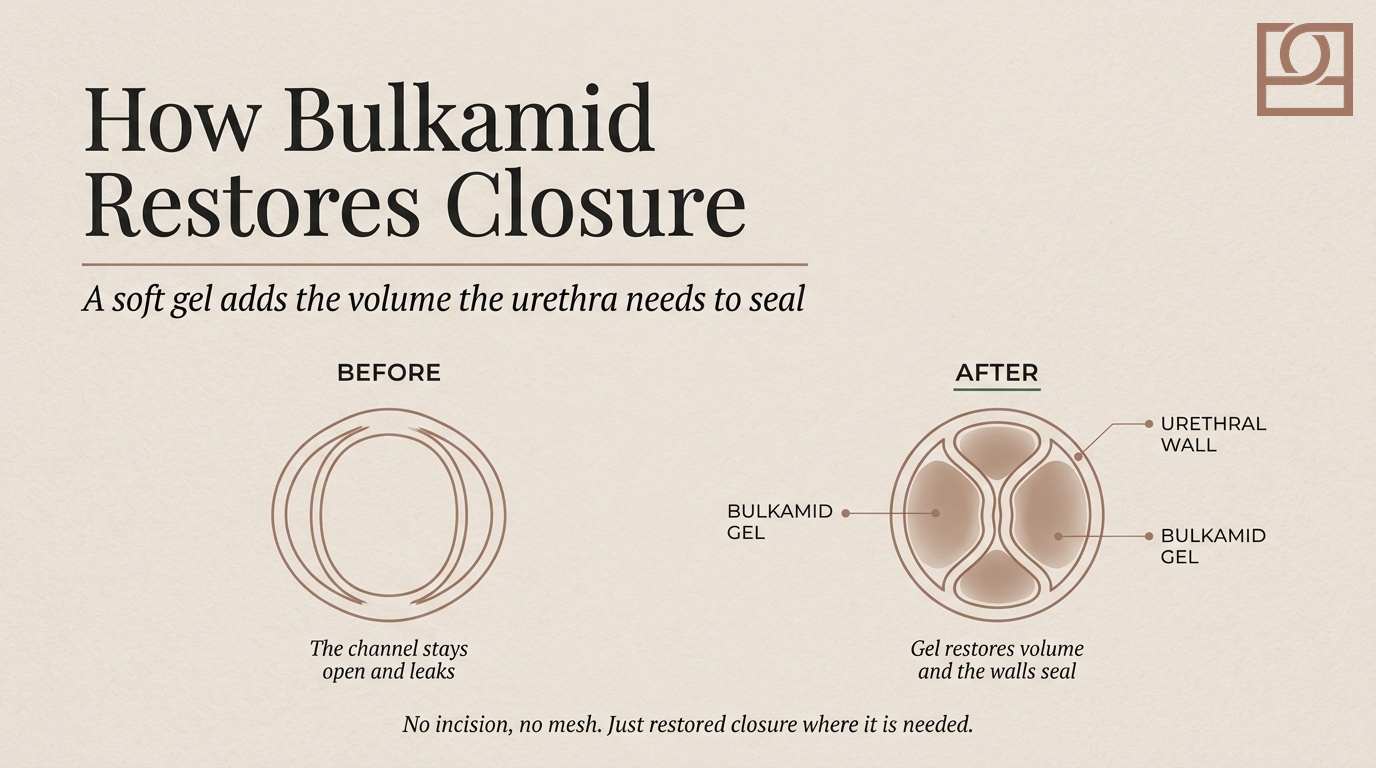
The mechanism of Bulkamid is elegant in its simplicity. During the procedure, the gel is injected into the soft tissue surrounding the urethra at the level of the bladder neck, the anatomical junction where the bladder meets the urethra and where the sphincter exerts its closing force. As explained by Georgia Urology, the injected gel restores volume to tissue that has thinned or atrophied, allowing the urethral walls to meet more effectively during moments of increased abdominal pressure.
The technical term for this effect is "coaptation," which refers to the ability of the urethral walls to come together and form a functional seal. Think of it as reinforcing a closing valve that has lost its gasket. The valve is still structurally present; it simply lacks the material volume needed to form a reliable seal. Bulkamid restores that volume without altering the underlying anatomy permanently, without cutting tissue, and without placing any foreign mesh or scaffold.
The result is a restored continence mechanism that functions the way it was designed to function, providing resistance against leakage during the exact moments, a sneeze, a sprint, a burst of laughter, that SUI makes unpredictable. According to Boulder Medical Center, most patients experience meaningful improvement in symptom severity within weeks of the procedure, with results stabilizing over the following months.
Urethral bulking is not a new concept. Clinicians have been injecting materials around the urethra to treat SUI for decades, and the history of those earlier agents illuminates exactly why Bulkamid represents such a significant advancement. Early bulking agents included bovine collagen, which was eventually discontinued due to rapid resorption (requiring repeated injections) and the need for allergy testing before use. Silicone-based agents raised concerns about particulate migration to distant lymph nodes. Carbon-coated zirconium beads offered more durability but were associated with their own migration concerns.
As documented by Science Insights, what distinguishes Bulkamid from all prior generations is its combination of properties: it is homogeneous (no particles that can migrate), non-resorbable (not broken down over time), and biocompatible (does not trigger significant immune response). Multi-year follow-up studies confirm that the gel remains stable in place without systemic distribution.
The practical implication for patients is significant. Earlier bulking agents often required patients to return for additional injections as the material was absorbed and symptoms returned. Bulkamid's durability means that for most patients, one treatment course delivers sustained results. As noted by Griffin Health, this "one treatment, lasting results" profile is one of the most frequently cited reasons patients and providers prefer Bulkamid over its predecessors.
The FDA approval of Bulkamid for SUI treatment in adult women was supported by a 228-patient clinical trial that systematically evaluated both safety and effectiveness. The trial data, cited by Urology San Diego, found that the most common reported side effect was injection site pain, occurring in approximately 12% of participants, which is consistent with the nature of any injection-based procedure and typically resolves quickly.
Long-term safety tracking has demonstrated no systemic concerns related to the polyacrylamide hydrogel composition. There are no reports of gel migration to distant anatomical sites, no evidence of carcinogenic risk, and no documented cases of immune-mediated disease attributed to Bulkamid in large-scale studies. As Science Insights documents, the safety data accumulated since the agent's widespread clinical adoption supports its use as a low-risk, high-tolerability option for appropriately selected patients.
For women who have spent years researching treatment options and reading alarming headlines about mesh complications, the Bulkamid safety profile offers something genuinely reassuring: a treatment backed by the kind of rigorous, transparent clinical data that actually earns trust, not just marketing language.
One of Bulkamid's most meaningful advantages is how manageable the entire treatment experience is from beginning to end. Understanding each phase from the initial diagnostic consultation through the recovery period helps set realistic expectations and removes the anxiety that often delays women from seeking care.
The path to Bulkamid begins with a thorough consultation that goes far beyond a quick symptom review. Your provider will take a detailed medical history including prior pregnancies and deliveries, pelvic surgeries, current medications, and a complete characterization of your incontinence symptoms, including when leaks occur, their frequency, and how significantly they affect your daily life. A physical examination will assess pelvic floor muscle strength, pelvic organ prolapse, and urethral mobility.
As confirmed by data from BJU International, 93 to 96% of patients considered for Bulkamid undergo urodynamic testing prior to the procedure. Urodynamic studies measure bladder pressure, urethral closure pressure, and sphincter function in a controlled setting, providing the objective confirmation that the leakage is indeed stress-type and related to intrinsic sphincter deficiency rather than urgency-driven or mixed in a way that would change treatment selection.
Additional pre-procedure steps may include a urinalysis to rule out active infection (which would temporarily delay the procedure) and a cystoscopy to evaluate the bladder and urethra directly. This is a collaborative process, not a conveyor belt. A skilled provider will take the time to explain what the testing shows, what it means for treatment planning, and what realistic outcomes look like for your specific anatomy and symptom pattern. As noted by PubMed-indexed research, shared decision-making and proper candidate selection are among the strongest predictors of patient satisfaction with Bulkamid outcomes.
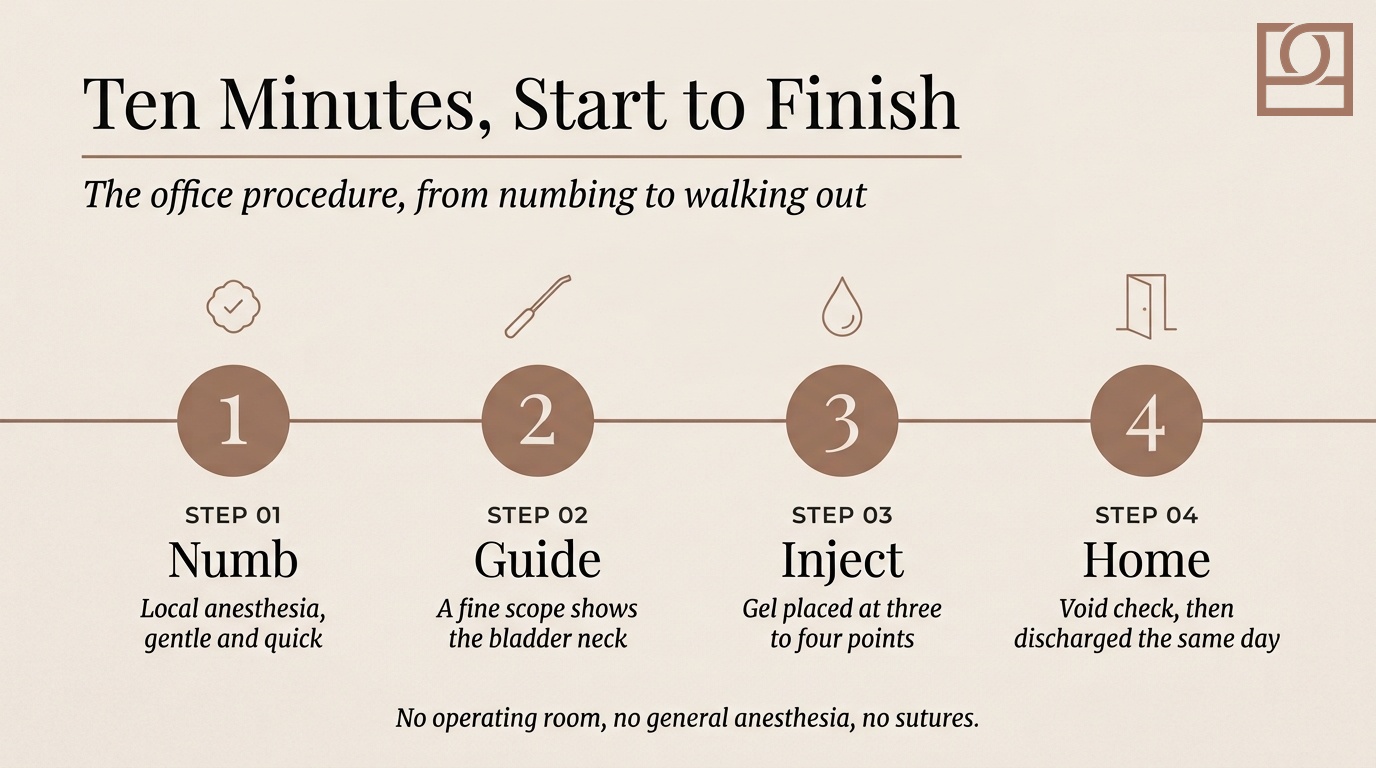
The actual Bulkamid procedure is remarkably efficient. It is typically performed in an office or procedure room under local anesthesia, which is applied topically or injected around the urethra to minimize discomfort. Some practices offer nitrous oxide (laughing gas) as an additional comfort measure for patients who experience anxiety. In surgical center settings, IV sedation may be available. No general anesthesia is required.
The procedure begins with the insertion of a specialized cystoscope through the urethra, allowing the provider to visualize the interior of the urethra and the bladder neck directly. Using a fine needle passed through the cystoscope, the provider injects small amounts of Bulkamid gel into the submucosal tissue at three to four evenly spaced sites around the circumference of the urethra. The total volume injected is small, typically measured in milliliters, but the strategic placement creates the coaptation effect that restores urethral closure.
According to Georgia Urology, the entire injection process takes approximately 10 minutes from cystoscope insertion to completion. There are no incisions. There are no sutures. There is no implanted mesh or foreign material other than the biocompatible gel itself. Most patients describe the experience as mildly uncomfortable rather than painful, and the majority are surprised by how quickly it is over. You will be in and out the same morning, without an operating room, without general anesthesia, and without the logistical weight of a surgical procedure.
After the injection is complete, you will be monitored briefly in the office before being asked to void (urinate) to confirm that you can do so comfortably. This void trial is a standard post-procedure check to ensure that the injected gel has not temporarily obstructed urinary flow. The majority of patients void successfully and are discharged the same day, often within an hour of the procedure.
Some patients experience mild urinary urgency, a slight burning sensation with urination, or very light spotting or blood-tinged urine immediately after the procedure. According to information from both the Northern Trust NHS and Women's Health South, these immediate effects are normal and typically resolve within 24 to 48 hours. They are a reflection of the body's natural response to the injection, not signs of a complication.
Post-procedure instructions are simple and straightforward. Most providers recommend avoiding heavy lifting for 48 hours, refraining from sexual activity for approximately one week, and staying well-hydrated to support urinary tract health. You will not need a urinary catheter for home use in the vast majority of cases, and there is no surgical wound to manage, no drain to care for, and no prescription pain medication required for most patients.
The Bulkamid recovery timeline is one of the most compelling aspects of the procedure for active, schedule-driven women who cannot afford weeks of restricted activity. According to Science Insights and Griffin Health, the typical progression looks like this:
Compare this to midurethral sling surgery, where recovery typically involves a catheter for at least the first 24 hours, restricted activity for four to six weeks, and the possibility of voiding dysfunction during the early healing phase. The Bulkamid recovery is not just faster; it is a fundamentally different experience, one that fits into a full, active life rather than requiring you to pause it.
Clinical evidence for Bulkamid has expanded significantly in recent years, with several large-scale studies providing outcome data that goes well beyond the original FDA trial. Here is what the most current research reveals about how well Bulkamid actually works in real-world practice.
A study published in Neurourology and Urodynamics evaluated outcomes in 284 women treated with Bulkamid, with a median follow-up of 6.7 months. Outcomes were measured using two validated, widely accepted instruments: the UDI-6 (Urogenital Distress Inventory) and the IIQ-7 (Incontinence Impact Questionnaire), which assess both the physical symptoms of incontinence and their impact on daily functioning and quality of life.
The results showed statistically significant improvements across both measures. Patients reported meaningful reductions in pad use, which is one of the most practical day-to-day indicators of treatment success. UDI-6 scores improved substantially, indicating reduced urinary frequency, urgency, stress leakage, and associated discomfort. IIQ-7 scores, which capture how much incontinence limits physical activity, travel, social participation, and emotional well-being, also showed clinically significant gains.
In human terms, these numbers translate to something powerful: most women went from daily or near-daily leaks and the constant mental management that accompanies them, to the kind of dry confidence that allows you to work out, travel, laugh, and live without planning every moment around your bladder. That shift in lived experience is what validated outcome measures are designed to capture, and Bulkamid delivers it in a meaningful, measurable way.
One of the more clinically significant findings in recent Bulkamid research involves its effect on the urgency component of mixed urinary incontinence. As established earlier, 64% of women in the large 2,710-patient cohort studied by the International Urogynecology Journal had mixed incontinence rather than pure stress leakage. This is important because mixed incontinence is generally considered more complex and harder to treat than pure SUI.
The data showed a clinically meaningful effect: treating the stress component of mixed incontinence with Bulkamid often improved urgency symptoms as well, even though the gel does not directly target urgency pathways. The likely explanation involves a reduction in what clinicians call "splinting behavior," where women unconsciously contract their pelvic floor to compensate for poor urethral closure, which can contribute to bladder overactivity over time. When Bulkamid restores more reliable urethral closure, the compensatory tension and its downstream effects on bladder function can diminish.
The practical implication is significant. If you have both stress leaks and urgency issues and have been told that your care plan needs to address each problem separately and sequentially, addressing SUI first with Bulkamid may simplify your overall treatment journey by improving urgency symptoms as a secondary benefit. This is not a guaranteed outcome for every patient, but it represents a meaningful possibility that a knowledgeable provider should discuss with you during consultation.
One of the most common concerns women raise about minimally invasive incontinence treatments is durability. If a treatment works, how long will it last? Do the results fade? Will you need to come back for more injections every few months?
The data from the Neurourology and Urodynamics study and from long-term outcome tracking reported by Griffin Health indicates that Bulkamid's non-resorbable composition delivers sustained benefit well beyond the first few months. Unlike collagen-based agents that were broken down by the body and required re-injection every six to twelve months, Bulkamid remains stable in the urethral tissue over multi-year follow-up periods.
For some patients, particularly those whose SUI is progressive due to ongoing hormonal changes or tissue aging, additional volume augmentation may provide incremental benefit after several years. This repeat injection option exists and is straightforward if needed, but it is not a routine requirement built into the treatment protocol. For most patients, the positioning is accurate: one treatment, years of meaningful relief, and an option for a future touch-up if circumstances change rather than a dependency on continued injections to maintain results.
Perhaps the most compelling evidence of Bulkamid's clinical versatility comes from studies examining its use in women who have already undergone sling surgery and continue to experience SUI. These are not straightforward cases. Prior surgery creates anatomical changes, potential scarring, and altered tissue planes that complicate any subsequent intervention.
A retrospective study cited in PubMed, reviewing outcomes in women treated with Bulkamid between 2019 and 2024 following sling revision for persistent SUI, found significant improvements in pad use and validated symptom scores (UDI-6 and IIQ-7) even in this complex population. The finding that Bulkamid can deliver meaningful benefit after a prior surgical treatment has failed carries important clinical and emotional weight.
If you have had surgery before and still struggle with leakage, the conversation about your options is not over. Effective post-surgical interventions mean there is still a clinically supported path forward, not just sympathy and a recommendation to "manage it." That is exactly the kind of second-chance medicine that a comprehensive women's health practice is positioned to offer.
Both Bulkamid and the midurethral sling are legitimate, evidence-supported treatments for stress urinary incontinence. They are not in competition; they serve different patient profiles with different risk tolerances, anatomical presentations, and life circumstances. Understanding how they compare allows for genuinely informed decision-making.
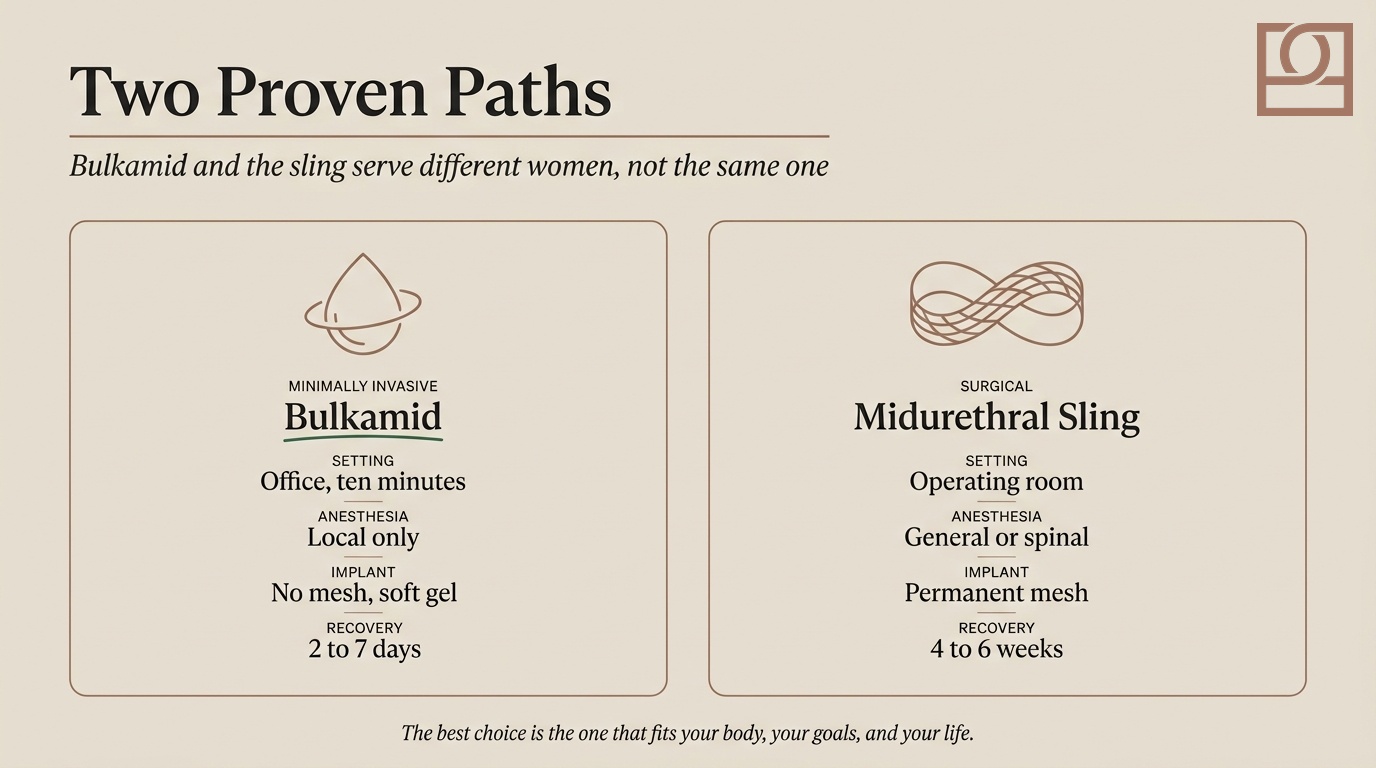
The procedural contrast between Bulkamid and sling surgery is stark. Bulkamid is performed in an office or outpatient procedure room under local anesthesia. The procedure takes about 10 minutes and involves no incisions, no implanted mesh, and no general anesthesia. Recovery is measured in days. According to Denver Urology, patients are typically back to their normal routines within 48 to 72 hours.
A midurethral sling, by contrast, is performed in an operating room under general or regional (spinal) anesthesia. The procedure involves small incisions in the vaginal wall and either the abdomen or inner thighs, through which a synthetic mesh tape is threaded and positioned under the mid-urethra. Surgery typically takes 30 to 60 minutes, and recovery involves restricted activity for four to six weeks, a higher risk of early voiding dysfunction, and the ongoing presence of a permanent implant.
| Treatment Feature | Bulkamid Urethral Bulking | Midurethral Sling Surgery |
|---|---|---|
| Procedure setting | Office or outpatient procedure room | Operating room |
| Anesthesia type | Local (nitrous or IV sedation optional) | General or regional (spinal) |
| Procedure duration | Approximately 10 minutes | 30 to 60 minutes |
| Incisions required | None | Yes (vaginal and abdominal or groin) |
| Implanted material | Biocompatible hydrogel (no mesh) | Permanent synthetic mesh tape |
| Typical recovery time | 2 to 7 days to normal activity | 4 to 6 weeks restricted activity |
| Reversibility | Does not alter anatomy permanently | Permanent implant, complex to revise |
| Efficacy for mild to moderate SUI | Significant symptom improvement in the majority | High cure rates across severity spectrum |
| Efficacy for severe SUI | May be less effective than sling | Preferred option for severe cases |
The key takeaway is that Bulkamid and the midurethral sling occupy different but complementary positions in the treatment landscape, and the best choice depends on the individual patient's symptom severity, anatomy, medical history, and personal preferences.
Midurethral sling surgery shows cure or significant improvement rates of 80 to 90% across published studies, making it one of the most effective treatments for SUI. For women with severe, high-volume stress leakage, particularly those with significant urethral hypermobility, the sling's efficacy profile is genuinely difficult to match with any less-invasive alternative.
Bulkamid delivers significant symptom improvement in the majority of appropriately selected patients, particularly those with mild to moderate SUI and confirmed ISD. As BJU International reports, Bulkamid outcomes are most favorable when patient selection is precise, underscoring the importance of thorough pre-procedure evaluation.
This is not a case of one treatment being categorically "better." It is a case of matching treatment to patient. A woman with mild to moderate SUI who has confirmed ISD, has already tried conservative measures, and wants to avoid surgery and mesh may experience life-changing results with Bulkamid. A woman with severe SUI and high urethral hypermobility may be better served by the sling. As Denver Urology frames it, the best treatment is the one that fits your body, your goals, and your life.
Both Bulkamid and sling surgery carry risks, and transparency about those risks is essential to informed consent. Bulkamid's risk profile includes temporary urinary retention (the most clinically significant early complication, discussed in detail in the next major section), urinary tract infection, and injection site pain, which occurred in approximately 12% of patients in the FDA trial. Serious or long-term complications are rare.
The sling's risk profile is different in character. Mesh erosion (where the synthetic tape erodes through vaginal tissue) occurs in a small but meaningful percentage of patients. Chronic pelvic pain, voiding dysfunction, and de novo urgency (new urgency symptoms that were not present before surgery) are documented complications. Revision surgery for mesh complications, while uncommon, is more complex and invasive than the original procedure. As Science Insights documents, neither treatment is risk-free, but the risk profiles differ significantly in both character and severity.
The decision-making framework here is not about avoiding all risk; it is about choosing the risk profile you can most comfortably live with given your specific health history, anatomy, and personal values. A thoughtful provider will help you weigh these considerations honestly rather than pushing any single treatment as the universal answer.
One of Bulkamid's most strategically important characteristics is what it does not do: it does not permanently alter your anatomy or foreclose future treatment options. If Bulkamid provides partial but not complete relief, or if symptom progression occurs years later, sling surgery remains a viable next step. The gel does not create the kind of anatomical disruption that would make subsequent procedures technically more difficult.
This is in contrast to sling surgery, which places a permanent implant. If the sling requires revision due to complications or insufficient efficacy, the procedure is significantly more complex than the original surgery, and the anatomical territory is less straightforward to navigate. As noted in the PubMed study on Bulkamid after sling revision, even women who have already had sling surgery can benefit from subsequent Bulkamid treatment, which speaks to the complementary rather than competitive relationship between these two options.
For women who are uncertain about committing to surgery, Bulkamid offers a genuinely low-commitment, high-reward entry point into incontinence treatment. It is not a compromise; it is a strategically sound first-line intervention that preserves all future options while delivering real, measurable relief.
As Bulkamid has grown in clinical adoption, the question of where the procedure should be performed has attracted genuine research interest. The answer is more nuanced than a simple recommendation, and understanding the trade-offs helps patients make an informed choice in partnership with their provider.

An increasing number of urology and gynecology practices now offer Bulkamid as a fully in-office procedure under local anesthesia. The advantages of this setting are real and meaningful for many patients. There are no facility fees associated with an operating room or ambulatory surgery center booking, which can significantly reduce out-of-pocket costs. There is no need for pre-operative medical clearance, pre-anesthesia bloodwork, or the logistical preparation typically required before a surgical procedure. You arrive, have the procedure, and leave, often within 60 to 90 minutes total.
For the target patient, an accomplished woman with a full schedule who has been carefully managing her time and privacy around this health concern, the in-office setting aligns with both practical needs and preferences. According to Georgia Urology and PubMed-indexed research, the office setting has become the predominant environment for Bulkamid delivery in the United States, and outcomes data across large patient populations confirms its viability.
There is one important caveat to the in-office model that deserves transparent discussion: urinary retention rates. A retrospective review of 155 Bulkamid procedures performed between 2020 and 2024, published by PubMed and analyzed by UroToday, found that patients undergoing Bulkamid in an office setting experienced higher rates of immediate postoperative urinary retention compared to those treated in a surgical center setting.
The reasons for this finding are clinically logical. Local anesthesia can temporarily affect sphincter and bladder neck function. The degree of sedation available in an office setting is typically lighter, and patient anxiety (which can inhibit voiding) may be less well-managed than in a setting where IV sedation is available. Additionally, the post-procedure observation period in an office is typically shorter, leaving less time for the anesthetic effects to resolve before the void trial.
Urinary retention in this context is typically temporary and manageable. If a patient is unable to void after Bulkamid, a temporary in-and-out catheterization or short-term catheter placement allows normal voiding to resume once local anesthetic effects dissipate. It is rarely a serious complication, but it does require clinical management and, in some cases, a brief extended observation period or a return visit.
For certain patients, the surgical center environment offers meaningful advantages that outweigh the convenience of the office setting. Candidates who may be better suited to a surgical center include women with significant procedural anxiety for whom deeper sedation (IV sedation or twilight anesthesia) would improve the experience, those with complex pelvic anatomy that may make cystoscopy more challenging under minimal anesthesia, and patients with a prior history of urinary retention after any procedure.
A surgical center also provides a longer standard observation window and easier access to catheterization if retention occurs, which aligns with the retention rate data cited above. As PubMed research confirms, the surgical center setting is not inherently "better" for Bulkamid outcomes overall. The choice is about matching the clinical environment to the individual patient's needs rather than applying a one-size-fits-all approach. According to the same UroToday analysis, symptom relief outcomes were comparable between settings, confirming that efficacy is not compromised by either choice.
Every patient should feel empowered to discuss the procedure setting openly with their provider. The following questions will help you gather the information you need to make a confident, informed decision:
According to the Neurourology and Urodynamics data, symptom relief is comparable across settings when Bulkamid is properly performed. When you choose a setting, you're optimizing for safety, comfort, and confidence that your individual needs have been considered. You deserve transparency, not a predetermined protocol, and a plan that fits your specific comfort level and health profile.
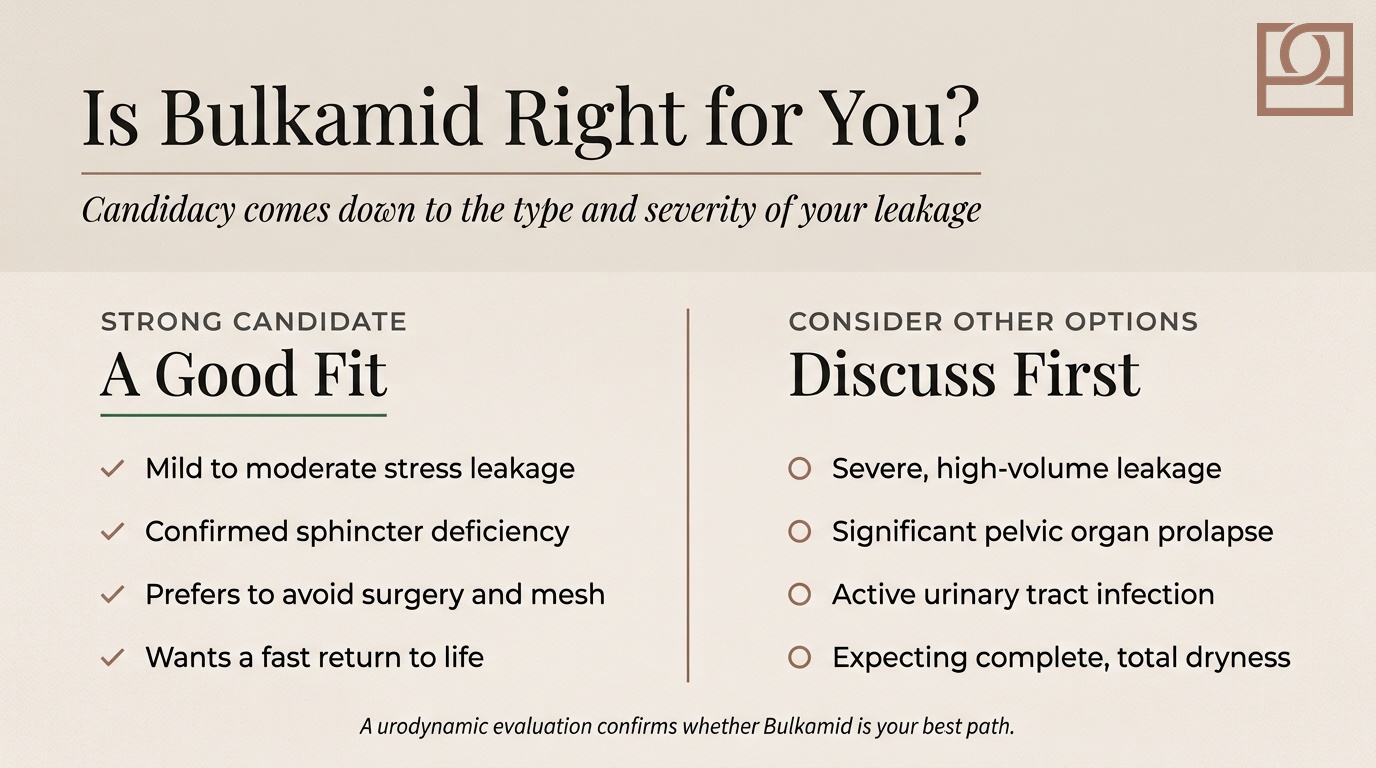
Bulkamid is not the right choice for every woman with incontinence, and the strength of its outcomes depends heavily on appropriate patient selection. Understanding candidacy criteria honestly empowers you to have a productive conversation with your provider rather than arriving with fixed expectations.
The women who tend to experience the most meaningful benefit from Bulkamid share a consistent clinical profile. They have confirmed stress urinary incontinence or stress-predominant mixed incontinence, with urodynamic evidence of intrinsic sphincter deficiency. They have typically tried and found insufficient relief from conservative measures such as pelvic floor physical therapy, bladder training, or pessary use. And they have a clear preference for a minimally invasive approach with rapid recovery over a surgical option.
As cited by Urology San Diego and the International Urogynecology Journal, ideal candidates have completed childbearing. Pregnancy after Bulkamid is not technically contraindicated, but the physical changes of pregnancy and vaginal delivery could affect the gel's positioning and reduce the durability of outcomes. Having an honest conversation about family planning is an important part of the pre-procedure discussion.
Women in the perimenopause and menopause transition are often excellent candidates, particularly when combined with a parallel program of pelvic floor rehabilitation and hormone optimization to address the hormonal contributors to tissue atrophy. Bulkamid addresses the structural deficit; concurrent hormonal and pelvic support addresses the underlying physiological environment.
For women who have researched sling surgery and have concerns about synthetic mesh, Bulkamid represents a clinically validated alternative that sidesteps those concerns entirely. There is no mesh in Bulkamid. There is no implanted synthetic device. The concerns about mesh erosion, chronic pain, and complex revision procedures that have driven significant public and legal attention over the past decade simply do not apply.
As noted by Denver Urology and Greater Boston Urology, many women who present explicitly asking about non-mesh alternatives are excellent Bulkamid candidates, particularly when their SUI is mild to moderate in severity. The desire to avoid mesh is a medically valid preference, not an overreaction, and Bulkamid is an evidence-based way to honor that preference without compromising on effectiveness.
Crucially, choosing Bulkamid as a first-line option does not close the door on sling surgery in the future. If a patient tries Bulkamid and finds the results insufficient, sling surgery remains available. Bulkamid does not open any new doors and does not close any existing ones.
Bulkamid has demonstrated clinical value in several populations that were once considered challenging to treat or for whom re-operation carried significant risk. Women who have previously undergone midurethral sling surgery and continue to experience SUI, either because the sling was insufficient or because it was revised due to complications, represent one of the most encouraging special populations. The PubMed retrospective study of post-sling patients treated with Bulkamid between 2019 and 2024 demonstrated meaningful improvements in both objective measures and patient-reported quality of life, confirming that prior surgical failure is not a barrier to Bulkamid efficacy.
Post-radiation patients with SUI present a more complex picture. Pelvic radiation creates tissue changes, including fibrosis and reduced vascularity, that complicate many interventions. While dedicated large-scale studies in this population are limited, the theoretical advantage of Bulkamid in this setting is that it avoids additional tissue trauma, relies on existing anatomical structures rather than creating new ones, and does not introduce a synthetic implant into compromised tissue. Research reviewed on Eureka Mag notes that patients with neurogenic bladder dysfunction have also been included in some Bulkamid cohorts, though evidence in this group is more limited and candidacy requires individualized assessment by a provider experienced with complex pelvic floor disorders.
Honesty about Bulkamid's limitations matters as much as enthusiasm for its strengths. Women with severe, high-volume stress urinary incontinence, particularly those who leak with minimal exertion or at rest, may not achieve the degree of symptom control that Bulkamid can deliver. For this group, the structural deficit may be beyond what urethral bulking alone can adequately address, and the superior efficacy of midurethral sling surgery may offer a better risk-benefit balance.
Women with significant concurrent pelvic organ prolapse (cystocele, uterine prolapse, or rectocele) that requires surgical correction are generally better served by addressing the prolapse surgically and considering sling placement at the same time, if appropriate. Combining prolapse repair with Bulkamid injection is less studied and may not produce optimal outcomes from either intervention.
Active urinary tract infection is a temporary contraindication; the procedure should be deferred until the infection has fully cleared. Unrealistic expectations are also an important consideration. As noted by BJU International, Bulkamid consistently improves symptoms in appropriately selected patients. It is not a guarantee of 100% dryness for every woman, and patients who expect complete cure rather than significant improvement may find their outcomes disappointing even when the clinical result is objectively excellent. Calibrating expectations is part of good pre-procedure counseling.
Stress urinary incontinence does not exist in isolation. It is part of a broader physiological landscape that includes hormonal changes, pelvic floor function, tissue health, and quality of life across multiple dimensions. The most effective approach treats the symptom directly while also supporting the broader system it belongs to. That philosophy defines genuinely integrated women's health care.
The conventional model of women's health care is fragmented by design. Gynecology handles one set of concerns. Urology handles another. Aesthetics, hormone management, and pelvic health are treated as separate domains, managed by separate specialists in separate facilities. The patient becomes the person responsible for synthesizing all of those conversations into a coherent personal health picture, which is an unreasonable burden to place on anyone.
A genuinely integrated approach recognizes that the urethra, the pelvic floor, the hormonal milieu, and the vaginal tissue are not separate systems. They are components of a single, interconnected anatomical and physiological environment. Treating SUI in isolation, without considering the hormonal status driving tissue atrophy, the pelvic floor function that modulates urethral support, or the aesthetic and intimacy concerns that often co-exist with incontinence, is treating a symptom rather than a person.
Bulkamid is elegantly suited to an integrated care model because it addresses a discrete structural problem without disrupting the surrounding environment. It does not require weeks of recovery that interrupt ongoing physical therapy, hormone optimization, or aesthetic treatment plans. It slots cleanly into a comprehensive health strategy rather than replacing one. For patients receiving care through a practice that takes Gynecology and women's wellness seriously as a unified discipline, Bulkamid becomes one coordinated component of a broader plan rather than a standalone referral to a separate specialist.
Stress urinary incontinence does not emerge from nowhere. It develops within a specific physiological context, and that context changes across a woman's life. In the postpartum period, the culprit is often direct trauma to pelvic floor musculature and connective tissue during vaginal delivery. In perimenopause and beyond, declining estrogen is the primary driver of urethral tissue atrophy, reduced sphincter tone, and changes in collagen composition that make the urethral closure mechanism progressively less effective.
Addressing Bulkamid in isolation from these hormonal realities is treating the symptom but not the environment that produced it. Concurrent hormone optimization, whether through bioidentical hormone replacement therapy or other approaches tailored to the individual patient's health history, supports urethral and vaginal tissue health at the cellular level. It does not replace the structural benefit that Bulkamid provides, but it creates a more favorable tissue environment in which those results can be maintained over time.
The example patient journey looks like this: Bulkamid for immediate, structural relief of SUI symptoms, concurrent initiation of bioidentical HRT to support vaginal and urethral tissue health, and ongoing pelvic floor physical therapy to optimize muscle coordination and long-term sphincter support. Each component addresses a different dimension of the problem. Together, they produce a more durable, more complete outcome than any single intervention could achieve alone.
Patients who present with incontinence often carry a cluster of related concerns that they may not have yet connected or voiced: vaginal dryness, reduced sensation, changes in tissue laxity, or discomfort during intimacy. These are not vanity concerns; they are quality-of-life concerns that deserve clinical attention as part of a whole-patient approach to pelvic and sexual health.
Bulkamid can be thoughtfully coordinated with a range of complementary minimally invasive treatments in a phased approach. CO2 laser vaginal rejuvenation and radiofrequency-based treatments address vaginal laxity and dryness by stimulating collagen remodeling in the vaginal tissue. Platelet-rich plasma (PRP) therapies support tissue regeneration. ThermiVa and similar energy-based devices are used for external vulvar rejuvenation. None of these treatments conflict with Bulkamid, and several address the same hormonal and tissue-level changes that contribute to SUI.
The value of a practice that understands how these treatments work together is not just convenience, although the ability to address multiple concerns under one roof is genuinely significant for women managing busy lives. It is the clinical benefit of having a provider who thinks about your pelvic health as an integrated system and designs a care plan accordingly, one consultation producing a comprehensive strategy with results that compound and reinforce each other.

There is a tendency in medicine to reserve the highest level of attention, service, and environmental quality for the most complex procedures. A 10-minute injection typically does not come with a private suite, a climate-controlled recovery space, a dedicated aftercare nurse, or a care team available for follow-up questions. But the principle that every patient deserves world-class care, regardless of procedure complexity, distinguishes genuinely exceptional practices from merely competent ones.
The Practice Healthcare was built on exactly that principle. From the 12,000-square-foot facility with its private entrance to the four-week dedicated aftercare nurse program, every aspect of the patient experience reflects the understanding that the procedure is one part of the experience, and the environment, communication, follow-through, and relationship make up the rest. Whether a patient is undergoing a major reconstructive surgery or a 10-minute Bulkamid injection, the commitment to a hospitality-grade experience that complements the clinical quality of care does not change.
An experienced OB-GYN who understands the full spectrum of pelvic floor health, hormonal contributors to incontinence, and the range of minimally invasive treatment options brings a level of clinical nuance to the Bulkamid consultation that simply cannot be replicated in a high-volume, low-touch clinical setting. Post-procedure check-ins, accessible communication with the care team, and proactive monitoring of how symptoms evolve in the weeks after treatment are all part of delivering care that doesn't end when you go home.
For women who have spent years managing SUI quietly and privately, often with a combination of strategic planning and quiet embarrassment, finding a practice that treats this concern with the same clinical seriousness and dignified service it brings to every other aspect of women's health is itself a form of relief before the procedure even begins.

Bulkamid represents one of the most significant advances in the management of stress urinary incontinence in recent decades, precisely because it addresses a gap that has existed in the treatment landscape for a long time. Between the inadequacy of pelvic floor exercises alone for women with confirmed intrinsic sphincter deficiency and the significant surgical commitment of midurethral sling placement, there was no middle ground with strong clinical backing, a favorable safety profile, and a recovery that fit real life. Bulkamid fills that space.
Its composition as a durable, non-resorbable, biocompatible hydrogel distinguishes it from every prior generation of urethral bulking agents. Its 10-minute office-based procedure profile distinguishes it from every surgical alternative. And its expanding body of real-world outcome data, including meaningful symptom relief in the majority of appropriately selected patients, efficacy in complex post-surgical cases, and incidental improvement in urgency symptoms alongside stress leakage, distinguishes it as a treatment that earns its clinical reputation.
Choosing a provider matters. Bulkamid's outcomes depend not only on the quality of the gel itself but on the precision of the diagnosis, the skill of the injection technique, the thoughtfulness of the aftercare, and the degree to which the treatment is integrated into a broader understanding of the patient's pelvic health, hormonal status, and personal goals. A practice that brings that level of attention to a 10-minute procedure is one worth seeking out.
If you have been living with stress urinary incontinence and have been waiting for a solution that meets your standards for clinical excellence and minimal disruption to your life, the wait is over. The conversation starts with a consultation, a thorough evaluation, and a provider who treats your concerns with the seriousness and care they deserve. The Practice Healthcare is that partner for women who expect both world-class medicine and a world-class experience at every stage of their care.
Bulkamid is an FDA-approved soft hydrogel composed of 97.5% water and 2.5% cross-linked polyacrylamide polymer. Doctors inject it into the tissue around the urethra to treat stress urinary incontinence (SUI) by restoring volume to the urethral wall and improving its ability to seal shut during physical activity.
The actual injection procedure takes approximately 10 minutes and is typically performed in an office or outpatient procedure room under local anesthesia. Total visit time, including preparation and post-procedure observation, is usually 60 to 90 minutes, and most patients are discharged the same day.
Bulkamid is a non-resorbable gel, meaning the body does not break it down over time, which distinguishes it from earlier bulking agents like collagen that required frequent repeat injections. Most patients experience sustained benefit without needing additional treatment, although a touch-up injection is an option years later if needed.
Midurethral sling surgery demonstrates cure or improvement rates of 80 to 90% and is generally more effective for severe SUI. Bulkamid delivers significant symptom improvement in the majority of appropriately selected patients with mild to moderate SUI, without surgery, mesh, general anesthesia, or extended recovery. The best choice depends on symptom severity, anatomy, and patient preference.
The most common side effects include injection site pain (reported in approximately 12% of patients in the FDA trial), temporary urinary urgency, and mild blood-tinged urine, all of which typically resolve within 24 to 72 hours. Temporary urinary retention is the most clinically significant early complication and is more common in office settings than surgical center settings, but it is manageable with catheterization and resolves without long-term consequences in most cases.
No. Bulkamid contains no synthetic mesh, synthetic tape, or implanted foreign device. It is a biocompatible, water-based hydrogel, making it a mesh-free alternative to midurethral sling surgery for appropriately selected patients.
Women with severe, high-volume stress urinary incontinence may achieve better outcomes with sling surgery. Those with active urinary tract infections, significant concurrent pelvic organ prolapse requiring surgical correction, or unrealistic expectations about achieving 100% dryness may not be ideal candidates. Candidacy requires a thorough evaluation including urodynamic testing.
Yes. A retrospective study reviewing outcomes in women treated with Bulkamid after sling revision for persistent SUI (2019 to 2024) found significant improvements in pad use and validated symptom scores even in this complex population. Bulkamid does not require anatomical conditions that a prior sling would compromise.
Most patients begin noticing symptom improvement within two to four weeks as the gel settles into position and the tissue adapts. Results typically stabilize by the second month following the procedure, and no ongoing maintenance or restrictions are required for the majority of patients.
Insurance coverage for Bulkamid varies by plan and payer. Because Bulkamid is FDA-approved for a specific indication (SUI due to intrinsic sphincter deficiency), it may be eligible for coverage under many plans, particularly when conservative treatments have been documented as insufficient. A practice with dedicated insurance advocacy support can help navigate prior authorization and coverage questions on your behalf.
Bulkamid is injected into the urethral wall tissue to treat stress urinary incontinence by adding volume and improving urethral closure. Botox for bladder issues is injected into the bladder muscle itself to treat overactive bladder and urgency urinary incontinence by temporarily reducing involuntary bladder contractions. These are different treatments for different types of incontinence and are not interchangeable.
Yes. Bulkamid can be coordinated with complementary treatments including pelvic floor physical therapy, hormone optimization, CO2 laser vaginal rejuvenation, radiofrequency treatments, and PRP therapies in a phased approach. The minimally invasive nature of Bulkamid and its brief recovery period make it compatible with concurrent or sequential treatment planning for related pelvic health concerns.