


Share this post


If you are reading this because something has changed since your first breast surgery, you are not alone, and you are not starting over. Breast procedures of all kinds, from initial augmentation to complex reconstruction, are rarely the final word on how your body looks and feels over decades. For tens of thousands of women each year, breast revision surgery is the most important surgical decision they make in a lifetime of body stewardship. This guide covers everything you need to navigate that decision with clarity, confidence, and the right clinical information.
For most of the history of cosmetic surgery, revision was quietly framed as a correction, a reluctant return to the operating room after something went wrong. That framing is outdated. Breast revision surgery has evolved into an expected component of long-term breast care, no different in spirit from updating a skincare routine or revisiting hormone therapy as your body changes across decades. The most discerning patients now plan for it before they need it, and the data supports that wisdom.
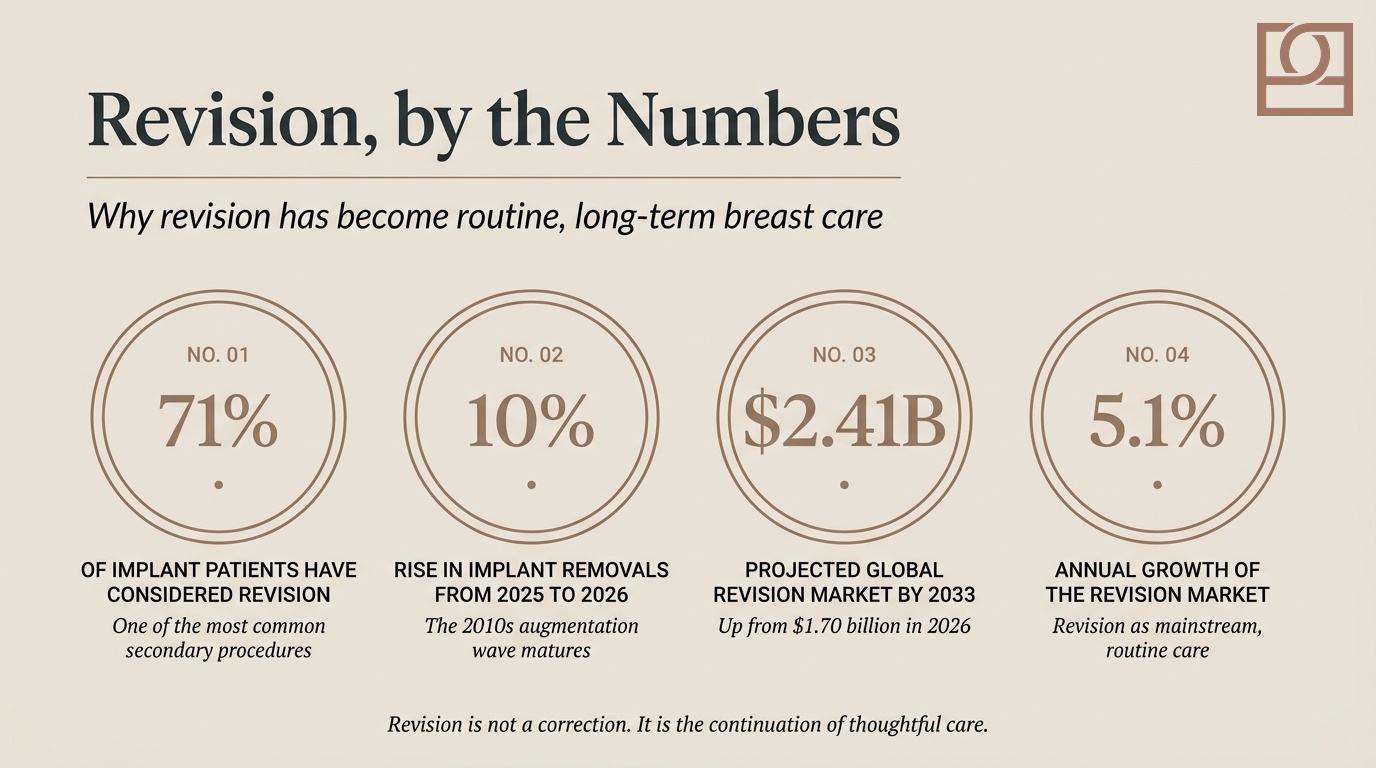
The breast revision surgery market was valued at $1.70 billion in 2026 and is projected to reach $2.41 billion by 2033, growing at a compound annual rate of 5.1%. That is not a niche procedure. That is a mainstream category of care, growing at the pace of wellness itself.
Breast implants are engineered for longevity, but they were never designed for lifetime use. Implants are not lifelong devices; they are subject to mechanical wear, material degradation, and the relentless biological forces of aging, weight change, pregnancy, and gravity. Understanding this upfront transforms how you think about your original surgery. It was not a one-time fix. It was the beginning of a relationship between your body and a device that will change alongside you.
Technological improvements in implant design mean patients with older devices can meaningfully improve outcomes by choosing revision. Cohesive silicone gel implants available today bear little resemblance to the devices placed ten or fifteen years ago. Form-stable anatomical shapes, improved surface textures, and more refined size profiles give revision patients options their original surgeons didn't have. Your body at 35 is genuinely different from your body at 50, and revision keeps your breast care in step with that reality.
The numbers tell a compelling story. Breast implant removals and revisions increased by 10% from 2025 to 2026, a surge that tracks directly to the cohort of patients who underwent primary augmentation during the implant boom of the 2010s. Those patients are now 10 to 15 years out from their original procedures, which is precisely when biological and material changes begin to show most visibly. The wave is predictable, and the surgeons best prepared to handle it are those who have been training for it.
Cultural factors are accelerating the trend as well. Social media has normalized transparency around revision in ways unimaginable a generation ago. Influencers, physicians, and everyday patients openly discuss their revision journeys, dissolving the stigma that once kept women silent about secondary procedures. The result is a more informed, less ashamed patient population, one that pursues revision proactively rather than waiting until a complication becomes unavoidable. The surge is not about dissatisfaction. It is about elevated standards, better information, and the confidence to act on both.
The patients who achieve the best long-term outcomes are the ones who stopped thinking about breast surgery as a single event and started thinking about it as an ongoing relationship. This mindset mirrors what has happened in other areas of women's health: skincare is iterative, hormone therapy is adjusted over time, and wellness programs evolve as your body and goals change. Breast care is no different. The most sophisticated patients schedule annual check-ins, maintain imaging schedules, and stay in dialogue with their surgical team long after the original incisions have healed.
This is precisely the model that defines truly integrated breast care, where revision is not an afterthought but a built-in expectation of the original care plan. If your surgeon treats your first augmentation as the final chapter, find a new surgeon. Practices built for the long term design their aftercare ecosystems with revision in mind from day one. In this framing, breast revision surgery is not a detour. It is the natural continuation of the path you started.
There is a version of the story where revision means something went wrong, the surgeon erred, or the patient chose poorly. That version exists, and it is worth acknowledging honestly. But it represents a minority of the revision landscape. Far more often, revision is what happens when a thoughtful woman with high standards applies her current knowledge and aesthetic sensibility to a decision she made years earlier, often with less information, less maturity, and different life circumstances.
High-achieving women who invest in their health and appearance routinely treat revision as refinement rather than repair. Choosing revision demonstrates body literacy: you understand your anatomy, you know what has changed, and you are proactive enough to address it before a minor issue becomes a major complication. That is not regret. That is intelligent self-care, and it is the defining quality of the patients who achieve and sustain the most beautiful long-term results.
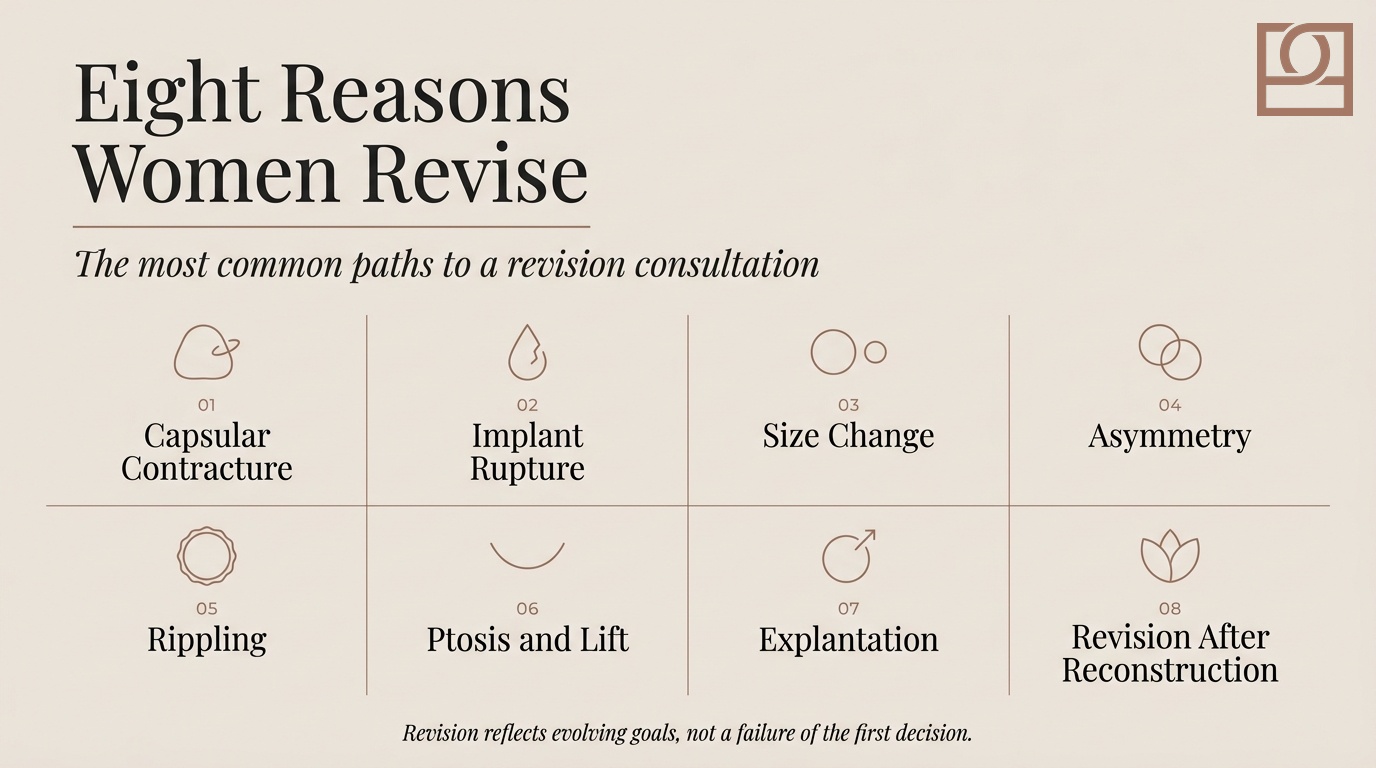
Breast revision surgery is not a single procedure. It is an entire category of surgical care, encompassing everything from swapping an implant size to correcting complex deformities that developed years after a technically sound original operation. Understanding the range of reasons women seek a revision consultation helps you recognize your situation and communicate it clearly to your surgeon.
Capsular contracture is the most frequent medical reason for breast revision surgery, and it can develop in any patient regardless of the skill of the original surgeon or the quality of the implants used. When a foreign body is placed in tissue, the body naturally forms a fibrous capsule around it. In most patients, this capsule remains soft and invisible. In others, the capsule thickens, tightens, and distorts the implant, causing hardness, visible shape changes, and in advanced cases, significant pain.
Surgeons classify capsular contracture using the Baker grading scale, from Grade I, where the breast feels normal, through Grade IV, where the breast is hard, painful, and visibly distorted. Grades III and IV virtually always require surgical intervention. Revision surgery for capsular contracture typically involves removing the scar tissue and replacing the implants, often combined with a pocket change to reduce recurrence risk. Understanding capsular contracture and its progression is essential for any implant patient, and knowing how to prevent capsular contracture through lifestyle and monitoring habits is equally important. Even biology's most predictable responses can be managed with the right expertise and approach.
Implant rupture is a structural failure, not a personal one. Saline implants deflate visibly and quickly when the shell fails, making detection straightforward. Silicone implants are more nuanced: the cohesive gel may stay largely in place after rupture, a situation called "silent rupture" that can go undetected without imaging. The FDA currently recommends MRI screening at five to six years after silicone implant placement and every two to three years thereafter specifically to catch these events early.
Rupture is rarely an emergency in terms of immediate health risk, but it does require intervention. The opportunity within that intervention is significant. When you undergo implant replacement for rupture, you have the chance to reassess everything: size, shape, material, pocket position, and whether a lift or other refinement would serve your current goals. Many women emerge from a rupture revision with results meaningfully better than their original surgery, simply because technology and their own aesthetic clarity have improved in the intervening years.
Life stages transform the body in ways that make original implant choices feel misaligned. Post-pregnancy breast tissue changes, significant weight loss, and the physical shifts of perimenopause and menopause all alter how implants sit, project, and proportion against the surrounding anatomy. A volume that felt balanced at 28 may read as too large at 45, especially as lifestyle priorities shift toward fitness, professional presence, and a more natural silhouette.
Cultural aesthetics also evolve, and patients who chose maximum projection during a particular aesthetic era now frequently seek revision toward softer, more proportionate results. The reverse is equally true: some patients who initially chose conservative sizes find that their goals have grown bolder with age and confidence. Breast augmentation vs breast lift discussions frequently become part of size-change revision consultations, as the two decisions are deeply interconnected when tissue has changed significantly. Your body is not static, and your aesthetic should not be expected to stay fixed either.
Even technically excellent primary surgeries can result in asymmetry over time. Implants can shift, rotate, or settle unevenly as tissue changes and gravity applies its consistent pressure. Specific deformities have clinical names: "bottoming out" describes an implant that has migrated downward, creating a low nipple-to-fold distance. "Symmastia" describes implants that have migrated toward the midline, creating a windowshading effect across the cleavage. "Double bubble" deformity occurs when the implant sits below the natural breast fold, creating a visible ledge.
Revision surgery addresses asymmetry, implant rupture, capsular contracture, and size changes, and correcting malposition and asymmetry requires precise pocket modification that is among the most technically demanding work in breast surgery. Precision is iterative. The first surgery creates the foundation; revision refines the details to match your evolved anatomy and goals.
Rippling is a condition where the edge or surface texture of the implant becomes visible or palpable through the overlying skin. It is more common in patients with thin tissue coverage, particularly in the upper pole and inner breast, and it becomes more pronounced as skin loses elasticity with age. Subglandular placement, saline fill, and underfilled implants all increase rippling risk. Revision strategies include switching to a higher-viscosity silicone implant, changing pocket position to submuscular or dual-plane, or using fat grafting to add tissue coverage in thin areas.
Breast sagging, or ptosis, is a natural consequence of age, pregnancy, breastfeeding, and gravity. When ptosis develops around an implant, the result is often described as a "Snoopy nose" deformity: the implant sits high while the breast tissue and nipple have descended. Correcting this requires combining implant management with a mastopexy, or breast lift. The breast lift component reshapes the skin envelope and repositions the nipple-areola complex while the revision addresses the implant itself. Staging these elements, doing them simultaneously or sequentially, is a nuanced decision that depends heavily on tissue quality and the degree of correction needed.
A growing segment of revision patients are choosing to remove their implants entirely, a procedure called explantation, sometimes combined with en bloc capsulectomy, where the implant and its surrounding capsule are removed together. This group includes patients who have developed symptoms they attribute to their implants, those who simply prefer a natural silhouette as their aesthetic goals evolve, and those who choose breast reconstruction via fat grafting after implant removal. Explantation without replacement requires careful planning for what the breast will look like afterward, and often benefits from combining the removal with a lift or fat transfer to restore the best possible natural contour.
Breast reconstruction patients represent a critically important and often underserved revision population. Reconstructive results evolve over months and years, and the majority of reconstruction patients ultimately benefit from one or more revisionary procedures to refine symmetry, improve texture, address capsule changes, or optimize nipple and areola outcomes. These patients deserve surgeons who understand the unique anatomical context of post-mastectomy tissue and who approach revision with both clinical precision and genuine compassion. Understanding Direct-to-Implant breast reconstruction and its evolution matters deeply for patients navigating this path.
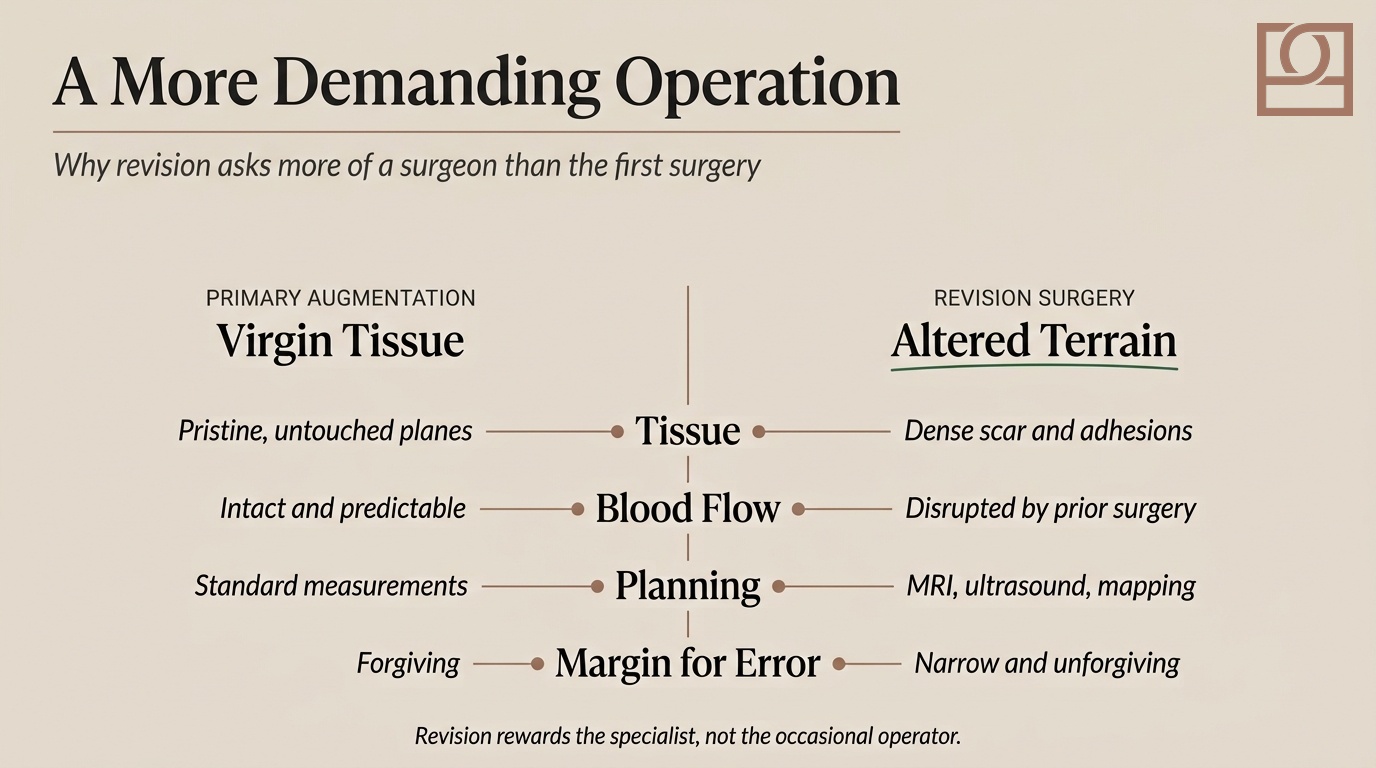
One of the most important things you should understand before pursuing breast revision surgery is that it is categorically more demanding than primary augmentation, both diagnostically and technically. The internal environment your surgeon will encounter during revision is fundamentally different from the virgin tissue of an original procedure, and that difference requires specialized expertise that not every board-certified plastic surgeon has developed.
Every breast surgery creates internal scar tissue. By the time a patient presents for revision, that scar tissue has matured into a dense, fibrous capsule that alters the anatomy in ways that do not appear on the surface. Tissue changes, scar formation, and altered blood flow from previous surgery create a surgical environment that demands advanced dissection skills. Blood supply patterns that guided the original procedure are disrupted. Tissue planes that were pristine are now adherent and scarred. The margin for error is narrower, and the consequences of imprecision are more significant.
Revision breast surgery may be much more challenging than the original procedure, and this complexity is why surgical volume and subspecialization matter so much when choosing a revision surgeon. Your body remembers every surgery it has been through. A revision specialist navigates that history with skill and respect.
Great breast revision surgery begins long before the operating room. Diagnosis and planning may include imaging such as MRI, ultrasound, and mammography to assess the current state of the implants, the capsule, and the surrounding tissue. Knowing exactly what the surgeon will encounter internally before the first incision separates a well-planned revision from a reactive one.
Three-dimensional imaging technology allows simulation of projected outcomes across a range of implant options. Pocket evaluation determines whether staying in the current plane or transitioning, for example, from subglandular to submuscular or to a dual-plane position, will achieve the desired result. Capsule assessment identifies whether the existing fibrous tissue is soft and usable, contracted and restrictive, or calcified and potentially complicating. The diagnostic phase is not preliminary to revision surgery. It is half of the surgery itself.
The technical repertoire required for comprehensive breast revision surgery is substantially broader than what primary augmentation demands. The following table outlines the primary surgical techniques used in revision and the clinical scenarios where each applies:
| Revision Technique | Clinical Indication | Technical Complexity |
|---|---|---|
| Partial capsulectomy | Mild capsular contracture, pocket refinement | Moderate |
| Total capsulectomy | Severe capsular contracture, implant rupture | High |
| En bloc capsulectomy | Symptomatic patients, silicone rupture | Very high |
| Pocket conversion | Malposition, rippling, capsular contracture recurrence | High |
| Implant exchange only | Size change, upgrade to newer technology | Low to moderate |
| Combined implant exchange plus mastopexy | Ptosis with implant concerns | Very high |
| Fat grafting for contour correction | Rippling, thin tissue coverage, upper pole concavity | High |
| Explantation with or without lift | Patient preference for natural silhouette, implant removal | Moderate to high |
| Internal mesh support (e.g., Galaflex) | Pocket reinforcement, revision longevity support | High |
The key takeaway is that breast revision surgery is not a single technique but a customized combination of approaches chosen specifically for each patient's anatomy and goals, which is why cookie-cutter revision protocols consistently underperform. Breast surgery innovations like internal mesh support have meaningfully extended the durability of revision results, particularly in patients who have undergone multiple prior procedures.

Board certification in plastic surgery is the baseline requirement for any surgeon you consider, not a differentiator. What differentiates revision surgeons is subspecialization, volume, and the depth of their technical repertoire. A surgeon who performs the occasional revision between primary augmentations is not the same as one whose practice is built substantially around complex secondary breast procedures. Annual revision case volume matters enormously. The surgeon who operates on fifty or more revision cases per year develops an intuitive fluency with scarred tissue, altered anatomy, and unpredictable intraoperative findings that a lower-volume surgeon simply cannot match.
Proprietary techniques developed through years of focused revision practice, such as those pioneered at elite Beverly Hills practices, represent accumulated surgical intelligence that directly benefits patients. When you choose a revision specialist, you are not paying for a credential. You are accessing thousands of hours of experience navigating exactly the kind of complexity your body presents. The aftercare infrastructure matters just as much: a dedicated post-surgical support model that includes a four-week assigned nurse, next-day follow-up, and weekly check-ins is the difference between a technically successful revision and a truly transformative one. As one guiding principle puts it: it is important to have an expert breast surgeon perform this procedure.
The consultation is where revision surgery actually begins. Everything that follows- the planning, the procedure, the recovery- flows from the quality of information exchanged in that first extended conversation. Understanding what a genuinely thorough consultation looks like helps you evaluate any surgeon you meet and ensures you walk into the operating room with full confidence in the plan designed for you.
A revision consultation conducted well is weighted toward listening, at least in its first phase. Your surgeon should want to understand your complete surgical history: where you had your original procedure, what implants were placed (size, profile, material, manufacturer, and fill), how the recovery went, and how your satisfaction with results evolved over time. That last part, the arc of your satisfaction, is clinically meaningful. A patient who loved her results for eight years before developing concerns tells a very different biological story than one who was never quite satisfied from the start.
During this phase, we categorize your current concerns: are they primarily aesthetic, functional, or both? Do you experience pain, asymmetry, hardness, or simply want a different look? Your future goals matter equally: are you seeking to maintain roughly what you have, scale back significantly, or achieve something you have never had? A psychological readiness assessment, thoughtful rather than bureaucratic, helps ensure you are pursuing revision for clear-eyed reasons rather than in reaction to a difficult life event. Great revision surgeons ask more questions than they answer, at least in the first half of the consultation.
The physical examination in a revision consultation is more extensive than what you experienced before your original surgery. Your surgeon will assess tissue quality and elasticity at multiple points across the breast envelope, evaluating how well the skin can support a particular volume or shape. Implant position, symmetry, and the integrity of the capsule are assessed with both visual inspection and careful palpation. The skin envelope itself, including stretch marks, thin zones, and areas of firmness, indicates which revision techniques are feasible.
Nipple-areola complex position is documented carefully, as it determines whether a lift component is necessary or advisable. Imaging, particularly MRI for silicone implants, ultrasound for capsule evaluation, and mammography for comprehensive breast health screening, provides internal information that no physical examination alone can supply. If you have prior surgical records, including operative notes documenting your implant specifications and technique, bring them. If you do not have them, your surgeon may be able to help you obtain them. What the examination reveals about your internal anatomy is the foundation on which your entire revision plan will be built.
Once your surgeon has gathered clinical history, examined you thoroughly, and reviewed your imaging, the planning phase begins. This is the creative and strategic heart of the consultation. Implant selection for revision involves far more variables than primary augmentation: you are not choosing from a blank slate but rather choosing what will achieve the best result within your specific anatomical context. Size, profile (low, moderate, high, or extra-high projection), surface texture, material, and manufacturer all factor into the decision, and the best choice may not be the one that looks best in a catalog.
Incision planning considers whether to use your original incision or whether a new approach will serve the revision better. Pocket management strategy, whether to stay in the current plane, transition to a new one, or use a hybrid approach, is one of the most consequential decisions in the plan. Anesthesia and facility logistics are reviewed: revision surgery of any meaningful complexity should always be performed in an accredited surgical facility with a board-certified anesthesiologist. Your surgeon should also give you a realistic, honest preview of the recovery timeline and what you can expect the healing process to look and feel like. No two revisions are identical, and yours will be designed for you alone.
How your surgeon and practice support you after revision surgery matters as much as what they do in the operating room. A revision in a complex anatomical environment has more variables than primary augmentation, and those variables can surface during healing. In elite surgical practices, the surgeon personally calls patients the night of surgery, and next-day dressing changes are standard, followed by structured appointments at one, two, and three weeks post-operatively. Revision patients are monitored more closely than primary augmentation patients precisely because the healing environment is more complex.
The highest-tier practices build aftercare into the facility's overall experience architecture. A dedicated nurse assigned for the first four weeks, a 24-hour contact line for concerns, lymphatic drainage support, scar management protocols, and seamless referral to complementary services including wellness, hormone optimization, and medspa treatments represent the kind of integrated aftercare that distinguishes world-class revision care from technically competent but transactional care. The surgery itself is measured in hours. The care that follows is measured in months, and that sustained, attentive follow-through determines whether your revision becomes the definitive outcome you sought or merely an intermediate step.
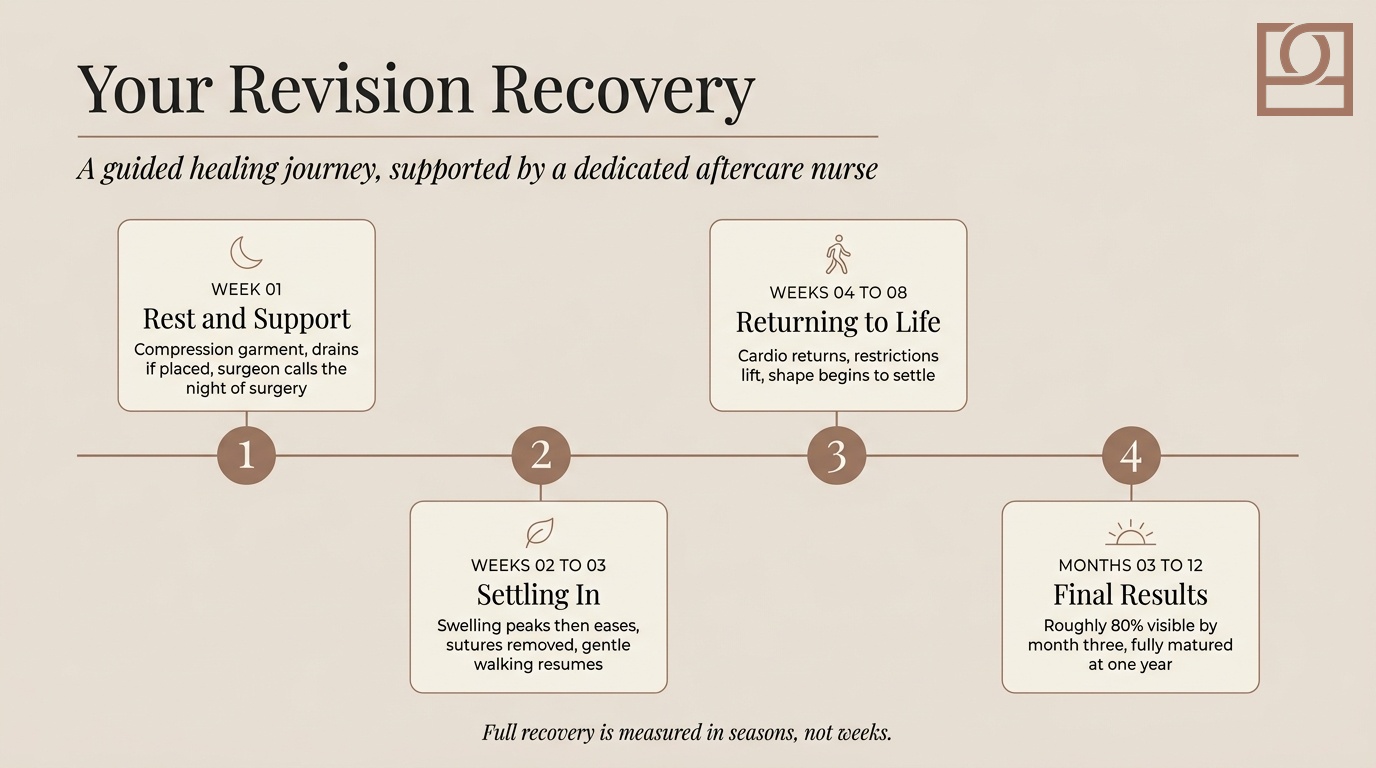
Breast revision recovery is not the same as recovering from primary augmentation. The extent of revision performed, the techniques employed, and the condition of your tissue all influence how your healing progresses. What follows is an honest, stage-by-stage roadmap designed to help you understand what is normal, what to watch for, and when the light at the end of the tunnel becomes genuinely visible.
Immediately after breast revision surgery, you will wake in a compression garment designed to support your tissue, minimize swelling, and hold everything in optimal position during the critical first days. Depending on the extent of your revision, drains may be placed to remove fluid that accumulates in the surgical site. Pain management is active during this phase: a combination of oral medications and, in many practices, long-acting local anesthetic injections to extend your immediate comfort window.
The night of surgery, your surgeon should call you personally to check in, answer questions, and address any concerns before you settle in for your first night of recovery. The following day, you will return to the practice for a dressing change and initial evaluation. Mobility is limited during week one: you will be instructed to avoid raising your arms above shoulder height, lifting anything heavier than a few pounds, and sleeping on your side or stomach. This structured next-day follow-up and close monitoring protocol in the first days after surgery is a hallmark of truly attentive revision care. The first 48 hours are the most uncomfortable. The practices built for excellence ensure you do not navigate them alone.
By the end of week one and into week two, swelling is often at its peak before it begins to subside. This is the phase that tests patience most acutely: you may look and feel more swollen than you did immediately after surgery, and your breasts will likely appear higher and rounder than your final result. This is normal, expected, and temporary. Follow-up appointments at one, two, and three weeks allow your surgeon to monitor healing progress and remove sutures at the appropriate stage.
Most revision patients can resume light activity, specifically gentle walking, during week two. The goal is circulation support, not exertion. Stretching is gentle and limited to what your surgeon specifically approves. Scar care typically begins once incisions are confirmed healed and closed, and your nurse or care coordinator will instruct you on the specific protocol recommended for your situation. Most patients notice noticeable improvement within several weeks, though the temptation to interpret week-two results as final results is one of the most common sources of unnecessary anxiety during revision recovery. This is the awkward phase. Trust the process, because it is working even when it does not feel that way.
By week four, most revision patients have cleared the most significant activity restrictions. Cardiovascular exercise, at moderate intensity, typically returns during this phase, with upper body weight training following several weeks later pending surgical clearance. Swelling continues to diminish, and most patients see most of their tightness and post-operative swelling resolve within several weeks of the four-week mark.
This is also the phase when wardrobe adjustment begins in earnest. Revisiting your bra wardrobe as your shape settles is both practically necessary and often genuinely enjoyable: many revision patients find that clothing fits better, feels more comfortable, and looks more proportionate during this phase than at any point since their original surgery. The recovery arc after revision depends significantly on the extent of correction performed, and patients who underwent more complex procedures, including pocket conversion, capsulectomy, or simultaneous lift, should expect their clearing timeline to extend accordingly. By week six, the overwhelming majority of revision patients report remembering clearly and gratefully why they pursued this surgery.
The three-month milestone is when roughly 80% of your final result becomes visible. Swelling has resolved substantially, implants have settled into their intended position, and the breast shape that will define your outcome is largely established. Scar fading accelerates between months three and six, and by the six-month mark, well-placed incisions are typically blending into the surrounding skin in ways that are difficult to detect without close examination.
The twelve-month mark represents the clinical definition of final result and is when most revision surgeons take formal post-operative photographs for the practice portfolio. This is also the appropriate time for a comprehensive follow-up discussion about long-term monitoring: imaging schedule, future check-in cadence, and integration into any broader wellness or preventive breast health program. Recovery from revision varies considerably by patient and by the specific procedure performed, and the patients who achieve the most satisfying long-term outcomes are consistently those who commit to the full monitoring protocol rather than disappearing after their six-week clearance. Full recovery from revision is measured in seasons, not weeks. The patience required during that span pays dividends that compound over years.

Selecting a surgeon for breast revision surgery is one of the most consequential decisions you will make in your healthcare journey. The complexity of revision requires a higher standard of evaluation than primary augmentation, and understanding the specific criteria that distinguish revision specialists from general plastic surgeons empowers you to make that choice wisely.
American Board of Plastic Surgery certification is the non-negotiable baseline for any surgeon you consider for breast revision. It represents a minimum standard of training, examination, and peer review that should be verified independently on the ABPS verification website, not simply accepted from a practice's marketing materials. Beyond board certification, fellowship training in aesthetic or reconstructive breast surgery reflects a deliberate choice to develop subspecialty expertise in the area where you need it most.
Annual revision case volume is perhaps the most informative single metric available to prospective patients. A surgeon performing fifty or more breast revision surgeries per year develops a depth of pattern recognition, technical fluency, and intraoperative problem-solving capability that no amount of continuing education can replicate. When evaluating before-and-after galleries, specifically look for revision cases, not just primary augmentation results. Revision patients present with pre-existing anatomy that constrains outcomes, and the ability to produce consistently beautiful results within those constraints is the truest test of revision expertise. Credentials are table stakes. Volume and specialization are the actual differentiators.
Different revision surgeons occupy different positions on the philosophical spectrum from aggressive correction to conservative refinement. Neither extreme is universally correct: the right approach depends entirely on the specific problem being addressed, the tissue quality available to work with, and the patient's goals and tolerance for staged procedures. What you want is a surgeon who can articulate a clear philosophy and explain exactly how it applies to your case, not one who defaults to a single approach regardless of the clinical picture.
Surgeons with deep revision experience often have the wisdom to stage procedures, addressing the most critical concern in a first operation and returning for refinements once healing is complete and the tissue environment has stabilized. This staged approach is frequently the path to the most beautiful final result even though it requires more patience from the patient. Conversely, when a single-stage correction is clearly achievable and appropriate, an experienced revision specialist should be able to execute it confidently. The best surgeons in this field are also willing to tell a patient directly when revision is not yet indicated, when watchful waiting is the wisest clinical course, and when a patient's expectations cannot be safely met. The ability to say no is one of the clearest signs of genuine expertise.
The facility where you undergo revision surgery matters enormously. Accreditation through recognized bodies, including AAAASF, JCAHO, or state-licensed surgical center certification, ensures that the facility meets rigorous standards for equipment, staffing, emergency preparedness, and infection control. These are not administrative formalities. They are the infrastructure of safe surgery.
Anesthesia staffing deserves specific attention. A board-certified anesthesiologist, holding an MD or DO degree with full anesthesiology training, provides a higher standard of intraoperative monitoring and emergency response than a CRNA working independently. For revision surgeries that may be longer and more complex than original procedures, this distinction matters clinically. Confirm that your surgical facility has a formal hospital affiliation and established emergency transfer protocols, and do not hesitate to ask about the practice's complication rates and how complications are managed when they occur. Luxury means nothing if safety is not the foundation on which everything else is built.
The aftercare infrastructure surrounding your revision surgery is not a bonus feature. It is a clinical necessity and a meaningful predictor of outcomes. Before committing to a revision surgeon, understand precisely what post-operative support looks like. Is there a 24-hour nursing line or only business hours availability? How many follow-up visits are included, and over what timeframe? What scar management protocols does the practice offer, including laser resurfacing, topical treatments, and massage therapy?
Practices that integrate scar management, lymphatic drainage support, and wellness services under the same roof provide a recovery experience that is meaningfully more supportive, and measurably better in outcomes, than practices that send patients home with a pamphlet and a follow-up appointment three weeks later. The question of revision guarantee or touch-up policy is worth raising explicitly: what happens if minor refinements are needed three or six months post-operatively? A practice confident in its work will address this question directly and fairly. The surgery is the beginning. The support system that follows determines the final chapter.
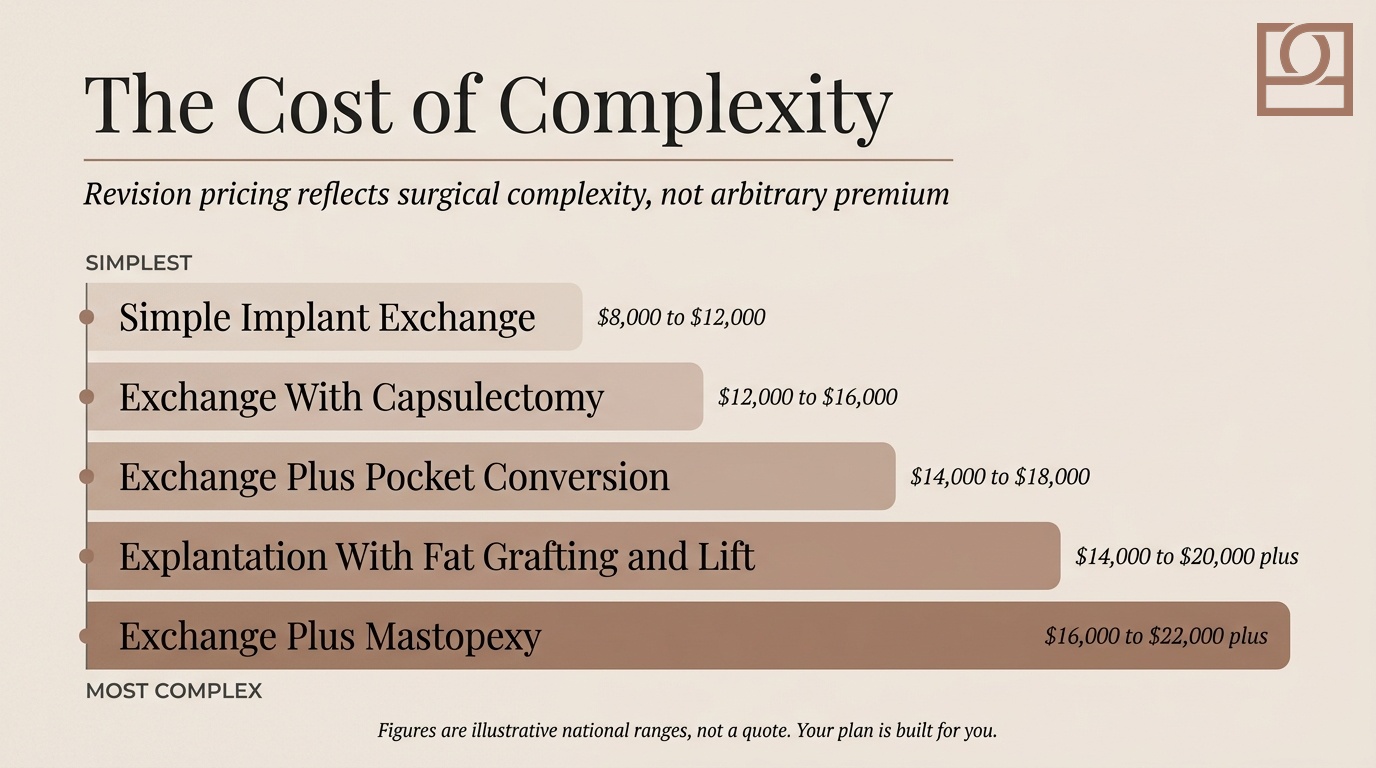
Planning breast revision surgery thoughtfully includes understanding its financial realities, timing considerations, and logistical requirements with the same clarity you bring to the clinical decision itself. Approaching these practical matters with a clear-eyed investment mindset, rather than a cost-minimization one, consistently produces better experiences and better outcomes.
Breast revision surgery is almost universally more expensive than primary augmentation, and that cost differential is justified by the greater complexity of the procedure. The following table provides a framework for understanding the cost range and its components:
| Revision Complexity Level | Typical Cost Range (US) | Key Cost Drivers |
|---|---|---|
| Simple implant exchange (same pocket, no complications) | $8,000 to $12,000 | Surgeon fee, anesthesia, facility, new implants |
| Implant exchange with capsulectomy | $12,000 to $16,000 | Extended OR time, capsule management, possible pathology |
| Implant exchange plus pocket conversion | $14,000 to $18,000 | Technical complexity, extended time, internal mesh if used |
| Implant exchange plus mastopexy (breast lift) | $16,000 to $22,000+ | Combined procedure complexity, extended OR time |
| Explantation with fat grafting and lift | $14,000 to $20,000+ | Fat harvest and processing, extended time, lift component |
The key takeaway is that revision pricing reflects surgical complexity, not arbitrary premium: the more technically demanding the procedure and the more experienced the surgeon performing it, the higher the appropriate investment. This is not an area where cost-driven decision-making serves your interests. Cosmetic surgery financing options can make premium care accessible without compromising on the expertise level your revision demands.
The line between cosmetic and reconstructive in breast revision is legally and practically meaningful. Procedures addressing documented medical complications of prior breast surgery, including capsular contracture causing pain or restricted movement, implant rupture with confirmed silicone extravasation, or infection requiring explantation, may qualify for partial insurance coverage depending on your carrier and policy language. The key word is "may": insurance coverage for revision is genuinely variable, and the determination process requires persistence and expertise to navigate effectively.
Pre-authorization is typically required for any revision component you intend to submit to insurance, and that process benefits enormously from a practice with dedicated insurance advocacy expertise. Documentation matters critically: operative reports from your original surgery, imaging confirming current implant status, and physician letters documenting functional impairment all strengthen a coverage case. Even when insurance covers a portion of the revision, choose your surgeon based on clinical excellence and alignment with your goals, not based on who is in network. A network surgeon who is not a revision specialist will produce inferior results regardless of how efficiently the claim processes.
Medical financing through programs such as CareCredit, Alphaeon Credit, and similar platforms allows you to spread breast revision surgery costs across manageable monthly payments, often with promotional interest periods. Health Savings Account and Flexible Spending Account funds may apply to medically necessary components of revision, including those related to documented complications, and your practice's financial coordinator can help you identify what qualifies.
The most useful reframe around revision financing is one of investment return. Cars, electronics, and vacations all depreciate from the moment of purchase. The confidence, physical comfort, and aesthetic alignment that come from a well-executed revision improve your daily experience for years and often decades. Patients who approach revision as a quality-of-life investment, rather than as an expense to minimize, consistently make better decisions about surgeon selection, scope of procedure, and aftercare. You finance things that lose value all the time. Investing in something that restores your relationship with your own body is a different category of spending entirely.
Strategic timing of revision surgery is not vanity. It is smart planning that respects both your body's recovery needs and the realities of your professional and personal life. Recovery from meaningful revision requires a minimum of two weeks away from professional obligations and four to six weeks away from physical activities involving the upper body. Planning surgery during a period where you can genuinely rest, without the anxiety of a looming deadline or social commitment, directly improves your recovery experience and your outcomes.
Seasonal considerations matter practically: summer clothing is unforgiving of compression garments, and certain social seasons, including holidays, weddings, and travel-heavy periods, are poor contexts for early recovery. Patients traveling from outside the greater Los Angeles area for their revision should plan for a minimum seven-to-ten-day local stay before traveling home, ensuring that critical early follow-up appointments are accessible. Coordinating revision with complementary procedures, such as a tummy tuck or additional body procedures, requires careful planning and a frank discussion with your surgeon about combined-procedure safety and extended recovery implications. The right timing makes an already significant investment considerably more manageable.
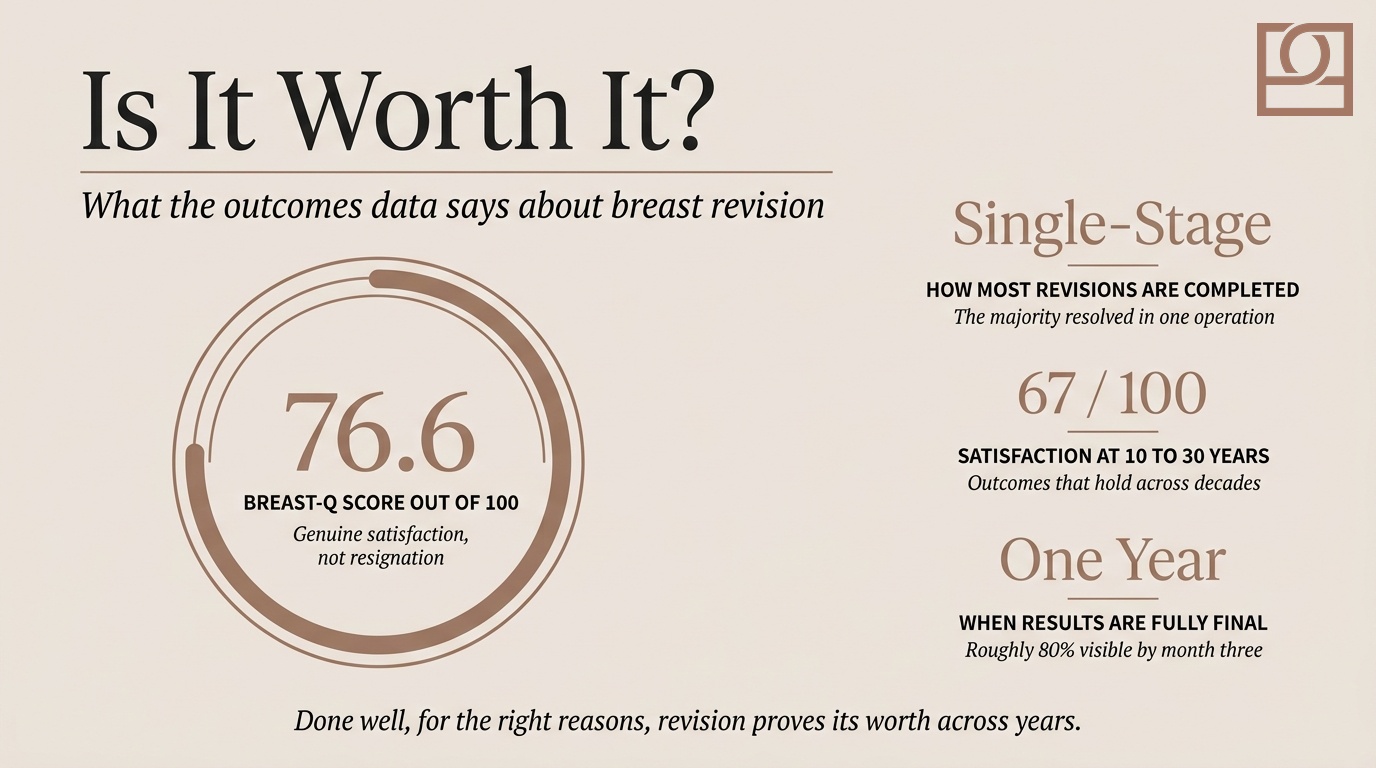
The question every revision patient asks, in some form or another, is the simplest one: will it be worth it? The honest answer, supported by data and the lived experience of thousands of women who have undergone revision, is that when performed by the right surgeon for the right reasons, with realistic expectations, breast revision surgery delivers outcomes that genuinely and durably improve quality of life. The evidence deserves an honest examination.
The clinical literature on breast revision surgery outcomes is more encouraging than many prospective patients realize. In one significant study, revision surgery was required in 7.6% of patients, and all of those revisions were successfully managed with single-stage correction. BREAST-Q quality-of-life scores in this patient cohort averaged 76.6 out of 100, a result that reflects genuine satisfaction rather than resigned acceptance. These are patients who navigated a complication and came out the other side with measurably good outcomes.
Long-term satisfaction data from breast surgery populations more broadly supports the same conclusion. Satisfaction scores averaging 67 out of 100 at 10 to 30 years post-operatively in studied breast surgery populations indicate that outcomes sustain meaningfully over time when initial results are sound, and monitoring is consistent. The data reflects what patients already know intuitively: when revision is done well, the results hold, satisfaction is real, and the decision proves its worth across years and decades.
Breast revision surgery, regardless of how technically excellent, does not stop the aging process. Your breast tissue will continue to respond to gravity, hormonal changes, weight fluctuations, and the passage of time after revision just as it did after your original surgery. Revision resets the clock, addressing what has drifted from your ideal and establishing a new baseline that evolves naturally from a much better starting point.
Implant longevity after revision is comparable to what you would expect after primary augmentation with contemporary devices: modern cohesive gel silicone implants are designed to last many years, though "many years" is not synonymous with "forever." Continuing to monitor implant integrity through periodic imaging remains important regardless of how recently your revision was performed. Annual breast health check-ins that include implant assessment, along with appropriate imaging intervals per FDA and your surgeon's guidance, keep you informed and empowered. Future revision is possible but far from inevitable, particularly when the original revision was comprehensive and technically sound.
The most profound outcomes of breast revision surgery are frequently the ones that do not photograph. The woman who spent years avoiding fitted clothing because her implants had shifted asymmetrically and now dresses with unselfconscious ease. The patient who had not slept comfortably on her stomach for four years due to capsular contracture and now wakes without pain. The professional who had been managing the subtle distraction of knowing her results no longer matched her standards and who now directs her energy entirely outward. These are the outcomes that patients describe with the most genuine feeling in their testimonials, and they are the ones that make revision genuinely life-improving rather than merely aesthetic.
Intimacy, physical activity, professional presence, and the quiet confidence of feeling at home in your own body all shift measurably after successful revision. These are not trivial outcomes. They are the lived experience of a decision made thoughtfully and executed with excellence, and they compound quietly across every day that follows.
For the women who approach their health as an integrated system rather than a collection of separate problems, breast revision surgery often marks a meaningful inflection point. The experience of returning to your body with focused attention, of choosing a practice that integrates surgical excellence with breast health monitoring, hormone optimization, and comprehensive women's wellness, opens doors to a more holistic relationship with your own well-being.
The practices that best serve this vision see revision not as the end of a surgical chapter but as a natural entry point into a long-term partnership. Patients who arrive for revision and discover an integrated gynecology program, a sophisticated hormone optimization practice, and a medspa offering cosmetic procedures that complement their surgical results often build a relationship that extends far beyond any single procedure. That kind of ongoing, coordinated, genuinely personalized care is what transforms an excellent surgery into an excellent life. Revision is not just a reset for your breasts. For many women, it is a reset for how they invest in themselves entirely.

Revision is evolution. Of the 71% of implant patients who have considered it, none express regret about their original decisions. They are expressing the natural intelligence of women who know their bodies have changed, whose standards have risen, and who refuse to accept a result that no longer serves them simply because accepting it would be easier than addressing it. That refusal is not vanity. It is self-respect expressed in the most concrete possible way.
The growing wave of breast revision surgery in 2026 and beyond reflects something important about how women are redefining their relationship with cosmetic and reconstructive medicine. The one-and-done transaction is being replaced by the long-term partnership, and the practices built to honor that shift are the ones worth seeking out. Revision patients deserve surgeons who bring both the technical sophistication to navigate complex secondary anatomy and the relational intelligence to understand what you are actually asking for when you sit down for that consultation.
Choosing the right revision surgeon means choosing board certification, meaningful subspecialty experience, and proven revision volume. It means choosing an accredited facility, a genuine aftercare ecosystem, and a practice that sees your care as a relationship rather than a transaction. It means choosing the team that will call you the night of surgery, see you the next morning, and stand with you through the full arc of healing until your results are exactly what they should be.
At The Practice Healthcare, surgical excellence and genuine hospitality are not competing priorities. They are designed to coexist, and that integration is the thing that makes every outcome, from a first revision to a complex multi-stage correction, something worth experiencing rather than merely surviving. If you are ready to have that conversation, the consultation is where your revision actually begins.
Your body is your lifelong home. Revision is renovation, and you deserve an architect who understands both structure and beauty in equal measure.
Breast revision surgery is any secondary procedure performed to correct, improve, or update the results of a prior breast surgery, including augmentation, reduction, lift, or reconstruction. It addresses complications such as capsular contracture or implant rupture, changes in patient goals such as size adjustment, and aesthetic refinements such as asymmetry or malposition correction. Revision can be performed months or many years after the original procedure depending on clinical need.
Approximately 71% of breast implant patients have considered revision at some point, making secondary breast surgery one of the most frequently performed procedures in plastic surgery. Breast implant removals and revisions increased by 10% from 2025 to 2026 alone, driven largely by patients from the 2010s augmentation cohort reaching the 10-to-15-year mark post-surgery.
Breast revision surgery is significantly more technically complex than primary augmentation because the internal surgical environment has been altered by prior surgery. Scar tissue changes blood flow patterns, alters tissue planes, and limits the surgeon's options. Revision requires advanced dissection skills, comprehensive pre-operative imaging, and a broader surgical technique repertoire. Surgeons who specialize in revision develop pattern recognition and intraoperative adaptability that general plastic surgeons performing occasional revisions do not match.
Not always. Grade I and Grade II capsular contracture, where the breast feels firm but does not exhibit significant shape distortion or pain, can sometimes be managed conservatively or monitored without immediate surgical intervention. However, Grade III and Grade IV contracture, involving visible deformity, significant hardness, and pain, virtually always require surgical correction including capsulectomy and implant replacement. Catching capsular contracture early allows for more controlled intervention and often better outcomes.
Some components of breast revision surgery may qualify for insurance coverage when the procedure addresses a documented medical complication of prior breast surgery, such as painful capsular contracture, confirmed implant rupture, or infection. Coverage varies significantly by carrier and policy, and pre-authorization with comprehensive documentation is typically required. Insurance does not cover cosmetic revisions performed for aesthetic goals, regardless of the clinical context.
Most breast revision patients resume light daily activities within one to two weeks and return to most normal activities by weeks four to six. Exercise restrictions typically lift progressively between weeks four and eight depending on procedure complexity. Final results, including complete swelling resolution and full scar maturation, are typically assessed at the twelve-month post-operative mark. More complex revisions, including those combining capsulectomy with pocket conversion and mastopexy, have longer recovery timelines than simple implant exchanges.
Breast revision surgery and explantation address different goals. Revision typically involves replacing, repositioning, or refining existing implants while maintaining augmented volume. Explantation removes implants entirely, with or without replacement using fat grafting, and suits patients seeking a natural silhouette, those with specific symptom concerns, or those who have completed their desired augmentation chapter. The right choice depends on your anatomy, goals, tissue quality, and health considerations, and requires a thorough consultation with an experienced breast surgeon.
Yes. Revision surgery provides an excellent opportunity to reassess implant selection comprehensively, including size, profile, surface texture, material (saline versus silicone), and manufacturer. Many patients choose revision specifically to adjust their size toward a more natural or more proportionate result. Your tissue and pocket constraints will guide what size range is safe and aesthetically achievable, and your surgeon will help you understand those parameters clearly during the planning phase.
Start with confirmed American Board of Plastic Surgery certification, verified independently rather than accepted from marketing materials. Look for fellowship training in aesthetic or reconstructive breast surgery, and evaluate the surgeon's annual revision case volume. Review before-and-after galleries specifically for revision cases, not only primary augmentation results. Assess the practice's aftercare infrastructure, including follow-up visit frequency, nursing support availability, and scar management protocols, as these directly affect your outcomes.
Breast revision surgery costs range from approximately $8,000 for simple implant exchange to $22,000 or more for complex combined procedures involving capsulectomy, pocket conversion, and simultaneous mastopexy. The cost differential compared to primary augmentation reflects the greater technical complexity, longer operating time, and specialist expertise required. Geographic location, facility accreditation level, and the specific techniques employed all influence total investment.
In most cases, surgeons recommend waiting a minimum of six months after primary augmentation before pursuing elective revision to allow full healing and final result stabilization. Emergency revision for rupture, infection, or severe hematoma may be performed much sooner as clinically indicated. Revisions for capsular contracture, size change, or aesthetic refinement are generally most successful when performed on fully healed, stable tissue, and earlier evaluation often allows for more controlled, less complex correction than waiting until a problem has significantly progressed.
The goal of a well-planned revision performed by an experienced specialist is a durable result that does not require further surgery. Studies show that the majority of revision procedures are successfully completed in a single stage, with high patient-reported satisfaction. However, breast implants are not permanent devices, and the natural aging process continues after revision, meaning that future revision remains possible over a long enough timeframe. Annual monitoring, appropriate imaging intervals, and maintaining a long-term relationship with your surgical team are the best strategies for catching any future changes early and addressing them with the least invasive intervention possible.