

Share this post


What is a facelift? A facelift is a surgical procedure that restores youthful contours by tightening muscles, repositioning tissue, and removing excess skin.
Patients often consider facelift surgery when they notice jowls, deep nasolabial folds, or neck laxity that nonsurgical treatments can no longer correct. At The Practice Plastic Surgery, we prioritize thorough consultations, customized surgical plans, and advanced techniques to ensure a smooth, comfortable patient journey.
This overview will help you understand what to expect during facelift consultation, surgery, and recovery, so you can prepare thoughtfully and approach the process with confidence.
A facelift, or rhytidectomy, corrects age-related changes, such as jowls, deep folds, and neck laxity, by surgically tightening and repositioning the underlying structures.
It works by tightening the deeper muscular layer, known as the superficial musculoaponeurotic system (SMAS), removing excess skin, and, when appropriate, contouring fat or adding small-volume fat grafts to restore balanced fullness.
During consultation, your surgeon examines how your skin, bone structure, and facial proportions interact, then recommends the facelift approach best suited to your anatomy.
Techniques may include:
Safety is well established with these procedures.
In a review of 11,300 facelift patients published in the Aesthetic Surgery Journal, the overall complication rate was just 1.8%, with hematoma occurring in 1.1% and infection in 0.3%; figures comparable to other elective cosmetic procedures.
Facelift and deep plane facelift distinctions guide which option best fits your anatomy.
Ideal candidates for facelift surgery are healthy individuals who want to correct visible signs of facial and neck aging. Common features include:
Candidacy for facelift surgery also depends on health status and habits.
Patients should be medically stable, free from conditions that impair healing, and abstain from nicotine, as tobacco use increases surgical risk and delays recovery.
Skin quality, a history of prior procedures, and coexisting medical conditions influence incision placement, the surgical technique chosen, and the timeline for returning to work, exercise, and social activities.
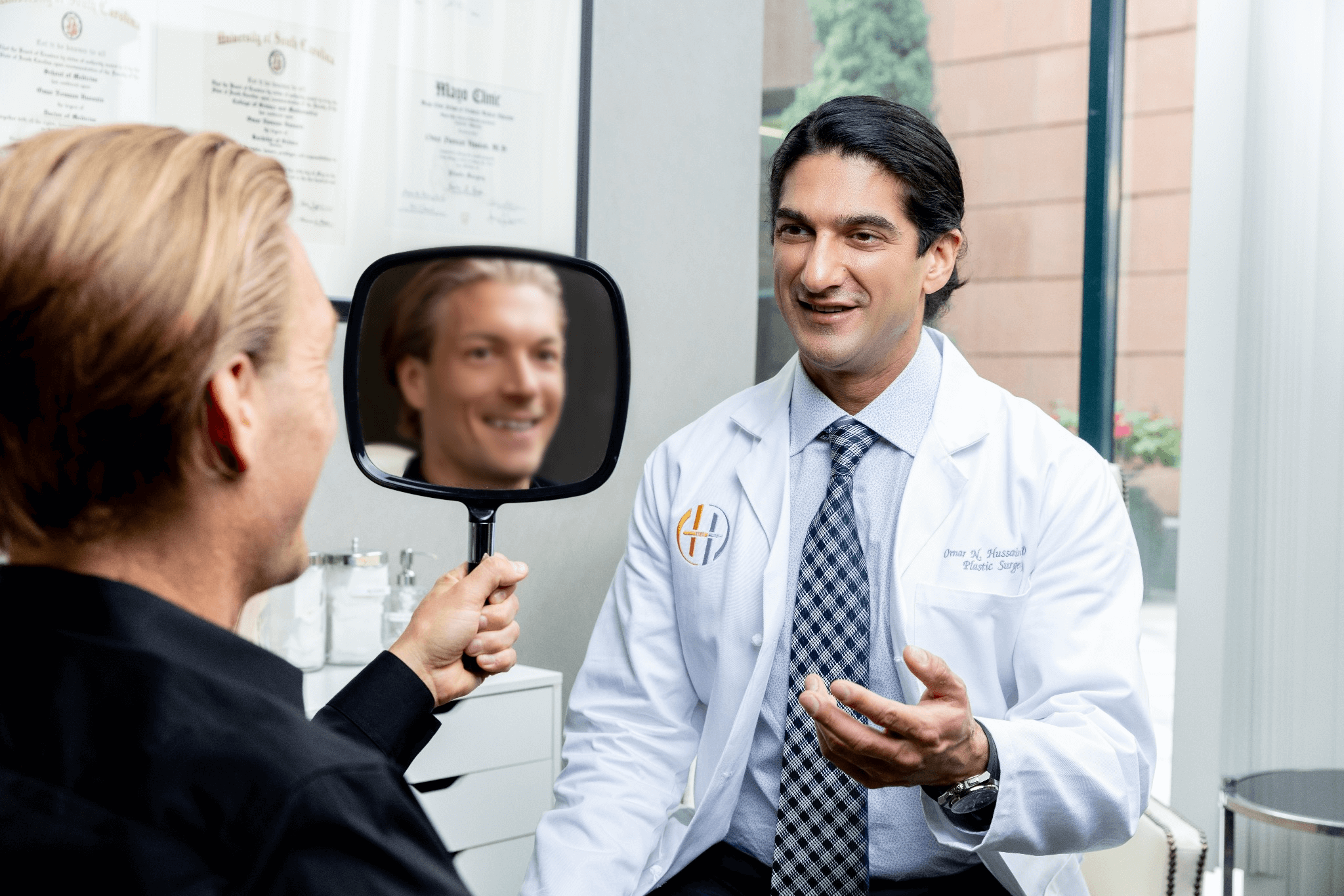
Your first step is a comprehensive consultation with Dr. Omar Hussain, MD, FACS, a board-certified facial plastic surgeon.
Dr. Hussain then evaluates skin elasticity, the strength of the superficial musculoaponeurotic system (SMAS), and the contours of the neck. These findings guide what technique the surgeon will use..
During this appointment, you can expect:
Preparation reduces risk and supports a smooth recovery. Begin at least 4 weeks before surgery and follow these steps:
On the day of surgery, you will be admitted to The Practice’s fully accredited Beverly Hills surgical facility, designed for safety and privacy.
After check-in, your team verifies your records, reviews consent, answers last-minute questions, and marks incision sites.
A board-certified anesthesiologist administers anesthesia, and continuous monitoring begins.
The operation lasts 3 to 5 hours, depending on your anatomy and any additional procedures. The deeper support layer (SMAS) is lifted and secured to restore jawline definition. Redundant skin is trimmed and redraped without tension.
When needed, small-volume autologous fat grafting can restore the midface contour.
Incisions are closed with fine sutures, and dressings are applied.
Once surgery is complete, you’ll awake in recovery with your head elevated. A nurse will help you manage pain and review post-op care instructions.. Once you’re cleared for discharge, you can leave with your escort to your aftercare facility.
For visual examples of outcomes, explore our facelift before/after gallery.
Anesthesia and incision planning are customized to each patient’s anatomy, health status, and the extent of facial aging being corrected.
| Category | Option | When used | Notes |
| Anesthesia | General anesthesia | Multi-region facelifts or combined procedures | Ensures airway control and complete unconsciousness |
| Anesthesia | IV sedation with local anesthesia | Shorter lifts in low-risk patients | Allows quicker recovery; performed only in accredited facilities |
| Incision | Temporal hairline | To address the midface and temple | Placed within the hairline and angled to protect follicles |
| Incision | Periauricular (around the ear) | Primary access to SMAS and the jawline | Hidden within natural ear creases, closed under minimal tension |
| Incision | Submental (Under the chin) | Platysma repair and neck contouring | Small incision concealed in the natural chin shadow |
Incisions are placed to maximize concealment, preserve hair follicles and nerve pathways, and support dependable healing.
In many cases, more than one incision type is combined to achieve balanced rejuvenation of the face and neck.
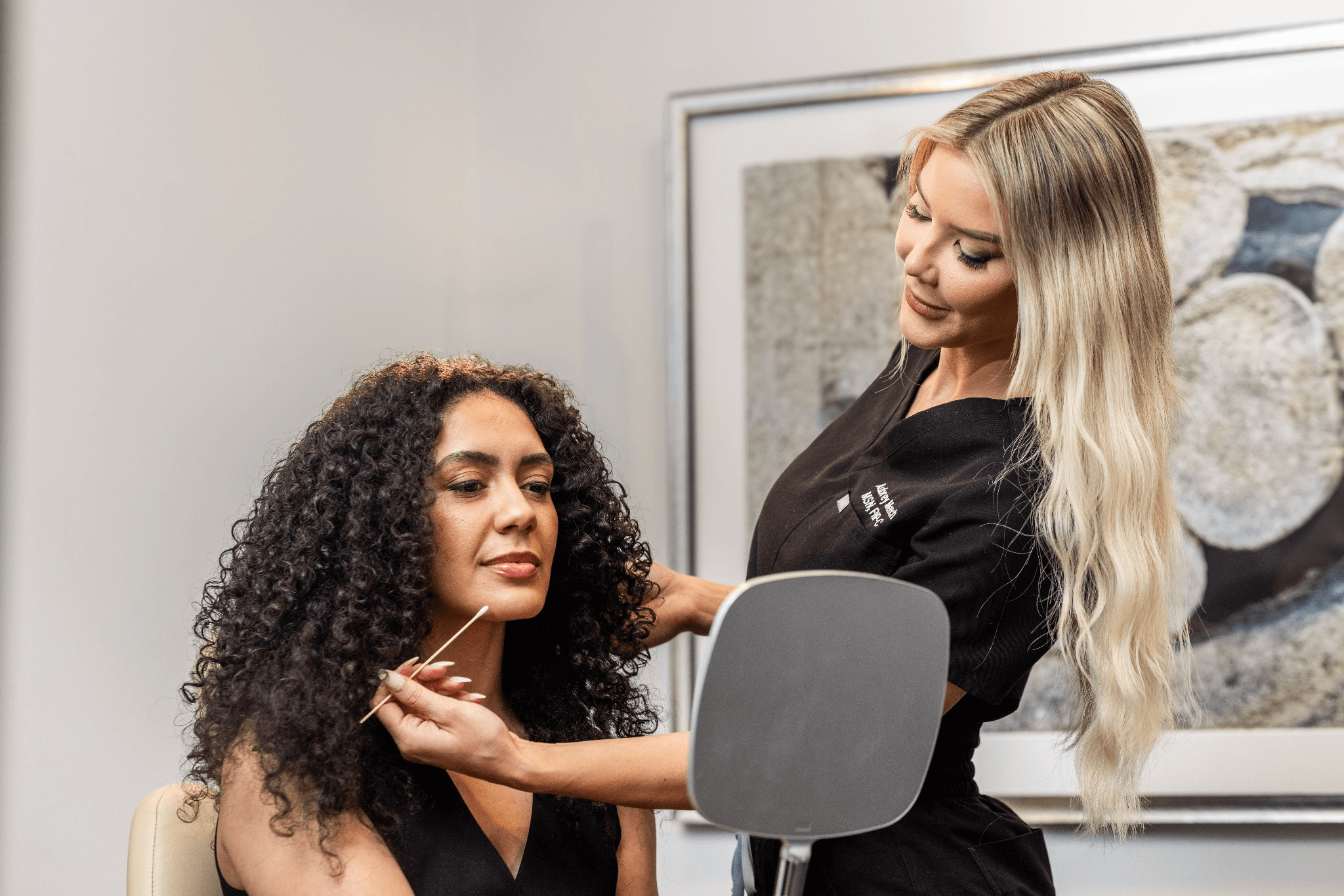
Patient safety is monitored at every stage of surgery. While under anesthesia, a board-certified anesthesiologist tracks heart rate, blood pressure, oxygen saturation, and ventilation.
Strict sterile technique is maintained throughout the procedure, and medications are administered to minimize bleeding and reduce postoperative nausea.
The team includes your surgeon, scrub technologist, and circulating nurses.
After closure, dressings and, if needed, small drains are placed. You awaken with your head elevated, pain well-controlled, and detailed recovery instructions provided. Fluids are introduced gradually as tolerated.
Most patients go home the same day, accompanied by an escort and provided with a direct contact number, as well as optional post-surgery concierge care to support their recovery.
Facelift recovery progresses in stages.
For the smoothest course, keep your head elevated and use cold compresses as directed.
Follow incision care closely, attend all follow-up visits, and avoid strenuous activity until you are cleared. Once incisions have healed, protect your skin with daily sunscreen to support lasting results.
In the short term, protect the surgical site by minimizing strain and following your surgeon’s instructions exactly.
Avoid heavy lifting, bending, or straining for at least 2 weeks. Keep your head elevated, follow incision care exactly, and attend every follow-up so that small issues are addressed early.
Contour settles in stages.
Most patients notice a sharper jawline and smoother neck within three to four months, with more gradual refinement continuing for up to a year.
According to the Cleveland Clinic, swelling and bruising typically resolve within 10 to 14 days, and facelift outcomes often remain effective for seven to ten years.
Call your surgeon promptly if you notice one-sided swelling, persistent bleeding, spreading redness, fever, or a firm, painful lump.
To learn more about how recovery is planned for men, visit our dedicated facelift for men resource.
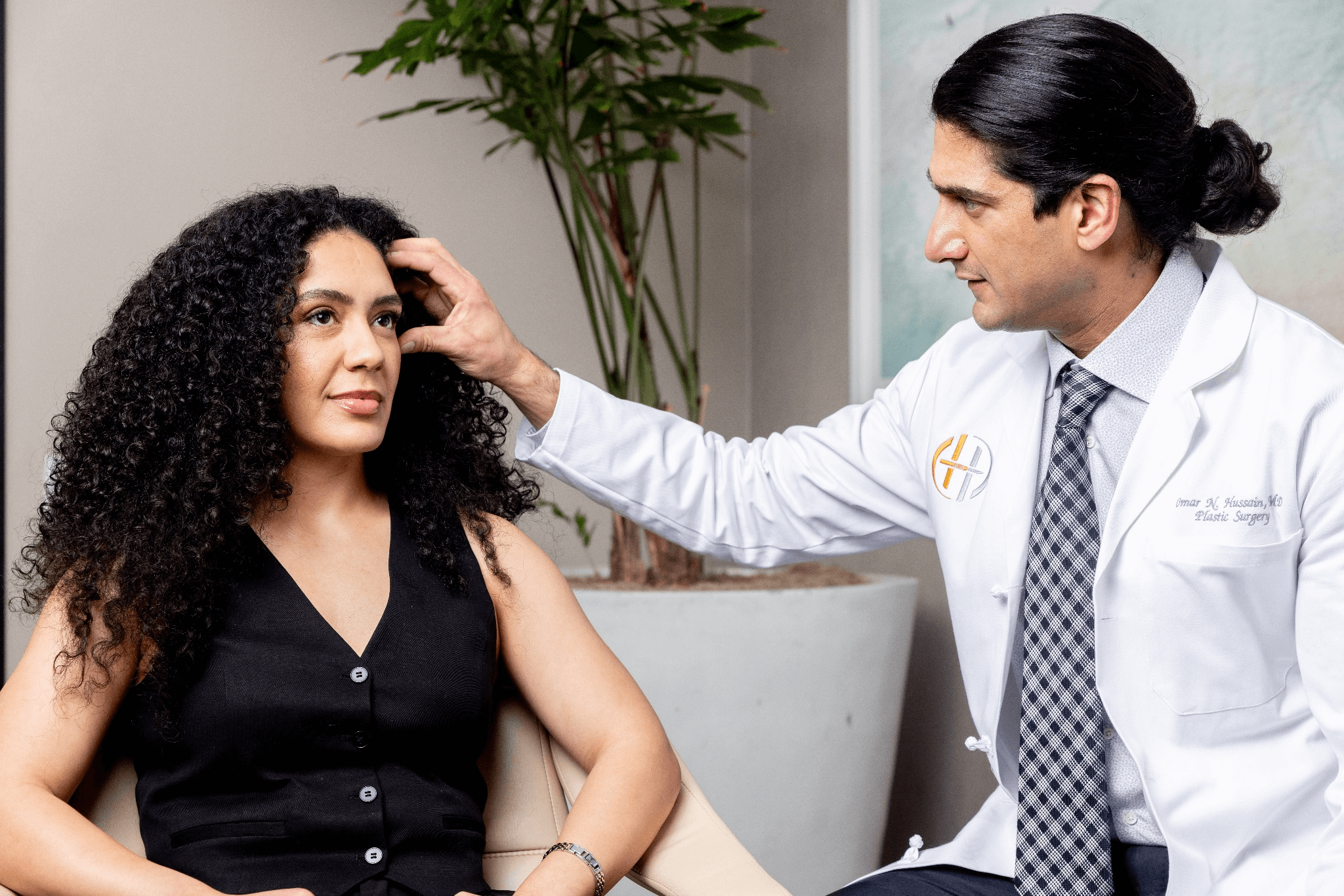
Facelift surgery restores definition at the jawline and neck by addressing support layers, skin, and volume. When patients understand what happens before, during, and after surgery, they set realistic timelines and reduce avoidable stress.
Your plan should be individualized. Anatomy, skin quality, and health history shape the technique, incision design, and recovery milestones.
At The Practice, Dr. Omar Hussain, MD, FACS, leads facelift care with comprehensive evaluations, precise SMAS work, and structured follow-up, ensuring you heal safely while maintaining your natural appearance.
If you are considering surgery, the next step is a focused consultation that confirms your candidacy, reviews the risks, and outlines the recovery process in clear terms.
Schedule a facelift consult with Dr. Hussain.
Most patients enjoy a refreshed contour for 7 to 10 years, although individual factors like skin quality, sun exposure, and weight changes matter. You set the stage for longevity by following aftercare, protecting your skin daily, and attending scheduled follow-ups.
A facelift is a surgical procedure that tightens deeper support layers, removes excess skin, and may add precise fat grafting for balance. In consultation, your surgeon explains how the procedure is tailored to your anatomy, goals, and expected recovery timeline.
Discomfort feels like tightness or fullness rather than sharp pain. Prescription medication helps during the first few days, then most patients transition to over-the-counter options.
During facelift planning, you can expect to review pain control, icing, and head elevation to make the early days feel more manageable.
Incisions are designed to blend in along the hairline and natural ear creases, with a small chin crease incision when needed.
You can promote better scar quality by not using nicotine, protecting incisions from tension, and applying silicone treatments and sunscreen as directed. Over time, most scars blend with the surrounding skin.
Think of maintenance as routine care. Use daily broad-spectrum sunscreen, maintain a stable weight, and adhere to a consistent skincare routine.
During follow-ups, your team may suggest resurfacing, neuromodulators, or fillers. You also learn what to expect during facelift follow-up, so future touch-ups are well-timed.
Facelift Surgery: The Complete Guide to Modern Techniques, Recovery, and Results
What Is a Chemical Peel and How Does It Improve Your Skin?
How to Prepare for Plastic Surgery: Simple Step-by-Step Guide
Stay in the know with our latest press coverage and helpful content updates to keep you informed.