



Share this post


What is perimenopause? Perimenopause is the transitional phase before menopause when estrogen and progesterone levels begin to fluctuate, leading to a range of physical and emotional changes.
Common symptoms include irregular periods, disrupted sleep, and increased irritability. These changes do not indicate that something is wrong.
They are part of a natural biological process that every woman experiences as her body transitions out of its reproductive years.
At The Practice Healthcare, Dr. Nelli Ghazaryan specializes in guiding women through this transition with an evidence-based, whole-body approach so you feel informed rather than blindsided.
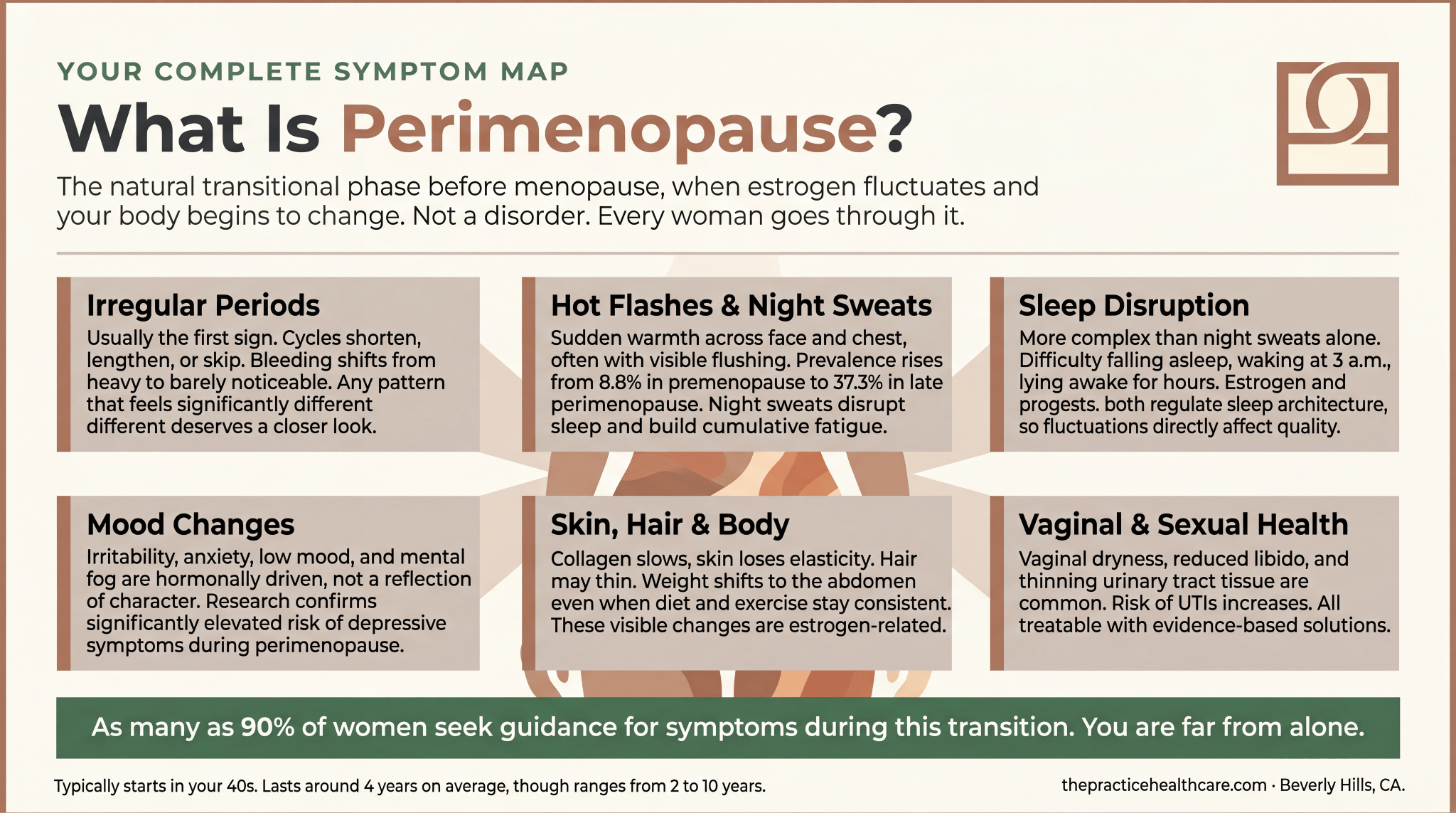
Perimenopause is the transitional phase leading up to menopause. Your ovaries gradually produce less estrogen, and those fluctuations bring changes throughout your body. Your cycle shifts. Symptoms you have not experienced before begin to surface.
This typically starts in your 40s, though some women notice it in their late 30s. It concludes after 12 consecutive months without a period, when menopause officially begins.
Your body is doing exactly what it is designed to do.
As your ovarian follicles naturally diminish, the cells that produced steady estradiol begin to wind down. According to peer-reviewed research on perimenopause management, as many as 90% of women seek guidance for symptoms during this transition, so you are far from alone.
Perimenopause typically lasts around four years, though your experience may look quite different. Some women move through it in two years; others notice changes that stretch over closer to a decade.
Your genetics, lifestyle, and overall health all play a role in how long and how intense the transition feels.
Symptoms also tend to come and go rather than build steadily. You might feel completely normal one month, then notice hot flashes and mood shifts the next. That variability is characteristic of the transition itself, and understanding how to thrive through it can make a real difference in how you experience each stage.
So what are the symptoms you should look for?
The list is broader than most women expect. Hormonal fluctuations affect nearly every system in your body, so perimenopause can show up in ways that seem completely unrelated at first glance. Your periods are often the first clue, but they are rarely the only one.
Changes in your menstrual cycle are usually the first sign that perimenopause has started. Your cycles may shorten or lengthen, bleeding can shift from heavy to barely noticeable, and skipped periods become more common.
That unpredictability is normal. Still, spotting between cycles or unusually heavy bleeding is worth discussing with your gynecologist, since those patterns can sometimes point to something else entirely. Any shift that feels significantly different from your norm deserves a closer look.
Hot flashes are among the most recognized perimenopause symptoms, and for good reason. That sudden wave of warmth spreading across your face and chest, often with visible flushing, can be genuinely disruptive.
Some women experience brief, mild episodes, while others deal with intense flashes lasting several minutes.
Night sweats follow the same pattern, just overnight. You wake up overheated, sleep breaks down, and fatigue builds. As reported by the Australian Women's Midlife Years Study, hot flush prevalence rises from 8.8% in premenopause to 37.3% in late perimenopause, making them one of the clearest biological markers of this transition.
Sleep disruption during perimenopause is more complex than just night sweats. You might struggle to fall asleep despite exhaustion, or wake up at 3 a.m. and lie there for hours.
That pattern builds into a cumulative fatigue that affects everything else.
The reason is hormonal. Both estrogen and progesterone help regulate sleep architecture, so as those levels fluctuate, your sleep quality shifts with them. Bringing these concerns to your doctor is worth doing because effective strategies and treatments exist.
The emotional side of perimenopause catches many women off guard. Irritability without a clear cause, anxiety, low mood, and mental fog are all real, hormonally driven changes. They are not a reflection of your character.
As estrogen fluctuates, it directly affects the brain systems that regulate mood. Peer-reviewed research from the SWAN study confirms that perimenopausal women face a significantly elevated risk of depressive symptoms, particularly those with prior mood sensitivity.
Speaking with a physician who understands this connection is a worthwhile step.
Declining estrogen affects your skin, hair, and body in ways you can see. Collagen slows down, so skin loses elasticity around the jawline and neck. Hair may thin or shed more than usual.
Body composition shifts too, with weight settling around the abdomen even if that was never the case before. For some women, diet and exercise alone stop delivering the same results, which is where understanding body contouring options for stubborn changes becomes genuinely useful.
Lower estrogen levels affect your vaginal and sexual health in ways worth knowing about.
Vaginal dryness is common during perimenopause and can make intimacy uncomfortable. Your libido may also shift, and the combination of physical changes and hormonal fluctuations can make sexual experiences feel noticeably different.
Declining estrogen also thins the tissues of the vaginal and urinary tract, which raises your risk of urinary tract infections. These changes are treatable. At The Practice Healthcare, Dr. Nelli Ghazaryan provides specialized care for exactly this stage, helping you address vaginal health and libido concerns with evidence-based solutions.

Most women enter perimenopause in their 40s, though it can begin in the late 30s for some. There is no single age that applies to everyone, since several factors shape your personal timeline.
Family history is one of the strongest predictors. Smoking is another, since chemicals in tobacco directly accelerate the loss of ovarian follicles.
Peer-reviewed research by Obstet Gynecol Clin North Am notes that smokers typically reach menopause earlier than nonsmokers. Certain medical conditions and prior surgeries can also shift your timeline.
There is no single test that confirms perimenopause. Instead, your physician considers your symptoms, age, and the pattern of changes you are experiencing together.
Tracking these can help you spot where you are:
Blood tests for FSH and estradiol are useful but not definitive, as hormone levels fluctuate throughout this transition. Staying current with routine cervical screenings and preventive exams also ensures any changes are evaluated in the broader context of your health.
The terms are often used interchangeably, but they describe distinct stages. Understanding the difference helps you and your physician choose the right approach.
| Perimenopause | Menopause | |
| Definition | Transition phase before menopause | 12 consecutive months without a period |
| Hormones | Fluctuating unpredictably | Stabilized at a lower baseline |
| Periods | Irregular but still present | Absent |
| Symptoms | Often most intense due to hormonal swings | May continue, but typically less volatile |
| Status | The journey | The destination |
Symptoms can overlap between both stages, which is why many women are unsure where they fall. Knowing which phase you are in gives that answer clarity.
Perimenopause is normal, but some symptoms deserve prompt medical attention. Reaching out early means you get the right support before things escalate.
See your physician if you notice:
At The Practice Healthcare, Dr. Nelli Ghazaryan can help you distinguish normal changes from symptoms that need further evaluation.
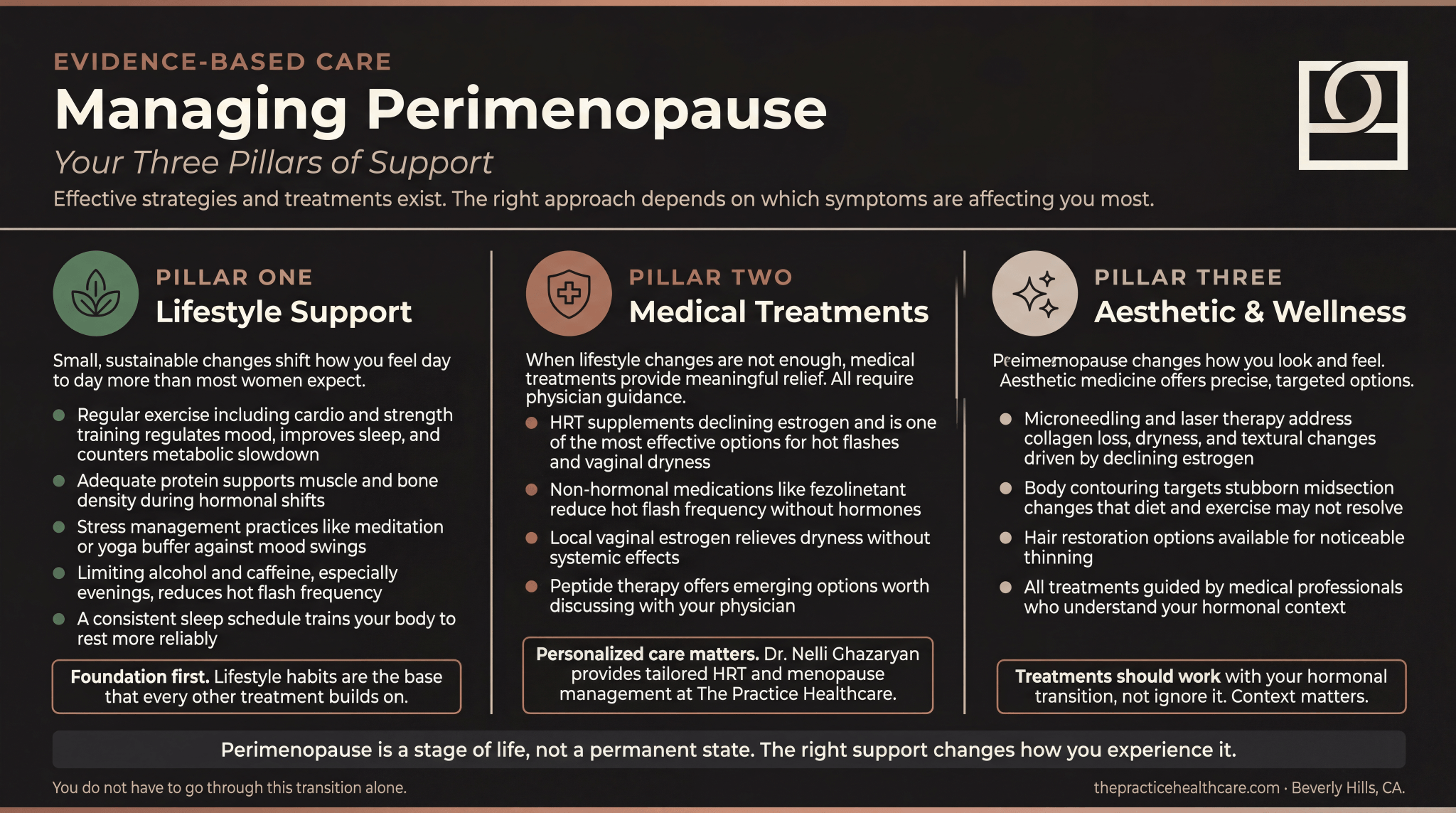
Managing perimenopause starts with knowing your options. Effective strategies and treatments exist, and the right approach depends on which symptoms are affecting you most.
You do not have to go through this transition alone.
Consistent lifestyle habits form the foundation of managing perimenopause well. Small, sustainable changes can shift how you feel day to day more than most women expect.
When lifestyle changes are not enough, medical treatments can provide meaningful relief. The right option depends on your health history and symptoms, so any treatment requires a physician's guidance.
Peptide therapy is also worth discussing with Dr. Nelli Ghazaryan, who provides personalized HRT and menopause care at The Practice Healthcare.
Perimenopause can change how you look and feel, and aesthetic medicine offers precise, targeted options to address that.
All treatments should be guided by experienced medical professionals who understand your hormonal context. Exploring nonsurgical facial rejuvenation is a strong starting point.
The emotional side of perimenopause is just as real as the physical symptoms. Many women describe feeling unlike themselves, and that shift in identity can be disorienting, especially when it arrives without warning.
Body image concerns, relationship strain, and mood changes are all common. So is the tendency to push through silently. You do not have to.
Talking openly with your partner, a friend, or a therapist can make a genuine difference. Perimenopause is a stage of life, not a permanent state, and the right support changes how you experience it.

Understanding what is happening in your body transforms perimenopause from something overwhelming into something you can navigate with clarity.
At The Practice Healthcare, Dr. Nelli Ghazaryan works with women at every stage of this transition, from symptom evaluation to personalized hormone therapy. Whether you have questions or are ready to explore your options, reach out to us today.
You deserve to feel informed and supported at every stage of your life.
Perimenopause is the natural transitional phase before menopause, when your ovaries gradually produce less estrogen. It is not a disorder. Every woman experiences it, though timing and symptoms vary. Most women enter perimenopause in their 40s, and the transition typically lasts four to eight years.
The first signs are usually changes in your menstrual cycle. Periods may become irregular, heavier, or shorter. Hot flashes, night sweats, and sleep disruption often follow. Because these symptoms overlap with other conditions, discussing them with your physician is important for an accurate assessment.
Yes. Your fertility is declining, but ovulation can still occur. Until you have gone 12 consecutive months without a period, pregnancy remains possible. Continue using contraception if you are not planning to conceive, and speak with your gynecologist about the right method for this stage.
Your doctor will review your symptoms, cycle changes, age, and family history. Blood tests measuring FSH and estradiol are helpful but not always conclusive since hormone levels fluctuate significantly. Ruling out thyroid disease and similar conditions is also an important part of confirming perimenopause.
No. Perimenopause is the natural transition every woman goes through before menopause. Early menopause means reaching menopause before age 45, which affects fewer women and can result from surgery, medical treatments, or genetic factors. You can experience perimenopause on a typical timeline and still reach menopause at the average age.