

Share this post


The goal of modern facial rejuvenation is a rested appearance rather than an obvious change, especially when surgical intervention is not indicated.
Noninvasive options can soften expression lines, restore subtle volume, and refine skin texture with minimal downtime. The real win is choosing the right tool for the right concern, then timing it so results settle naturally.
At The Practice Healthcare, Dr. Omar Hussain, MD, FACS, helps align Botox, fillers, and microneedling timing to your anatomy, expressions, and downtime needs.
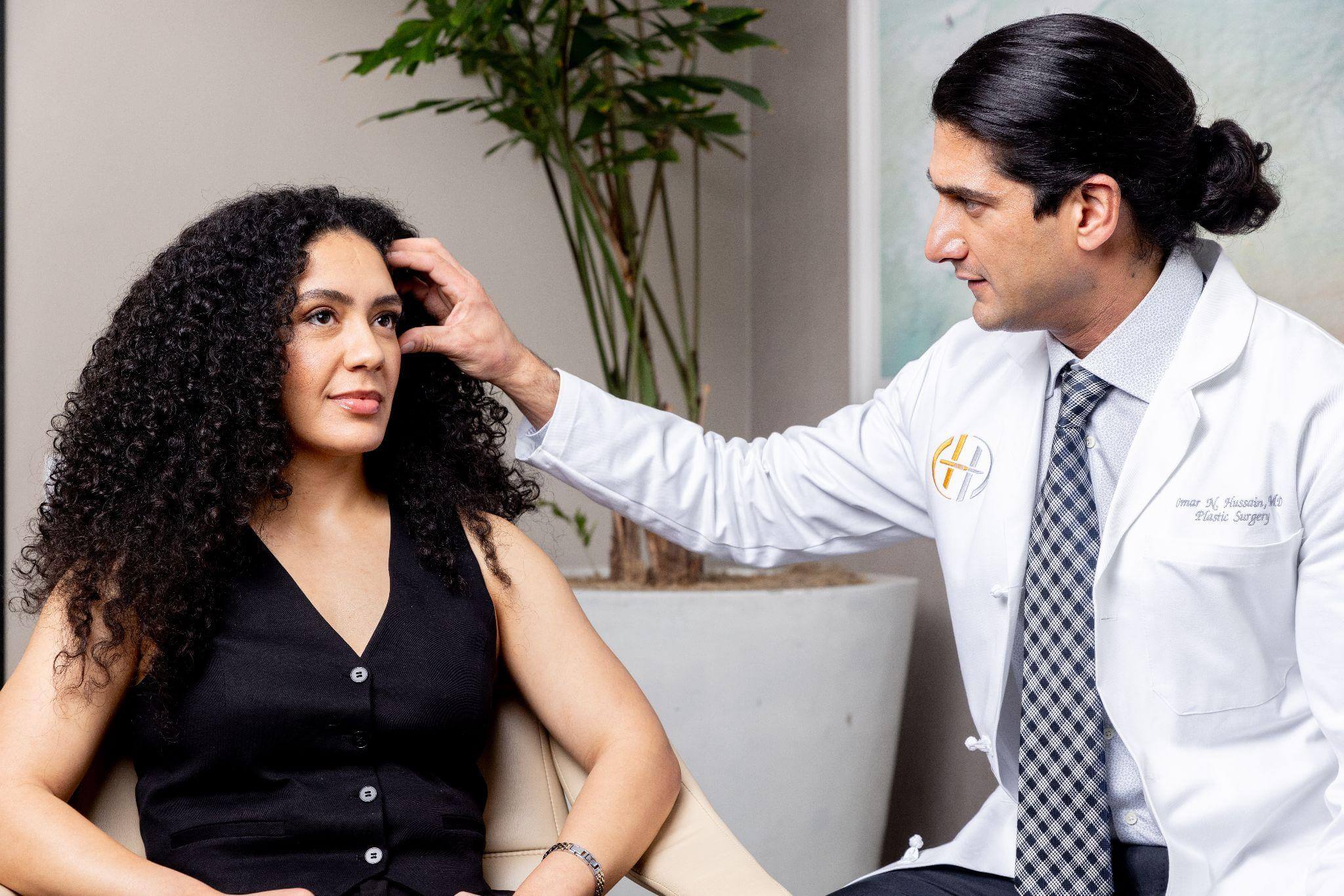
Nonsurgical facial rejuvenation includes in-office treatments that refresh your appearance without a facelift or other operative procedure.
These options have become mainstream. ISAPS reports 34.9 million surgical and nonsurgical aesthetic procedures in 2023, reflecting steady demand for low-downtime improvements.
These treatments work on different layers. Botox addresses muscle-driven creasing, fillers replace volume and support, and microneedling improves the skin surface. Many people prefer nonsurgical facial rejuvenation because changes can stay subtle, so you still look like you.
It also has limits. Significant laxity, heavy jowling, or deeper neck concerns may need surgery for a meaningful lift. A consultation with Dr. Omar Hussain helps define what injectables and skin treatments can realistically accomplish, what needs a different approach, and how to stage care so results settle naturally.
If you are exploring options at The Practice Healthcare, our Medspa offers a useful overview of available treatments.
Botox is a neuromodulator that temporarily relaxes selected facial muscles. When movement softens, the skin above it creases less, so dynamic lines look smoother.
Botox is best for expression-driven lines, such as:
A helpful self-check: make the expression that creates the line. If the line mainly shows with movement, Botox is usually part of the facial rejuvenation plan, especially when you follow a naturally youthful look approach.
You usually see Botox changes in phases, not all at once. A clinical review notes that effects can appear on days 1 to 4, reach maximum effect in 1 to 4 weeks, and then resolve around 3 to 4 months.
A practical way to plan facial rejuvenation timing:
Downtime stays minimal for most people. You may notice tiny bumps at injection points that fade quickly, mild redness, or tenderness. Bruising can happen, especially around thinner skin, so many people schedule Botox about 2 weeks before a big event to keep stress on the timing low.
Pros:
Cons:
If you want added context on technique and natural dosing, see Botox in Beverly Hills.
Dermal fillers add volume in specific areas to soften folds, support contours, or enhance features. Many are hyaluronic acid-based, a naturally occurring substance in skin that helps retain hydration.
A simple way to think about it: Botox relaxes movement lines, fillers rebuild support.
Fillers may be used to support:
The most natural facial rejuvenation strategy usually supports structure first. Treating only the fold can look heavy. Supporting the area that creates the fold often looks softer.
Most filler appointments follow a predictable flow:
Swelling often settles across several days. Bruising is common enough that many patients plan filler 1 to 2 weeks ahead of major events. A “final” look typically feels clearer once early swelling has resolved.
Longevity depends on product type, placement depth, and movement in the treated area.
In the planning window, many filler results fall in the 6- to 24-month range. Cheek support often lasts longer than highly mobile areas such as the lips, and maintenance timing is easiest when it aligns with your facial structure and your preferred level of upkeep.
Fillers are technique-sensitive. In a large survey of dermatologists reporting 1.7 million syringes injected, occlusion rates never exceeded 1 per 5,000 syringes, and overall risk was about 1 per 6,410 syringes with needles versus 1 per 40,882 with cannulas.
Even with low rates, the consequences can be serious, so experience, knowledge of anatomy, sterile technique, and a clear complication protocol are essential for safe, natural-looking facial rejuvenation.
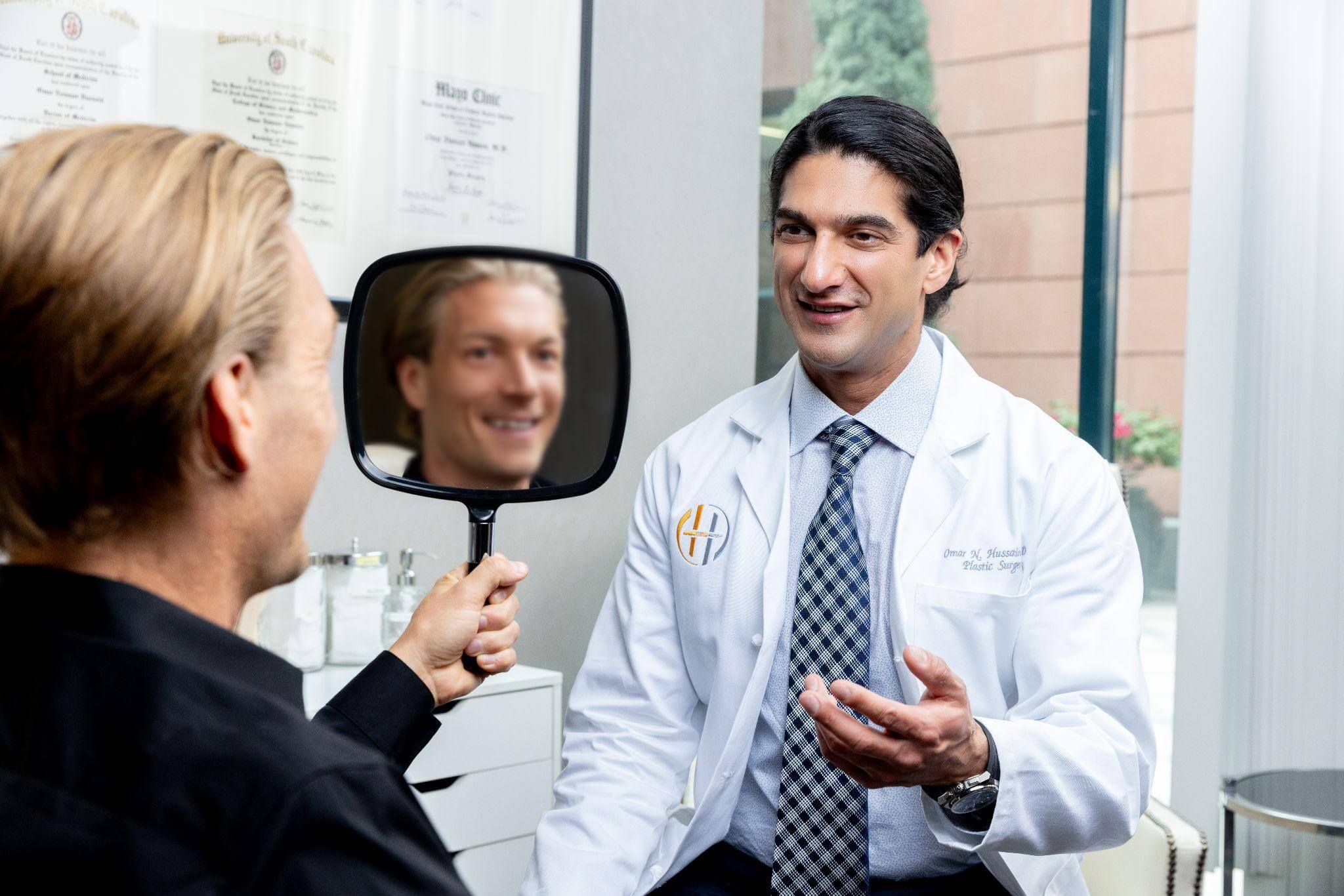
Microneedling uses sterile needles to create microchannels that trigger a controlled healing response.
That process signals collagen remodeling, which can make skin look smoother and brighter over time.
It is often chosen for fine lines, enlarged pores, uneven tone, and mild acne scarring. A systematic review reported clinically measurable improvement in acne scars, commonly in the 31–62% range across included studies, which helps explain why results build over a short series rather than a single visit.
Expect redness and mild swelling that typically settle in a few days with gentle skincare and daily sunscreen. For local details, see Microneedling in Beverly Hills.
The fastest way to choose is to identify the main signal you want to change: movement lines, volume loss, or skin texture.
| Treatment | Best for | When results show | Typical longevity | Typical downtime | Cost structure |
| Botox | Dynamic wrinkles. | Several days, peaks about 1-2 weeks. | About 3-4 months. | Minimal. | Per unit or area. |
| Dermal fillers | Volume loss, contour. | Immediate, then settles. | Often 6-24 months. | Bruising possible. | Per syringe. |
| Microneedling | Texture, tone, pores. | Gradual across sessions. | Builds with series, maintenance helps. | A few days. | Per session or package. |
Combination plans often look best because facial aging affects multiple layers of the skin.
A common sequence is relax (Botox), refill (fillers), then resurface (microneedling). Staging keeps facial rejuvenation looking natural by leaving room for small adjustments.
A strong plan starts with an in-person assessment.
Facial anatomy, skin quality, and expression patterns matter more than trending techniques. At The Practice Healthcare, Dr. Omar Hussain, MD, FACS, can help connect those details into a staged plan that stays conservative, balanced, and tailored to your features.
A provider should evaluate:
Age ranges are only a guide, but they can help structure a plan.
Most visits are efficient, but the “after” details shape how quickly you feel ready for photos.
These recovery patterns can also help you frame expectations during facelift recovery planning, since timing and healing cues matter even with smaller treatments. Your clinician should give clear pre- and post-care steps based on your health history, skin type, and treatment choice.
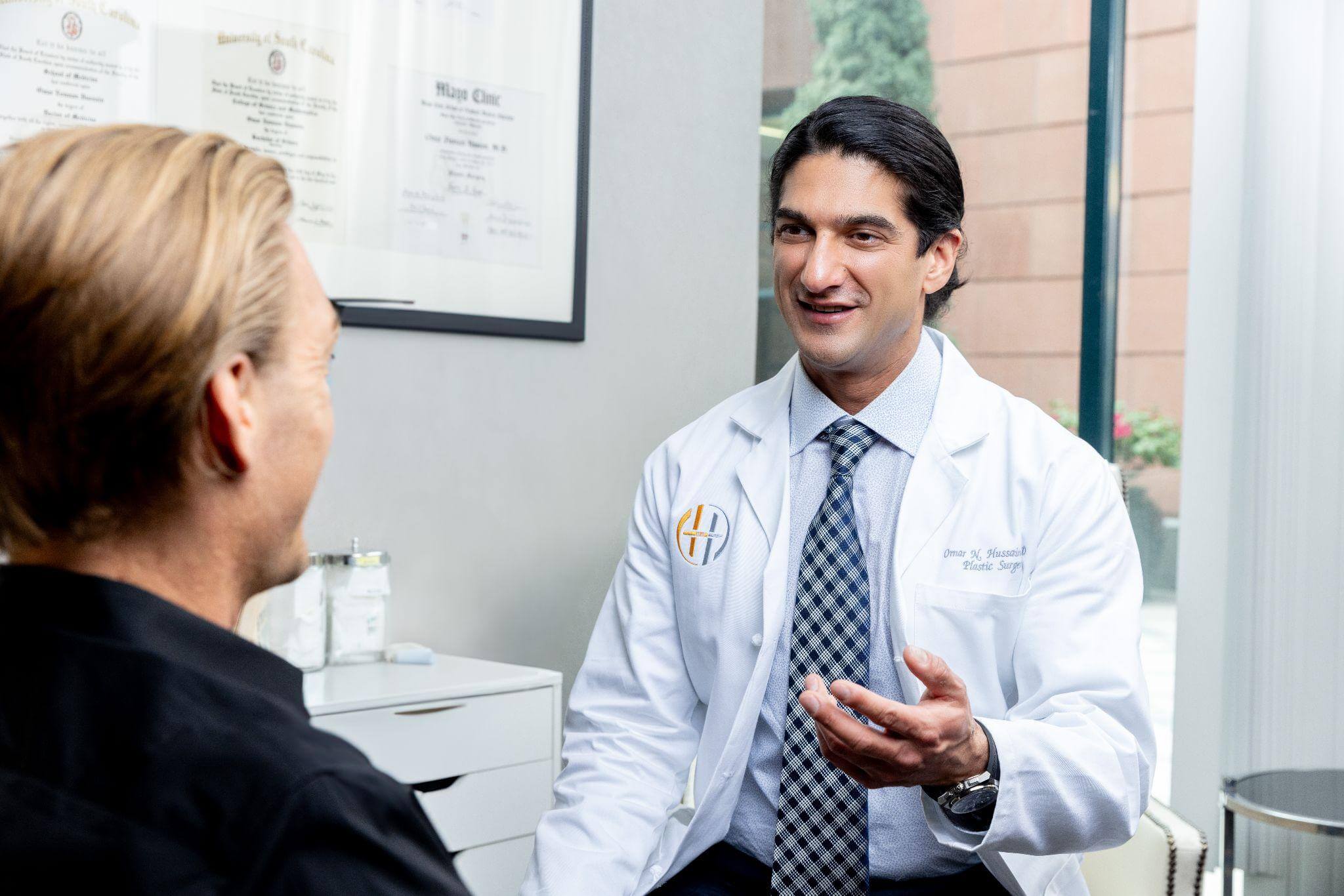
Natural-looking facial rejuvenation is an approach, not a product.
The “frozen” look usually comes down to dosing that ignores muscle balance. The “overfilled” look usually comes down to chasing a fold instead of restoring support where it is needed.
Expert planning, conservative dosing, and proper placement are the difference between refreshed and overdone.
If you worry about looking obvious, talk openly about that fear. A good consultation can show you dosing ranges, explain where volume support helps versus where it can look heavy, and plan a gradual approach. That kind of pacing makes facial rejuvenation feel predictable.
Pricing for facial rejuvenation depends on what you treat, how much product or time you need, and the experience behind the plan.
In Beverly Hills, the local market and clinical setting can also influence cost.
Botox is often priced per unit or per area, so the total cost depends on how many muscles need balancing for a natural look. Fillers are typically priced per syringe, and pricing depends on the amount of structural support you need and the product selected.
Microneedling is usually priced per session or package, with costs shaped by device type, add-ons, and your series length.
In the end, the most cost-effective nonsurgical facial rejuvenation plan is the one that matches your anatomy and your maintenance comfort level. That way, you are investing in results that build logically, instead of repeating treatments that do not address the main driver of change.
Every cosmetic procedure has risks, even when it is nonsurgical. You reduce risk with sterile technique, reputable products, and clinician expertise.
Temporary bruising, headache, and mild asymmetry can happen. A carefully planned plan reduces the risk of eyelid heaviness or an unnatural expression.
Swelling and bruising are common. Rare complications can be serious.
The FDA highlights unintended injection into a blood vessel as the most concerning risk, with reported complications including necrosis, vision abnormalities, including blindness, and stroke.
Temporary redness and irritation are expected. Infection and pigment changes are uncommon when the procedure is performed correctly, and aftercare is followed. Active skin infections and certain inflammatory conditions can change candidacy, so disclose your full skin history.
The safest path is care delivered by experienced medical professionals in a clinical setting.
That matters because nonsurgical facial rejuvenation still requires medical judgment, sterile technique, and precise anatomical knowledge.
In Beverly Hills, prioritize board certification and hands-on training, then look for a plan built around your face rather than a preset menu. You also want reputable product sourcing and a clear explanation of risks, downtime, and maintenance, so the timeline feels predictable.
If you want to explore how this fits into a broader aesthetic plan, start with The Practice Healthcare.

If your goal is a fresher look without surgery, start by naming the main concern: movement lines, volume loss, or skin texture.
Botox, fillers, and microneedling each solve a different part of the puzzle, and they often work best together when used conservatively.
If you want help translating your goals into a plan and timeline, the Medspa team can walk you through options and pacing. You can also meet with Dr. Omar Hussain, MD, FACS, to map a conservative sequence that fits your face, your schedule, and the kind of change you want to see in photos.
Start by naming the main issue: lines that deepen with movement, loss of support, or rough texture. Then match the tool. Facial rejuvenation often looks best when Botox, fillers, and microneedling are used selectively, based on your anatomy.
Expect refinement, then let it build. Nonsurgical facial rejuvenation can soften expression lines, improve contour, and brighten skin, yet the change should stay subtle. Timing matters too, because swelling or redness can briefly mask the final look.
Longevity depends on product, placement, and your metabolism. Facial rejuvenation with Botox usually lasts a few months, fillers often last many months, and microneedling tends to improve gradually across sessions. Maintenance works best when it follows a simple, planned rhythm.
Yes, and you should. Ask for examples that match your age range, skin type, and goals, then look for natural expression and balanced volume. Nonsurgical facial rejuvenation photos are most useful when they include consistent lighting and a clear timeline.
Facelift Surgery: The Complete Guide to Modern Techniques, Recovery, and Results
What Is a Chemical Peel and How Does It Improve Your Skin?
How to Prepare for Plastic Surgery: Simple Step-by-Step Guide
Stay in the know with our latest press coverage and helpful content updates to keep you informed.