



Share this post


Excitement and nerves usually go hand in hand in the weeks before surgery.
You've made the call and locked in your date, so the real question now is what to do between today and surgery day. If you're wondering how to prepare for plastic surgery, know this: the work you put in beforehand directly shapes how smoothly everything goes.
Good plastic surgery preparation lowers your risk, shortens recovery, and shapes your final result.
At The Practice Healthcare, Dr. Lisa Cassileth walks every patient through a clear, steady process before surgery day.
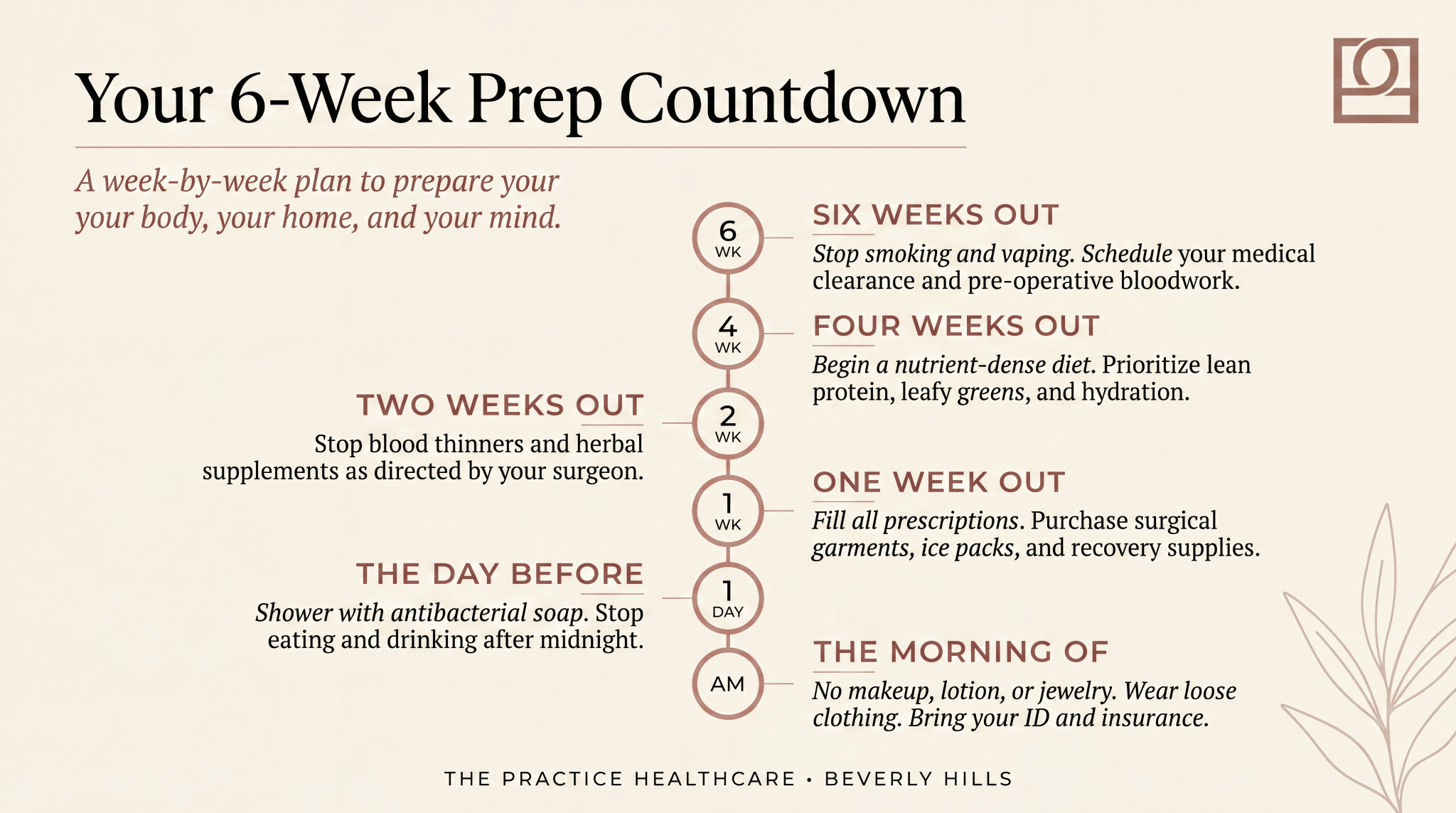
Knowing how to prepare for plastic surgery often decides whether your recovery is smooth or full of avoidable setbacks.
Patients who follow a structured pre-operative checklist tend to experience less pain, fewer complications, and better results. The Cleveland Clinic's pre-op checklist reinforces exactly that, from medication disclosure to quitting smoking well in advance, since smoking can aggravate the lungs during surgery and slow healing.
Still, preparation is a partnership. Your surgical team guides you through every step, but these surgery preparation tips only work when you apply them at home.
So treat your plastic surgery preparation like an investment in your results, long before you ever walk through the door.
Your plastic surgery pre-op journey really starts here. Before cosmetic surgery, verify that your surgeon is certified by the American Board of Plastic Surgery (ABPS) and has specific experience with your procedure.
Once credentials check out, read reviews, study before-and-after galleries, and pay attention to how the team communicates with you throughout the process.
At The Practice, Dr. Lisa Cassileth leads a physician-curated team of board-certified plastic and reconstructive surgeons. Meet the surgeons who will guide you before booking your consultation.
The consultation sets the foundation of a strong plastic surgery pre-op plan.
Your surgeon examines the treatment area, reviews your medical history, and discusses goals in detail. Together, a surgical plan is mapped out, including procedure type, anesthesia, and recovery timeline. This is also when realistic expectations get set, not after surgery.
Before any elective procedure, your surgeon will require medical clearance from your primary care doctor. This includes a physical exam, pre-operative bloodwork, and a review of your existing medical conditions.
Conditions like high blood pressure, diabetes, or a history of blood clotting need to be disclosed and managed before cosmetic surgery.
The American Society of Anesthesiologists also recommends meeting your anesthesiologist ahead of time to go through your medical history, past anesthesia experiences, and any concerns, so your plastic surgery pre-op window runs smoothly without surprises.
This is one of the most overlooked surgery preparation tips, and it carries real risk.
Many over-the-counter medications and supplements raise bleeding risk and can complicate surgery.
Stop blood thinners like aspirin, ibuprofen, and naproxen as directed, usually one to two weeks beforehand. According to the Cleveland Clinic, common herbal supplements such as garlic, ginkgo, ginseng, kava, St. John's wort, and echinacea can impair clotting, interact with anesthetics, and increase bleeding during surgery.
So only take what your surgeon approves, and bring a complete list of everything you use to every appointment.
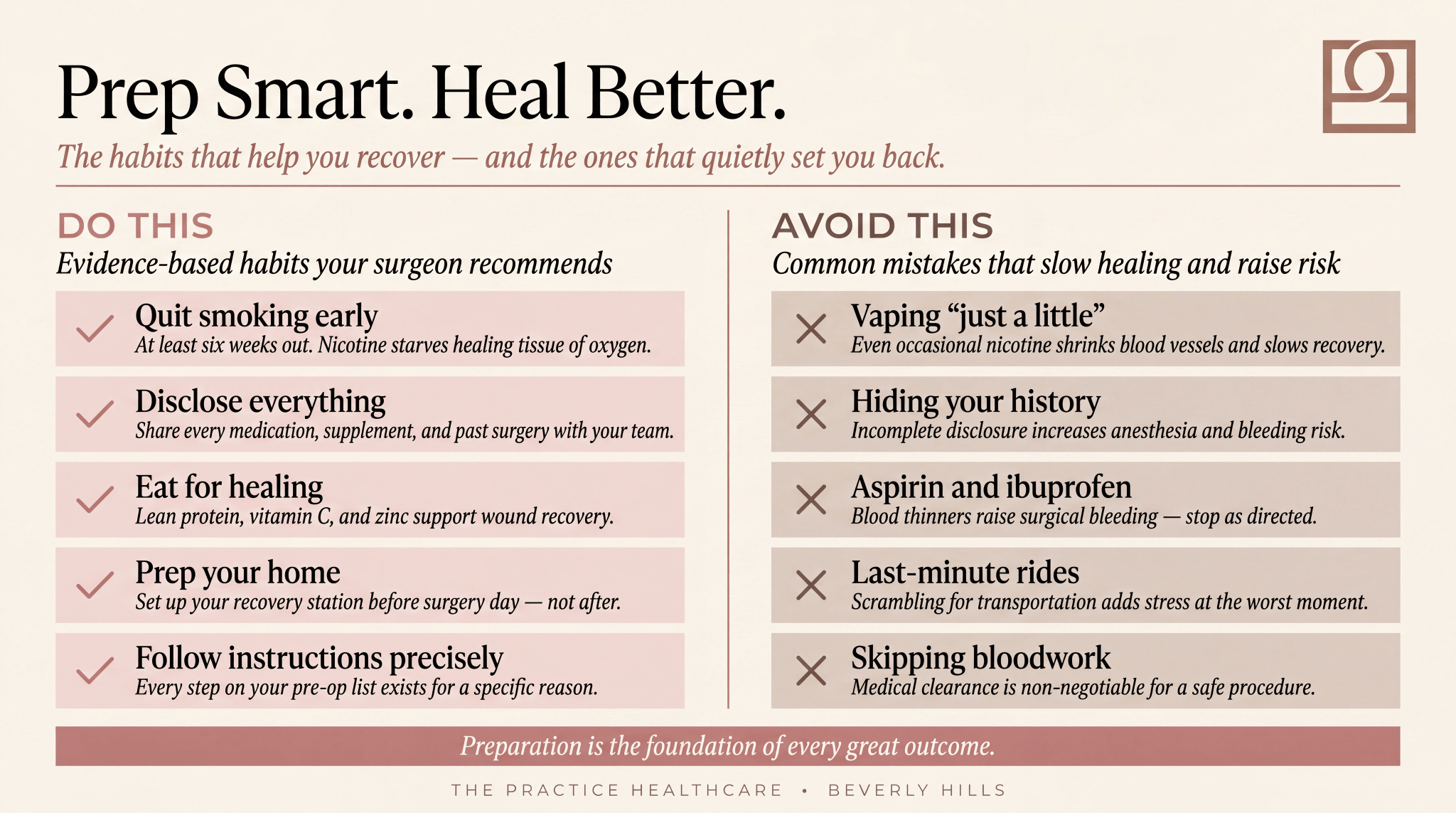
Nicotine constricts your blood vessels, which dramatically reduces oxygen delivery to surgical tissue.
According to the American Society of Plastic Surgeons, even a single puff shrinks your vessels, raising the risk of tissue death, infection, implant loss, and blood clots.
That's why you want to quit at least three to six weeks before surgery and stay smoke-free through recovery. This includes cigarettes, e-cigarettes, nicotine gum, patches, and chewing tobacco, making it one of the most important surgery preparation tips you can follow.
What you eat in the weeks before cosmetic surgery shapes how your body heals. The Academy of Nutrition and Dietetics recommends vitamin C-rich fruits and vegetables, zinc from fortified grains and protein foods, and adequate protein at every meal to support post-surgery wound healing.
So build your plate around lean proteins, leafy vegetables, fruits, and whole grains. Stay well-hydrated too, and cut back on alcohol in the week before your procedure since it interacts with anesthesia and slows healing.
Light to moderate exercise in the weeks before surgery supports circulation and cardiovascular health, both of which aid healing. Just as importantly, prioritize sleep, since your body repairs itself more quickly when well-rested.
However, avoid starting any intense new fitness routine close to your surgery date. A sudden spike in activity can stress your body and complicate recovery, which defeats the purpose of solid plastic surgery recovery preparation.
Plastic surgery recovery preparation pays off once you're home, when bending and reaching get hard. So prep your space in advance to ease stress:
If you're planning a breast procedure, tailor your setup to that specific recovery.
You can't drive yourself home after surgery, so arranging a responsible adult to pick you up is non-negotiable. Then plan for someone to stay with you through the first 24 to 48 hours.
If you live alone, extend that support to a couple of days.
Also, confirm the logistics in advance: arrival time, parking, and the post-op pickup spot. Otherwise, sorting those details on surgery morning adds stress at exactly the wrong moment.
These final surgery preparation tips cover what to do before plastic surgery this week. Check each off so you walk into surgery day fully prepared:
Once prep is done, your focus shifts to healing. Our team supports that with a tailored post-surgical recovery protocol.
Stop eating and drinking at midnight, unless your surgeon gave you different instructions.
Next, shower with antibacterial soap and wash your hair. Then aim for a full night of rest. If anxiety runs high, deep breathing or a short meditation can calm your nerves before bed.
On surgery day, keep your routine minimal so the team can prep you quickly:
Bring only what you need:
Even careful patients slip up on the pre-operative checklist that plastic surgery teams rely on. So, as you finalize what to do before plastic surgery, avoid these common errors:
At The Practice Healthcare in Beverly Hills, knowing what to do before plastic surgery shouldn't stop at the consultation room.
Since 2003, Dr. Lisa Cassileth and our board-certified surgical team have guided patients like you through personalized pre-operative instructions, from your first visit with our patient care coordinators to healing with our post-op specialists.
As a result, you get direct access to the surgical team during pre-op, clear answers to every question, and a preparation plan built around your procedure and health profile.
When you're ready, schedule your consultation and take the next step with confidence.

If you're still wondering how to prepare for plastic surgery, the short answer is: it isn't a single step.
It's a multi-week commitment spanning medical clearance, lifestyle changes, supplement adjustments, and home setup. Take it seriously, and you'll heal faster, avoid complications, and walk into surgery with confidence.
For personalized guidance from a board-certified team, reach out to The Practice Healthcare in Beverly Hills. Dr. Lisa Cassileth and her surgical team will guide you from consultation through full recovery.
Ideally, plastic surgery preparation begins six to eight weeks before surgery. This timeline gives medical clearance, medication adjustments, smoking cessation, and lifestyle changes time to take effect. Some steps, like quitting nicotine, need at least four to six weeks to reduce surgical risk.
Stop aspirin, ibuprofen, and naproxen as directed, usually one to two weeks before surgery. Many herbal supplements, including fish oil, garlic, ginkgo, and St. John's Wort, must also be stopped because they raise bleeding risk and interact with anesthesia during plastic surgery pre-op.
No. You shouldn't eat or drink after midnight the night before surgery, unless your surgeon directs otherwise. Fasting before cosmetic surgery is a safety requirement that prevents stomach contents from entering the lungs during anesthesia. Always follow your team's exact fasting instructions.
Follow your surgeon's instructions precisely. When learning how to prepare for plastic surgery, every item on their list, from stopping medications to completing bloodwork, exists to protect you. The pre-operative checklist plastic surgery teams provide is tailored to your specific procedure and health.