



Share this post


Poor sleep, unexpected mood changes, and hot flashes are not random. They are direct results of dropping estrogen and progesterone levels during perimenopause and menopause, and they warrant proper medical attention.
Understanding the benefits and risks of hormone therapy is a critical step in managing these symptoms. The conversation around it has swung between alarm and enthusiasm, making it hard to know what the evidence actually supports.
At The Practice Healthcare, Dr. Nelli Ghazaryan takes an evidence-based approach, evaluating your symptoms, health history, and risk factors to determine the right course of treatment for you.
Hormone therapy is a medical treatment that replaces the hormones your body produces less of as you move through perimenopause and menopause. It mostly commonly involves estrogen, progesterone, or both.
In select cases, testosterone may also be included under physician guidance to address low libido or fatigue.
If you have been managing early perimenopause changes with lifestyle adjustments, but symptoms are escalating, hormone therapy is often the next conversation to have. It is available in several forms, and the right one depends on your health history and symptoms.
Delivery method matters because transdermal options bypass the liver, which can mean a different risk profile compared to oral pills.
Hormone therapy is prescribed to address symptoms that arise when estrogen and progesterone decline, and for many women, those symptoms go well beyond mild inconvenience.
Common reasons your physician may recommend it include:
A narrative review in the International Journal of Molecular Sciences reported that menopausal hormone therapy remains the most effective treatment for vasomotor symptoms.
That said, treatment must always be tailored to your individual needs.
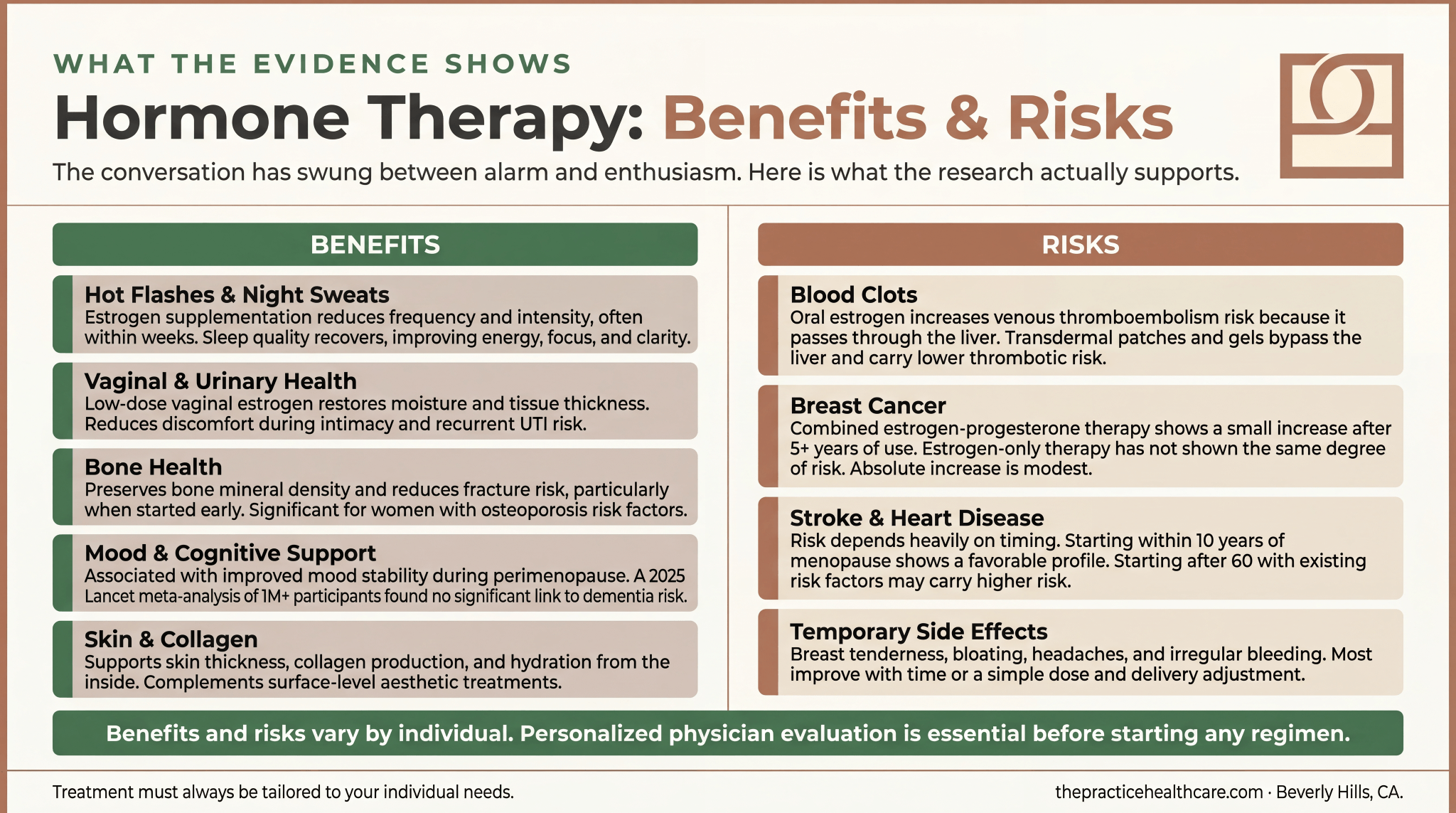
The benefits and risks of hormone therapy are worth understanding in detail because the benefits extend across multiple areas of your health. Knowing what it can actually do for you makes it easier to weigh your options with confidence.
Hot flashes and night sweats are among the most disruptive symptoms of menopause, and hormone therapy addresses them more effectively than any other treatment option. Estrogen supplementation reduces both the frequency and intensity of these episodes, often within weeks of starting treatment.
The improvement you experience goes further than daily comfort. When hot flashes stop interrupting your day and night sweats no longer break your sleep, your energy, focus, and mental clarity tend to follow.
That recovery in sleep quality alone can have a measurable effect on how you feel and function each day.
As estrogen levels decline, vaginal and urinary tract tissues become thinner and drier, which is what causes vaginal dryness, discomfort during intimacy, and recurrent urinary tract infections. Hormone therapy, particularly low-dose vaginal estrogen, directly targets these changes by restoring moisture, thickness, and resilience to the affected tissues.
Because the treatment works at the tissue level, the results are meaningful. For many women, this is one of the most impactful benefits hormone therapy offers, since it restores comfort in areas that quietly affect your daily quality of life.
Estrogen plays a direct role in maintaining bone density, so when levels drop during menopause, bone loss accelerates, and fracture risk rises. Hormone therapy helps slow that process, particularly when started early in the postmenopausal period.
A 2025 scoping review in Frontiers in Reproductive Health confirmed that menopausal hormone therapy preserves bone mineral density and reduces fracture risk in menopausal women.
For women with a family history of osteoporosis, low body weight, or prior fractures, that bone-protective benefit can be one of the most clinically significant reasons to consider treatment.
Mood instability, anxiety, and brain fog are common during the menopausal transition, and estrogen has been associated with improvements in mood stability, particularly when started during perimenopause.
The cognitive picture is more nuanced. A 2025 systematic review and meta-analysis in The Lancet Healthy Longevity, covering over one million participants, found no significant link between hormone therapy and dementia risk, which directly addresses a concern many women carry into this conversation.
Mood benefits are better supported by current evidence, and your physician can help you assess what is most relevant to your health profile.
Estrogen supports skin thickness, collagen production, and hydration, so as levels drop, you may notice drier skin, deeper wrinkles, and a gradual loss of firmness.
Hormone therapy can address some of those changes by supporting collagen from the inside, though it does not replace surface-level care. Nonsurgical facial rejuvenation treatments, such as laser resurfacing, radiofrequency, and fillers that rebuild collagen and restore volume, work at different layers.
Together, the two approaches cover both the systemic and surface-level causes of menopausal skin changes.

Understanding the risks is just as important as understanding the benefits, and an honest look at both is what helps you make a truly informed decision. What applies to one woman may not apply to another, which is why personalized evaluation matters.
Oral estrogen has been associated with an increased risk of venous thromboembolism, including deep vein thrombosis and pulmonary embolism.
That risk is higher with pill-form estrogen because it passes through the liver and affects clotting factors. Transdermal options, such as patches and gels, bypass the liver and tend to carry a lower thrombotic risk. So if you have a personal or family history of clotting disorders, your physician may recommend a transdermal approach instead.
Combined estrogen-progesterone therapy has been associated with a small increase in breast cancer risk with long-term use, generally after five or more years. Estrogen-only therapy, prescribed for women who have had a hysterectomy, carries different considerations and has not shown the same degree of risk.
The absolute increase is modest, but it does depend on duration, formulation, and your individual health history. That is why your physician needs the full picture before recommending any specific regimen.
Cardiovascular risk from hormone therapy depends heavily on when you start.
Women who begin treatment within ten years of menopause tend to see a more favorable cardiovascular profile than those who start later. Starting after age 60, especially with existing risk factors like high blood pressure or elevated cholesterol, may carry a higher risk of stroke and coronary events.
Timing is one of the most important variables your physician will evaluate before recommending treatment.
Beyond the more serious risks, some women experience side effects that are manageable and often temporary. Most improve with time or a simple adjustment in dose or delivery method:
Dr. Nelli Ghazaryan works closely with patients to fine-tune hormone therapy so that side effects are minimized while benefits are preserved.
Hormone therapy is not right for every woman, but for the right candidate, it can be transformative. The best candidates generally share these characteristics:
Staying current with your preventive screenings gives your physician the full picture needed to determine whether hormone therapy is an appropriate and safe option for you.
Not every woman is a suitable candidate, and knowing where you stand helps you approach this conversation with clarity. Hormone therapy is typically not recommended if you have:
Even so, alternative approaches may still offer symptom relief. Your physician is best placed to make that determination based on your full health history.
One of the most important insights shaping how physicians approach hormone therapy today is that timing matters enormously. Starting treatment within ten years of menopause onset tends to offer stronger cardiovascular protection and more effective symptom control than starting later.
Research published in Menopause examining health outcomes by formulation and timing in women beyond age 65 confirmed that outcomes vary considerably depending on when you start, how therapy is delivered, and which formulation is used.
The earlier and more precisely that decision is made, the better positioned you are to benefit from treatment.
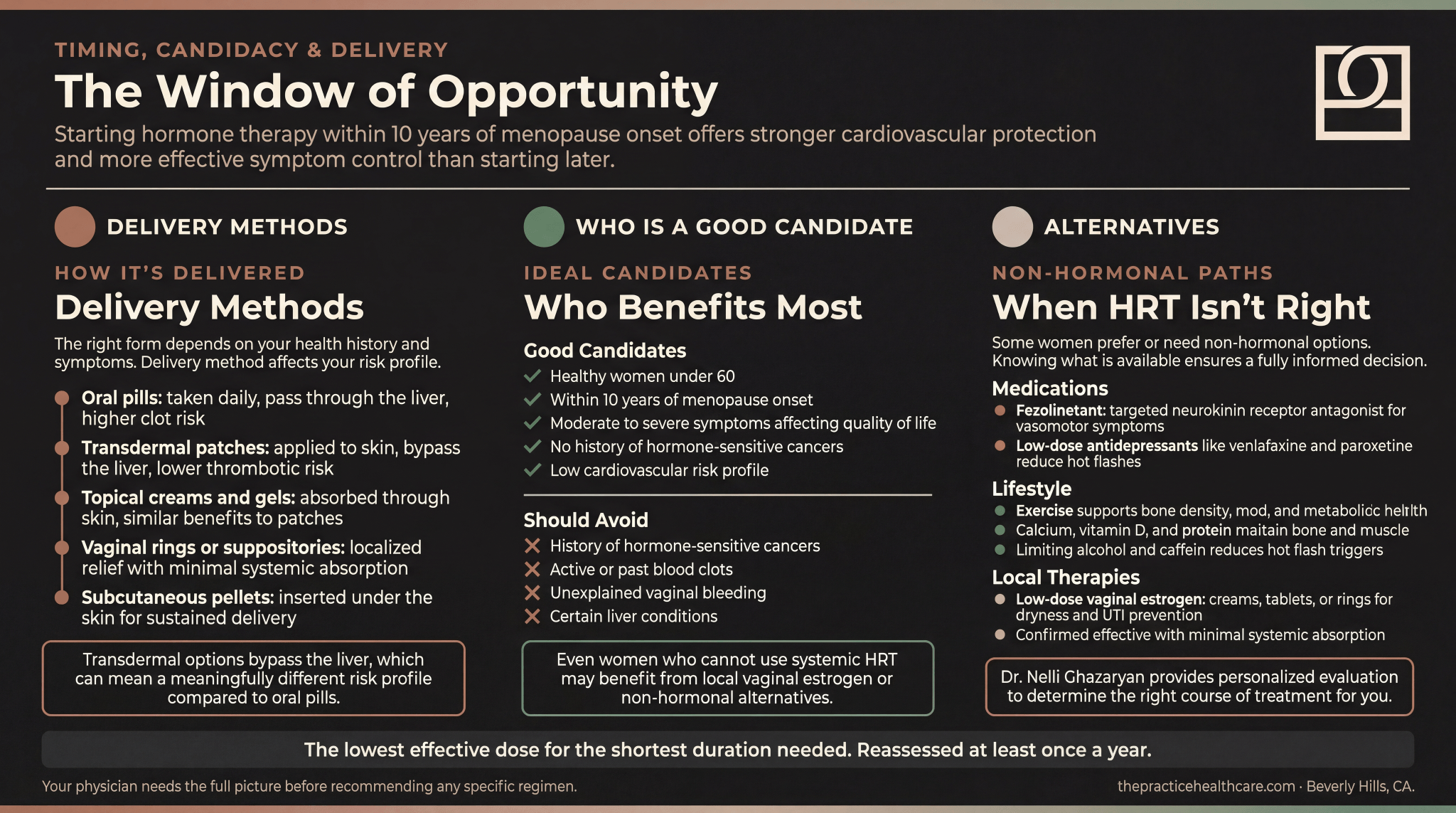
Hormone therapy is not the only path forward, and some women prefer or need non-hormonal options. Knowing what else is available ensures you can have a fully informed conversation with your physician before making any decisions.
Certain prescription medications can reduce hot flash frequency and severity without affecting hormone levels. Fezolinetant, a neurokinin receptor antagonist, is one of the newer targeted options developed specifically for vasomotor symptoms.
Low-dose antidepressants like venlafaxine and paroxetine have also shown effectiveness in reducing hot flashes.
For women exploring broader non-hormonal support, physician-led peptide therapy represents an expanding area of care worth discussing with your physician alongside any medication-based options.
Lifestyle changes will not replace hormone therapy for severe symptoms, but they can meaningfully support your transition and improve how you feel day to day.
For women whose primary concerns are vaginal dryness, discomfort during intimacy, or recurrent urinary tract infections, low-dose vaginal estrogen offers targeted relief without the systemic exposure of full hormone therapy.
Available as creams, tablets, or rings, these localized treatments restore moisture and tissue thickness directly where needed. A 2024 systematic review in the Journal of Menopausal Medicine confirmed that intravaginal estrogen effectively reduces dyspareunia, dryness, and vaginal pH changes with minimal systemic absorption, making it an option even for women who are not candidates for systemic hormone therapy.
The general principle is to use the lowest effective dose for the shortest duration needed. In practice, that looks different for every woman.
Your physician should reassess your treatment at least once a year, reviewing whether symptoms persist, whether benefits still outweigh risks, and whether your regimen still fits your health profile. Some women taper off after a few years, while others continue longer when bone protection or persistent vasomotor symptoms make it worthwhile.
Dr. Nelli Ghazaryan applies the same personalized recovery philosophy to ensure your plan evolves as your needs change.

The benefits and risks of hormone therapy deserve a thoughtful, personalized evaluation rather than a blanket answer. For many women, the right approach makes a meaningful difference in how they feel day to day. What matters most is having a medical team you trust to guide that decision.
Dr. Nelli Ghazaryan at The Practice Healthcare is here to help you evaluate your options and build a plan that fits your needs. Contact us to get started.
The benefits and risks of hormone therapy vary by individual. Benefits include relief from hot flashes, vaginal dryness, mood changes, and bone loss. Risks include blood clots, a modest breast cancer risk with long-term use, and cardiovascular effects depending on timing and formulation.
Hormone therapy is considered safe for many women when prescribed and monitored appropriately.
The best candidates are healthy women under 60, within ten years of menopause onset, with no history of hormone-sensitive cancers or clotting disorders. Formulation and delivery method also affect safety.
Research does not establish a direct link between hormone therapy and weight gain.
Most weight changes during menopause are tied to metabolic shifts, aging, and declining estrogen. Some women find that hormone therapy actually helps stabilize weight by improving sleep and reducing cortisol-related fat storage.
Hormone therapy supports skin hydration, bone density, and collagen production, but it does not stop aging. It is best understood as a tool for managing specific menopause symptoms rather than a comprehensive anti-aging solution.
Aging involves biological processes that extend well beyond hormone levels.
Fear around hormone therapy often stems from incomplete information. For many women, the benefits significantly outweigh the risks when treatment starts at the right time under physician supervision. An open, evidence-based conversation with your doctor is the best way to make a decision grounded in your actual health profile.